
AI assisted editorial. Published following automated quality checks, not independent fact verification. Confirm factual, safety and legal matters with appropriate professionals.
The short answer
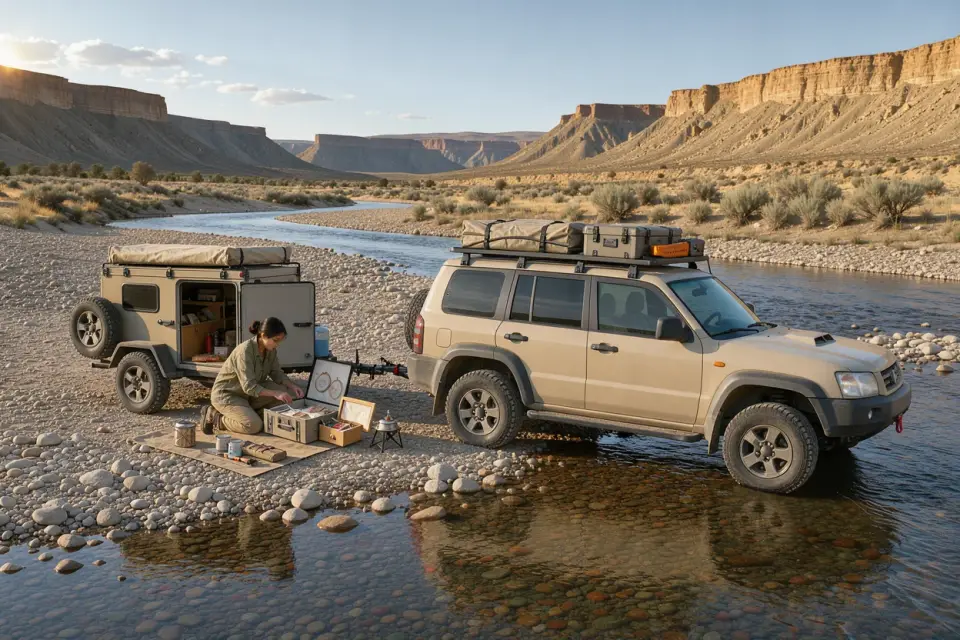
Vehicle based travel often requires creative downtime activities during weather delays or extended rest days. This guide explores how craft and hobby displays, including display frames and cases from partner BRKOX, fit into campervans, overland trailers, and home basecamps without sacrificing precious storage or organisation on the road.
Key takeaways
- Assess whether your hobby projects will live permanently inside your overland rig or remain at a static home basecamp before purchasing specialised display gear.
- Factor in vibration, dust ingress, and secure mounting methods whenever bringing framed displays or acrylic cases into vehicle based environments.
- Evaluate lighting power demands carefully, especially when adding LED kits to an existing 12V auxiliary camper leisure electrical system.
- Use a structured decision framework to weigh weight, fragility, and space footprint against the personal satisfaction of creative downtime.
Crafts, Hobbies, and Vehicle Based Travel
Overlanding is as much about the hours spent parked in remote campsites, waiting out mountain storms, or resting between driving legs as it is about navigating rough tracks. For many travellers, creative hobbies offer a grounding routine during life on the road. Building modular brick sets, assembling scale models, or working on fine crafts can turn a cramped camper interior into an engaging retreat on rainy afternoons.
However, integrating delicate hobbies into an overland lifestyle presents practical compromises. Space is always at a premium inside an off road rig, and loose components easily become hazards across corrugated washboard roads. Choosing how to house, light, and preserve finished projects requires careful forethought, balancing the enjoyment of a pastime with the strict demands of vehicular storage and transit durability.
Partner Showcase: BRKOX Display Gear
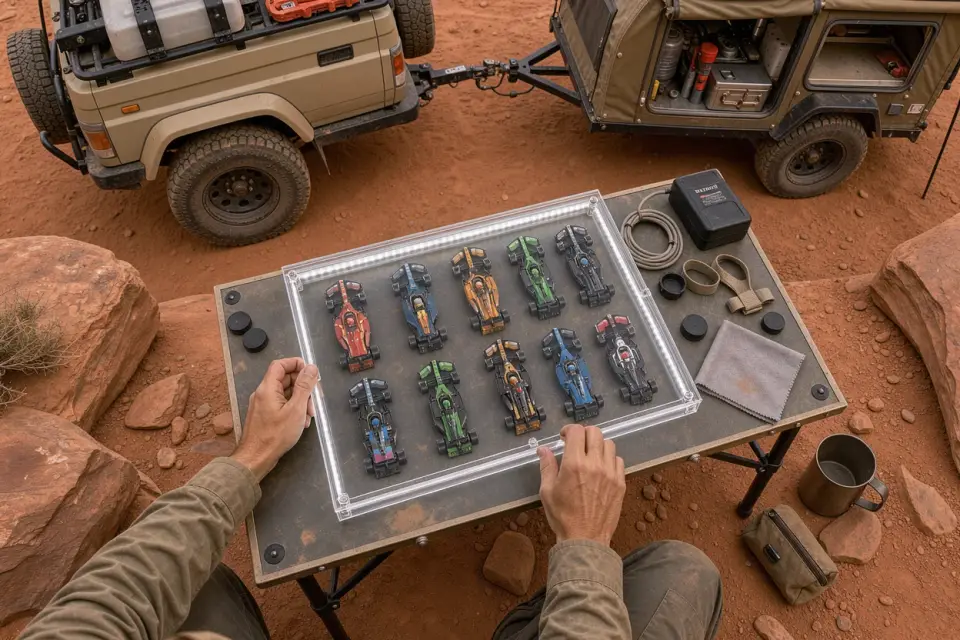
When considering ways to showcase assembled hobby kits, partner brand BRKOX provides dedicated display accessories. According to partner provided details, BRKOX · USA discounts wall display frames, display cases, and LED light kits specifically tailored for LEGO® sets, supported by U.S. delivery options.
While these display cases and light kits are engineered primarily for domestic rooms, overlanders frequently adapt specialised domestic equipment for static basecamps, home workshop garages, or permanently fitted motorhome interiors. It is important to note that these items are not built as ruggedised off road accessories; their suitability for an overland rig depends entirely on how securely they are mounted and isolated from vehicle vibration.
A Practical Comparison Framework for Mobile Displays
To decide whether a craft display solution is suitable for life on the road or basecamp, consider three key functional pillars: mounting resilience, power draw, and dust resistance.
Mounting Resilience: Standard wall frames rely on simple picture hooks, which will fail under off road conditions. In an overland vehicle, any frame or cabinet must be solidly fastened to structural timber or metal cabinetry using mechanical fixings or heavy duty dual lock fasteners. If using a free standing acrylic case, it must be stowed in a cushioned locker during transit.
Power and Wiring: Model lighting sets, such as LED light kits, often run on USB 5V or low voltage DC power. For campervans, this integrates easily with existing USB charging banks or auxiliary leisure batteries. However, consider wire routing carefully so that delicate connections do not snag on passing gear or rattle loose on gravel roads.
Dust and Ingress: Fine trail dust penetrates even well sealed overland vehicles. Enclosed display cases offer clear benefits over open shelving by shielding delicate brickwork and miniature parts from grit, reducing the need for tedious deep cleans after dusty desert crossings.
Hypothetical Decision Example: Basecamp vs Camper Fitment
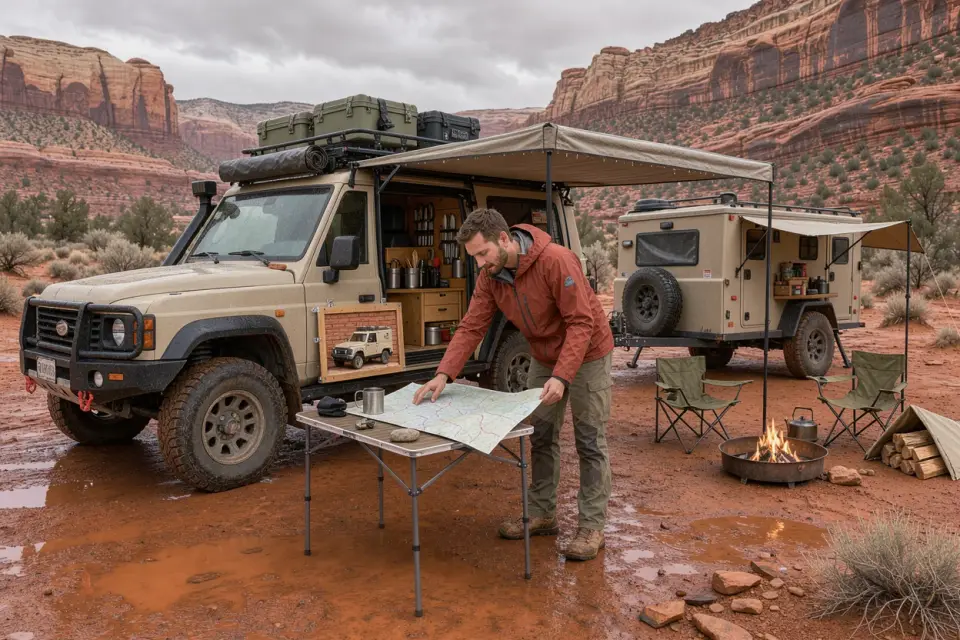
Consider Alex and Sam, who travel six months of the year in an overland expedition truck and spend the remaining months at a fixed cabin basecamp. Alex enjoys building complex vehicle brick models during quiet evenings by the campfire. They are evaluating whether to install an enclosed BRKOX wall display frame inside the truck cabin or save it for their static workshop.
Trade off Analysis: Installing the display inside the truck allows immediate enjoyment of completed builds during long trips. However, doing so requires drilling into interior panel cabinetry, adding extra securing brackets, and accepting the risk that rough tracks might dislodge internal parts. Alternatively, keeping the display unit at their home basecamp keeps the vehicle interior uncluttered, saves payload weight, and reserves the delicate lighting kits for an environment free from constant road vibration. Alex and Sam opt to keep fragile display frames at their home base, using a padded plastic tub for in transit hobby storage while travelling.
Questions to Ask Before You Purchase
Before investing in hobby display solutions for travel or basecamp, ask the seller or manufacturer these practical questions:
1. What are the exact external dimensions and mounting hole placements on the frame or case?
2. What material is used for the clear panels (e.g. acrylic, polycarbonate, or glass), and how resistant is it to scratching or flexing?
3. What power input and current draw do the LED lighting kits require, and do they use standard USB connections?
4. How do internal mounting studs or brackets secure individual models to prevent shifting during motion?
5. What replacement parts or mounting hardware are supplied in the package if custom installation is required?
Common questions
Can delicate model display cases survive corrugated overland tracks?
Standard hobby display cases are not built for severe off road vibration. If mounted inside an overland vehicle, they require mechanical fastening, internal model anchoring, and adequate vibration dampening to prevent panels and assembled components from shaking loose.
How do hobby LED lighting kits run from a campervan power setup?
Most LED kits for craft models run on low voltage USB 5V feeds. These can generally be plugged straight into standard 12V to USB sockets wired to your auxiliary leisure battery without placing significant load on off grid power systems.
What is the best way to clean dust out of hobby builds inside a vehicle?
Trail dust is best managed by keeping models inside sealed acrylic display cases or storage containers. For cleaning exposed models, a soft detailing brush paired with a low pressure portable electronics air duster prevents delicate components from snapping.
Partner discounts in this guide
Overland Finds may earn a commission from qualifying purchases made by customers in the USA through this link, at no additional cost to you. This does not imply independent product testing or endorsement. Confirm current terms and availability with the partner.

BRKOX · USA
Show off your builds with wall display frames, display cases and LED light kits designed for LEGO® sets, with U.S. delivery from BRKOX.
- Valid in
- USA
- Discount
- USA offer · Shop display frames for LEGO® sets