
AI assisted editorial. Published following automated quality checks, not independent fact verification. Confirm factual, safety and legal matters with appropriate professionals.
The short answer
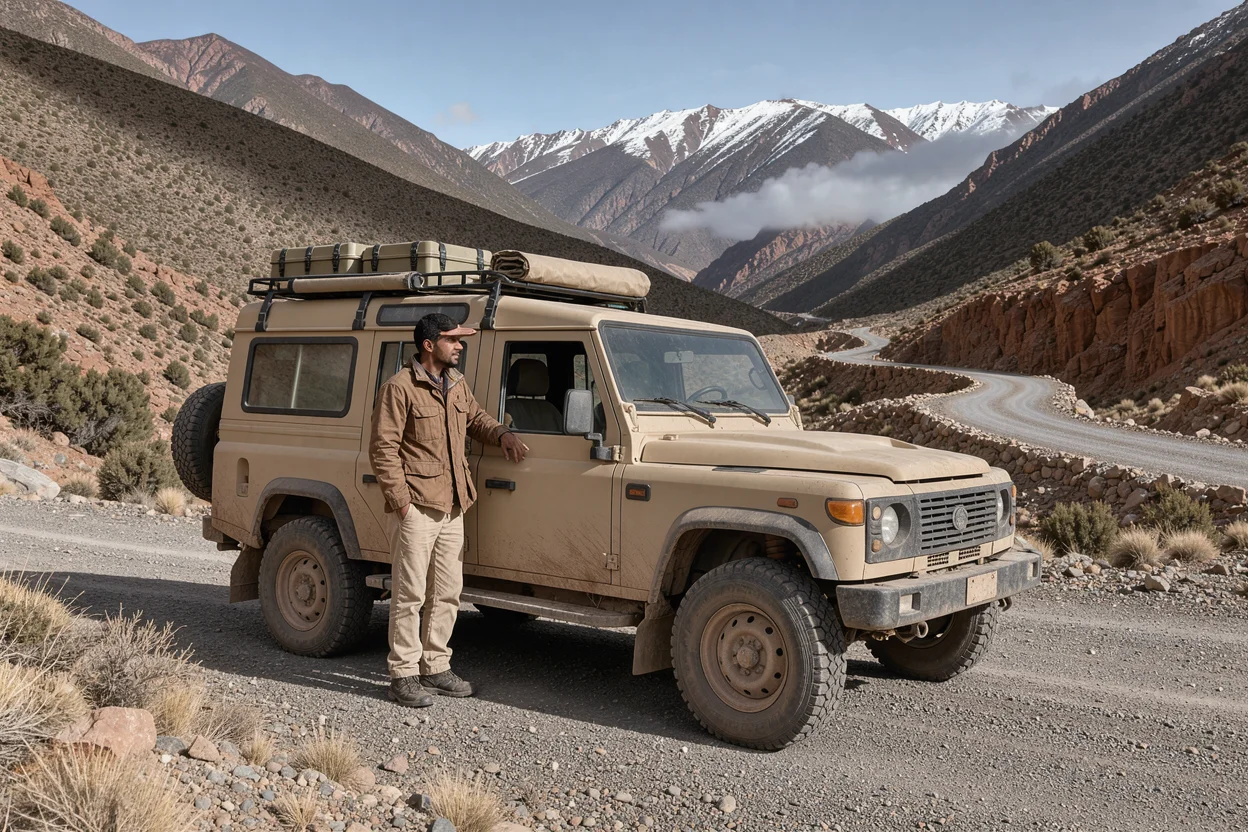
Planning an overland journey through Morocco's Atlas range requires balancing vehicle dimensions against narrow mountain passes, seasonal weather extremes, and self sufficiency needs. Success relies on choosing corridors that match your platform's cooling capacity, track width, and payload, rather than attempting technical trails beyond your vehicle's mechanical baseline.
Key takeaways
- Prioritise compact vehicle width and tight turning circles over interior living volume to navigate narrow switchbacks with confidence.
- Factor in rapid altitude gains that place heavy thermal demands on engines and create unpredictable weather shifts.
- Evaluate whether your vehicle can reliably carry adequate water, fuel, and filtration without exceeding gross vehicle weight limits.
- Match route difficulty to your crew's mechanical self reliance and the availability of remote recovery assistance.
Understanding the Geographic Realities of the Atlas Range
The Atlas Mountains present a dramatic transition between maritime plains, alpine plateaus, and pre Saharan desert edges. Planning an overland itinerary across this terrain involves understanding three primary sub ranges: the Middle Atlas, the High Atlas, and the Anti Atlas. Each presents distinct challenges, varying from dense cedar forests and muddy tracks to precipitous rocky passes and arid stone plains.
Elevation changes can be extreme over relatively short distances. A route that begins in temperate valley orchards can climb to exposed passes exceeding two thousand metres within a couple of hours. These rapid ascents place intense thermal loads on engines, particularly when navigating steep gradients at low speeds with loaded overland rigs.
Surface conditions range from newly engineered tarmac to centuries old mule tracks widened into rough pistes. Graded gravel roads can deteriorate rapidly following mountain rains, leaving deep washouts, exposed bedrock, and loose scree that demand continuous driver concentration and durable all terrain tyres.
Vehicle Tradeoffs: Evaluating Agility Versus Habitability
Choosing an overland platform for mountain routes always involves compromise between agility on narrow pistes and comfort during extended halts. Large overland trucks offer unmatched living space and long range water capacity, yet their height, width, and weight severely restrict route choice along gorge walls and through tight mountain settlements.
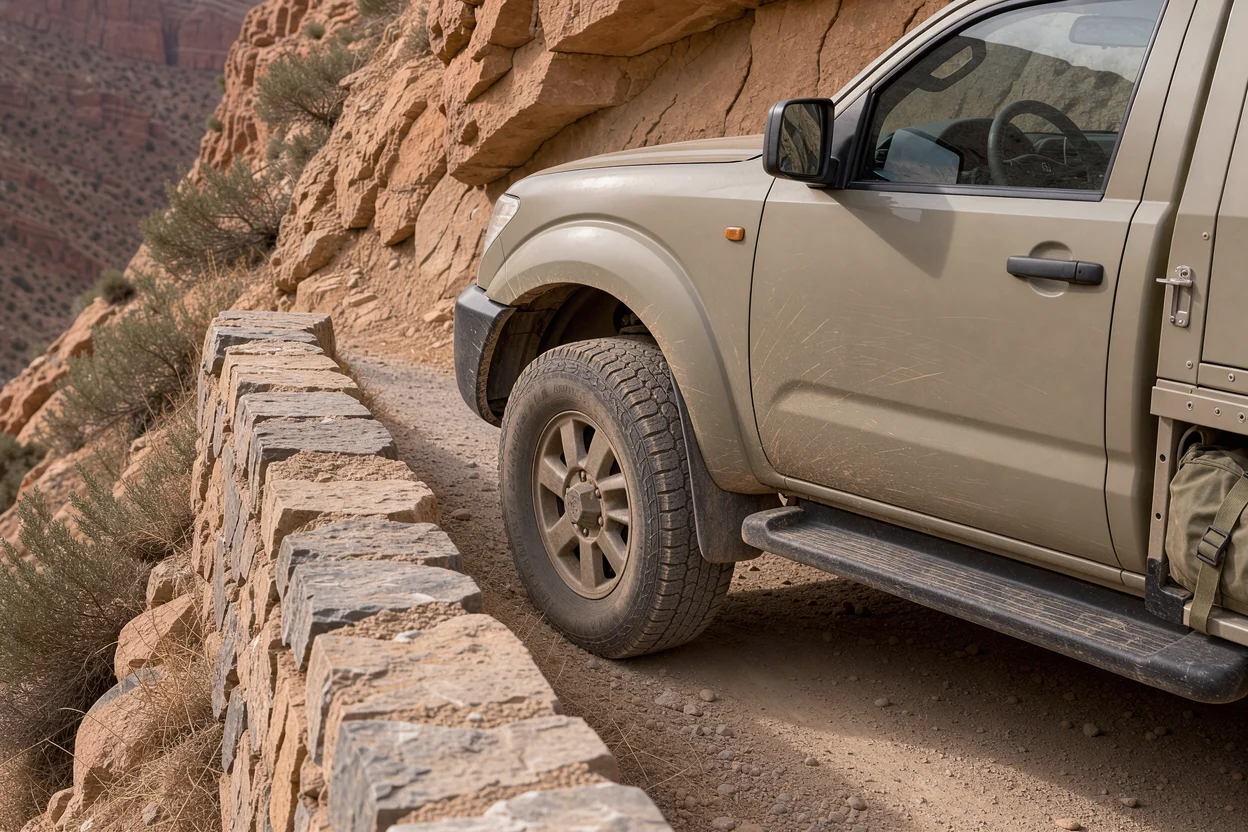
Conversely, compact short wheelbase four wheel drives excel at tight hairpins, narrow stone bridges, and shelf roads carved into cliff faces. However, their limited payload makes carrying sufficient spares, recovery gear, and domestic supplies for multi day remote crossings much more difficult.
Mid sized platforms, such as dual cab pickups or medium utility wagons, often strike a balanced compromise. They provide sufficient load carrying capability for self contained living systems while maintaining a manageable footprint that fits within standard mountain road widths.
Practical Comparison Framework for Route Corridors
When assessing prospective tracks, overlanders can categorise options using three primary terrain corridors: High Alpine Passes, River Gorges, and Arid Valley Link Roads. Each corridor dictates specific vehicle preparations and risk management considerations.
High Alpine Passes: These tracks deliver magnificent vistas and technical driving over rocky shelf roads. Key vehicle criteria include generous ground clearance, reliable low range gearing, and resilient cooling systems. Primary risks include rockfalls, snow drifts outside peak summer, and narrow passing points where reversing is challenging.
River Gorges: Routes running through valley floors feature dramatic canyon scenery and access to traditional oases. Key criteria focus on water wading capability, underbody armour, and modest vehicle height to clear overhanging rock arches. Seasonal flash flooding remains the overriding operational hazard.
Arid Valley Link Roads: These wide gravel tracks connect major geographic regions across the southern slopes. Key criteria centre on high speed suspension damping, dust filtration, and fuel range. Corrugations are common, testing chassis fasteners and interior cabinet construction.
Questions to Ask Outfitter Sellers and Vehicle Builders
If you are acquiring or commissioning an adventure vehicle specifically for alpine overland expeditions, seek clarity on how the build addresses narrow and steep mountain driving conditions.
Ask the builder how the final payload distribution affects the centre of gravity on steep side slopes. A high mounted roof tent or heavy roof rack can noticeably degrade stability on uneven rock steps.
Enquire about cooling system upgrades, asking specifically whether the transmission and engine cooling have been tested for continuous low speed crawling under full gross vehicle weight at altitude.
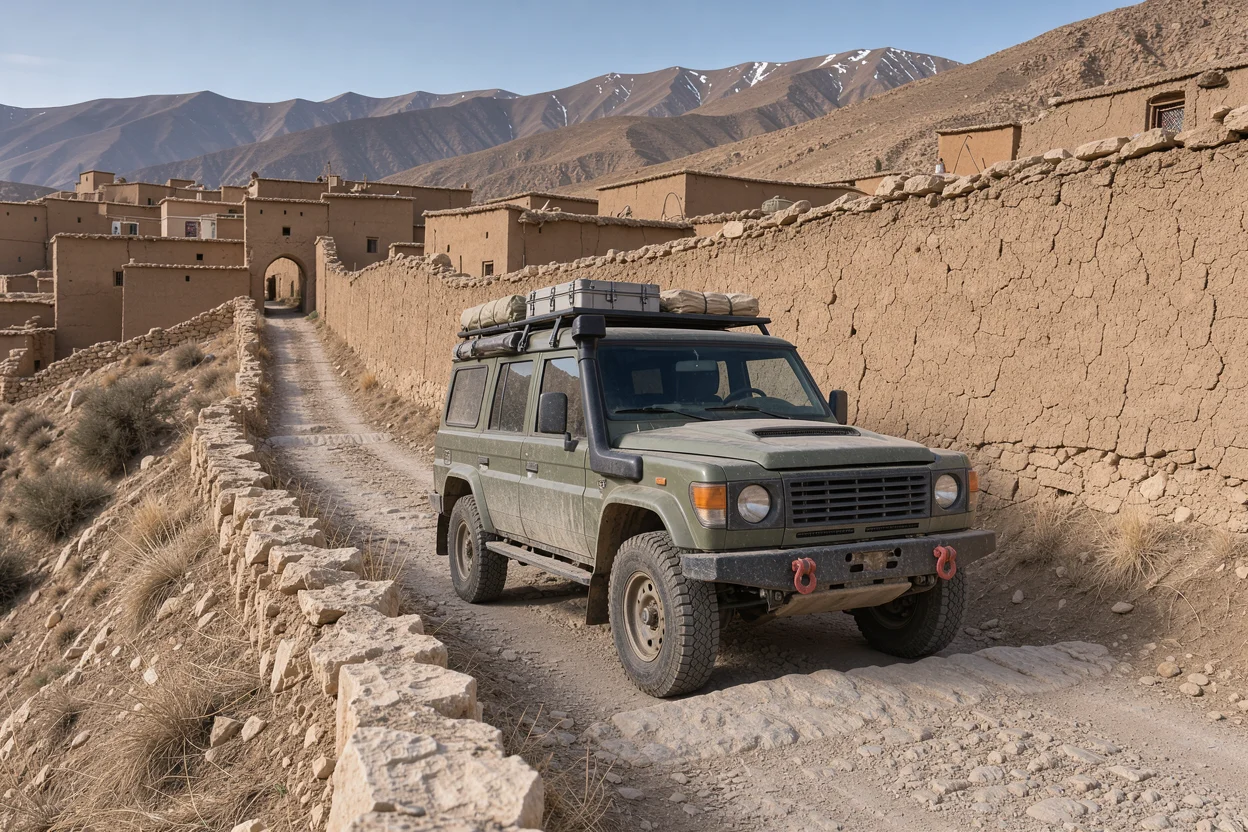
Clarify the vehicle's true external width, including wing mirrors and auxiliary awnings, to understand whether it can pass through village gateways without constant manual guidance.
Confirm what recovery points are fitted to both front and rear chassis rails, ensuring they are rated for complex, angled extractions on steep incline gradients.
Hypothetical Decision Example: Selecting a Platform for Remote Passes
Consider this hypothetical scenario: an overlanding couple must choose between an all wheel drive high roof campervan and a modified traditional four wheel drive station wagon for a three week autumn expedition across high altitude passes.
The campervan offers full standing height, an internal heated shower, and a permanent workspace, making cold mountain evenings highly comfortable. However, its long wheelbase increases the risk of grounding the chassis on sharp crests, and its overall height prevents access under low rocky overhangs found in famous gorge routes.
The station wagon provides robust four wheel drive capability with low range transfer gears, durable solid axles, and a narrow track that navigates tight switchbacks without multi point turns. Living space is reduced to a rooftop tent and an external kitchen, requiring greater weather tolerance from the occupants.
In this example, if the couple's primary objective is venturing beyond graded routes into remote connecting passes, the traditional station wagon proves the more capable and less restrictive choice despite its modest living space.
Logistics, Seasonal Windows, and Missing Information
Publicly available route notes often fail to account for the speed at which mountain infrastructure changes. A route described in older guidebooks as an impassable trail may now be smooth asphalt, while a previously benign dirt road may have collapsed following seasonal winter runoff.
Timing is paramount. Late spring and early autumn typically offer the most stable conditions, avoiding severe winter snow on high passes and oppressive summer heat on southern desert approaches. Even during favourable months, mountain weather can shift from clear skies to torrential storms within hours.
Remote resupply planning must factor in fuel consumption spikes. Driving steep, low range tracks increases fuel burn significantly compared to flat highway travel. Carry adequate filtration for drinking water, as natural sources in populated valleys often carry agricultural and pastoral runoff.
Common questions
What tyre tread profile is best suited for mountain routes?
A robust all terrain tyre with reinforced sidewalls generally offers the best balance of tarmac manners, puncture resistance over sharp limestone, and adequate grip on loose gravel passes.
How should an overlander handle narrow single track passes with oncoming traffic?
Customary etiquette generally requires the descending vehicle to yield or reverse to a wider passing section, as the climbing vehicle faces greater mechanical strain when restarting on steep gradients.
Are specialised recovery boards necessary in rocky mountain terrain?
Yes, heavy duty composite recovery tracks can be invaluable not just for mud, but for bridging deep wheel washouts and building temporary ramps over stepped rock ledges.