
AI assisted editorial. Published following automated quality checks, not independent fact verification. Confirm factual, safety and legal matters with appropriate professionals.
The short answer
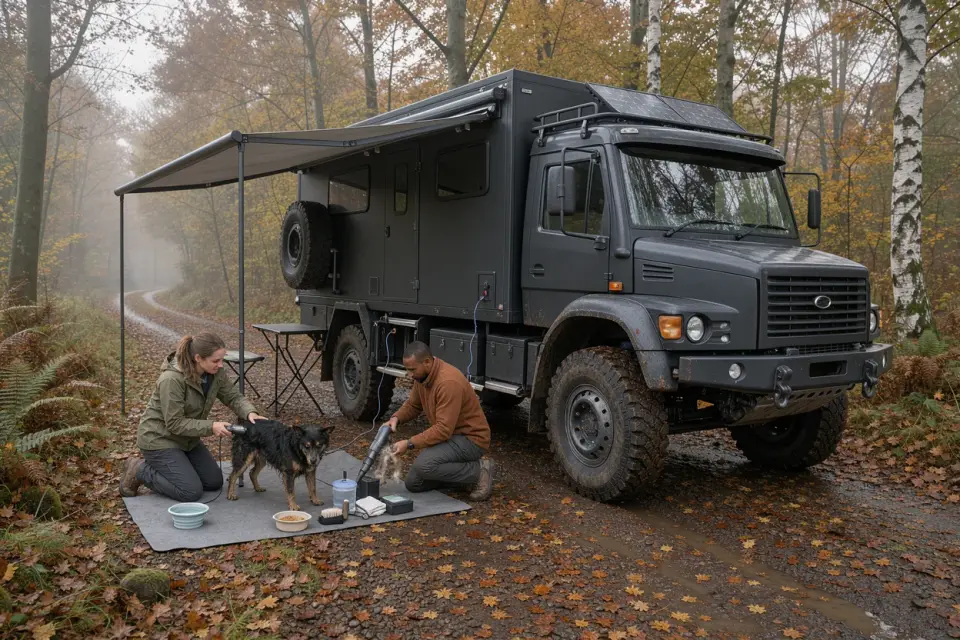
Travelling with dogs or cats adds companionship to overlanding, but managing mud, matted fur, and clean hydration inside a compact camper requires deliberate gear choices. This guide sets out what to evaluate when selecting pet care tools such as grooming clippers, grooming vacuums, and portable feeding items ensuring they align with limited vehicle power, water storage, and living space.
Key takeaways
- Consider vehicle electrical constraints by checking whether pet grooming or feeding devices use low draw USB, 12V sockets, or household inverters.
- Evaluate mud and shedding management to prevent trail debris and wet fur from overwhelming small vehicle interiors.
- Prioritise grooming and feeding tools that disassemble easily and can be cleaned without consuming precious onboard drinking water.
- Review manufacturer descriptions critically to confirm appliances fit your rig layout before dedicating valuable storage volume.
The Realities of Animal Care on Overland Journeys
Travelling off the beaten track with dogs or cats turns an overland rig into a mobile home for both human and animal. While sharing remote campsites with four legged companions brings immense joy, vehicle based travel exposes pets to dust, burrs, mud, and fluctuating climates that differ markedly from domestic routines. Inside a compact campervan, rooftop tent setup, or expedition truck, loose fur and tracked in grit quickly migrate into sleeping areas and living quarters.
Managing pet hygiene on the road requires deliberate preparation rather than afterthought solutions. Unchecked mud and damp coats can lead to skin irritation for the animal and persistent moisture issues inside your vehicle. At the same time, overlanders must manage finite resources, meaning grooming and feeding gear must not create excessive demands on fresh water tanks or dual battery electrical setups. Evaluating equipment specifically against the limitations of mobile living ensures both animal comfort and camp cleanliness.
Power, Storage, and Durability Considerations
Space and power represent the two hardest boundaries in any overland build. When browsing pet appliances, always examine how a tool charges or runs. Devices that charge via universal USB C or standard 12V vehicle outlets eliminate the need to run an inverter, which spares battery capacity for off grid refrigeration and lighting. If a product requires standard 230V alternating current, consider whether your inverter setup can support it alongside other campsite demands.
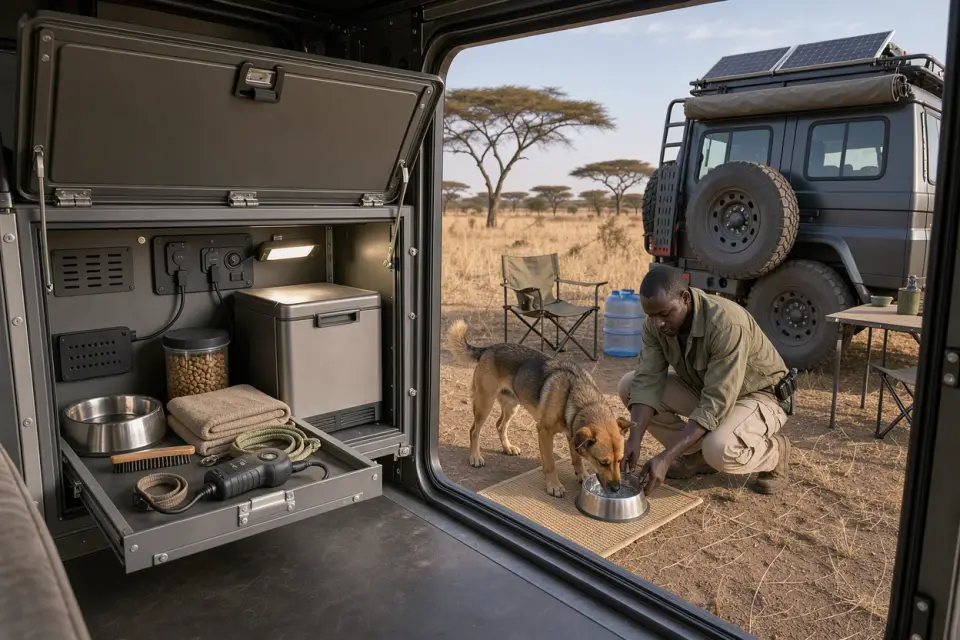
Storage footprint is equally critical. Every piece of kit competing for locker space must earn its keep. Look for multi functional equipment, such as grooming kits that pack into modular cases or clippers with interchangeable guards, rather than bulky single purpose hardware. Durability matters just as much: road vibration, corrugations, and dust ingress can quickly disable delicate consumer electronics. Sturdy housings, secure latches, and sealed switches are key indicators that an item can handle life inside an overland rig.
Evaluating Oneisall for Vehicle Based Travel
As a relevant partner example in this category, Oneisall · UK provides a range of pet appliances, with brand descriptions noting pet grooming vacuums, clippers, water fountains, and automated feeders designed for dogs and cats both at home and on the road. For overlanders, these categories address everyday challenges: keeping shedding under control inside tight vehicle spaces and maintaining reliable hydration and feeding while moving between camps.
When considering items from the Oneisall lineup for an overland build, prospective buyers should assess how individual items fit their vehicle layout. Cordless clippers, for instance, offer practical utility for trimming matted trail burrs or muddy paws outside the vehicle without managing trailing power leads. Grooming vacuums require you to review your rig battery capacity, dust canister capacity, and stowage volume. Similarly, automated feeders and fountains must be assessed for spill resistance during vehicle movement and ease of cleaning when away from domestic running water.
Practical Comparison Framework for Camp Pet Gear
To select the right pet kit for your vehicle layout, compare options using four distinct overland criteria: Power Draw, Fresh Water Footprint, Pack Volume, and Animal Stress. Traditional manual kit such as standard wire slicker brushes, damp microfibre towels, and stainless steel travel bowls draws zero electrical power and packs into minimal space, but relies heavily on manual labour and water wipes to clear fine trail grit from thick coats.
Rechargeable cordless tools provide an intermediate balance. Cordless clippers and compact pet vacuums collect loose hair directly at camp, preventing fur buildup inside the camper. However, they require spare battery capacity and periodic charging logistics. Integrated powered appliances offer high convenience by capturing hair before it settles into camper fabrics, but they demand designated locker space and a reliable leisure battery. Weighing these tradeoffs helps you match gear to your trip length and rig capability.
Hypothetical Decision Example: Equipping an Overland 4x4
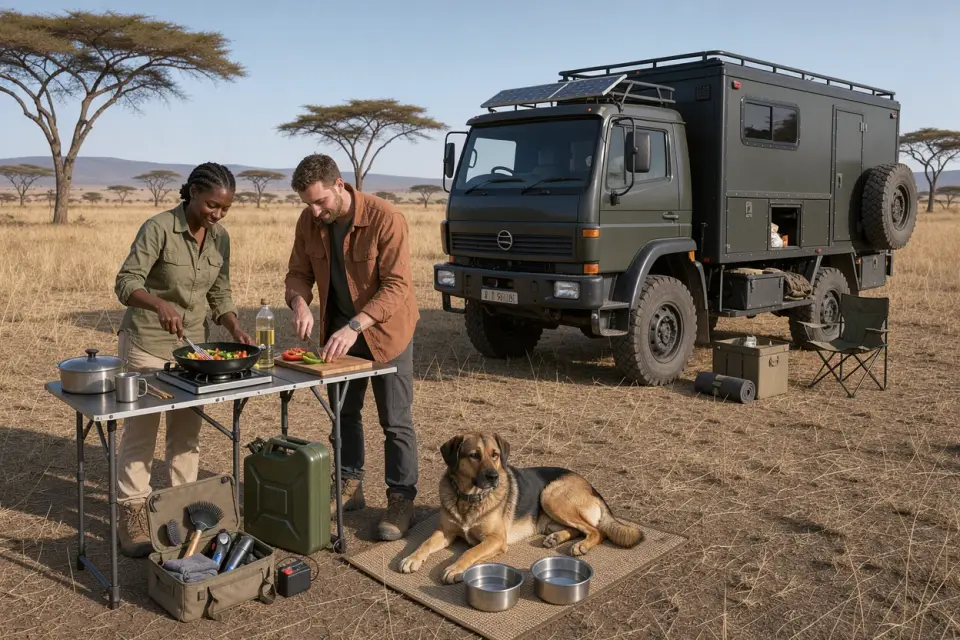
Consider a hypothetical couple touring in a mid sized 4x4 with a rooftop tent and a medium sized double coated dog. Their vehicle features a 100Ah lithium auxiliary battery, a 12V fridge, and 40 litres of onboard drinking water. Their primary frustration is fine sand and wet undercoat transferring into the tent after daily trail walks. They need a pet care setup that removes grit without wasting drinking water on frequent hose downs.
In this scenario, rather than carrying a high draw corded grooming station that strains their modest 12V electrical setup, the sensible choice is a compact, USB rechargeable clipper for trimming muddy paws and sanitary areas, paired with a low draw cordless pet vacuum or manual shedding rake. Water stays reserved for drinking and cooking, battery consumption remains negligible, and loose hair is captured before the dog enters the sleeping quarters.
Questions to Ask Before Purchasing Pet Care Hardware
Before buying pet care appliances for life on the road, ask retailers and manufacturers specific questions about mobile use. Start by clarifying charging requirements: 'Can this device recharge directly from a 5V USB or 12V DC source, or does it require a dedicated mains wall adapter?' Understanding this prevents unexpected inverter demands at camp.
Inquire about maintenance and spares: 'How easily can the filters, blades, or water reservoirs be cleaned when municipal mains pressure is unavailable?' Also check sound output: 'What are the decibel levels during operation?' Quiet appliances are crucial in remote campgrounds where high pitched motor noise can distress wildlife, irritate neighbouring campers, and frighten sensitive pets in unfamiliar surroundings.
Common questions
Can pet grooming vacuums run directly off an overland 12V leisure battery?
Some compact grooming tools run on internal batteries recharged via standard USB or 12V ports, whereas mains powered units require an inverter. Check the rated wattage and voltage before purchase to ensure your electrical system can sustain the load.
How can I prevent water fountains or bowls from spilling while driving?
Standard open fountains are prone to sloshing over rough tracks. Look for splash resistant travel bowls with floating plates, or stow electric fountains securely inside a sealed locker while the vehicle is in motion, deploying them only at camp.
How should I manage pet hygiene on long trips with limited water?
Relying on full baths rapidly depletes vehicle water tanks. Combining targeted clippers for paw fur, a dry slicker brush, and pet safe dry foam or microfibre towels removes trail dirt effectively while conserving drinking water.
Is it safe to leave automated pet feeders inside an overland camper?
Automated feeders work well in stationary setups, but road vibration can dislodge lids or hopper mechanisms. Choose sturdy designs with locking lids to prevent food spilling or curious pets breaking in during transit.
Partner discounts in this guide
Overland Finds may earn a commission from qualifying purchases made by customers in the UK through this link, at no additional cost to you. This does not imply independent product testing or endorsement. Confirm current terms and availability with the partner.

Oneisall · UK
Pet grooming vacuums, clippers, water fountains and feeders from Oneisall for dogs and cats, at home or on the road.
- Valid in
- UK
- Discount
- UK offer · Shop pet grooming kits