
AI assisted editorial. Published following automated quality checks, not independent fact verification. Confirm factual, safety and legal matters with appropriate professionals.
The short answer
Selecting toys and play gear for overland travel requires balancing engagement with storage limits, noise levels, and packability. This guide outlines how to assess travel toys for durability and containment, highlighting Joyreal Toys · USA by Joyreal Toys as a partner example of Montessori inspired busy boards and sensory play items designed for early development.
Key takeaways
- Prioritise self contained play items with tethered or minimal loose parts to prevent pieces disappearing under vehicle seats.
- Evaluate physical footprint and packability, choosing flat sensory boards or folding tables over bulky rigid structures.
- Differentiate between partner provided catalogue descriptions and your specific space, age, and travel constraints before buying.
- Verify cleaning methods and materials to ensure toys can withstand road dust, outdoor use, and frequent wipe downs.
Evaluating Toys and Play Equipment for Overland Travel
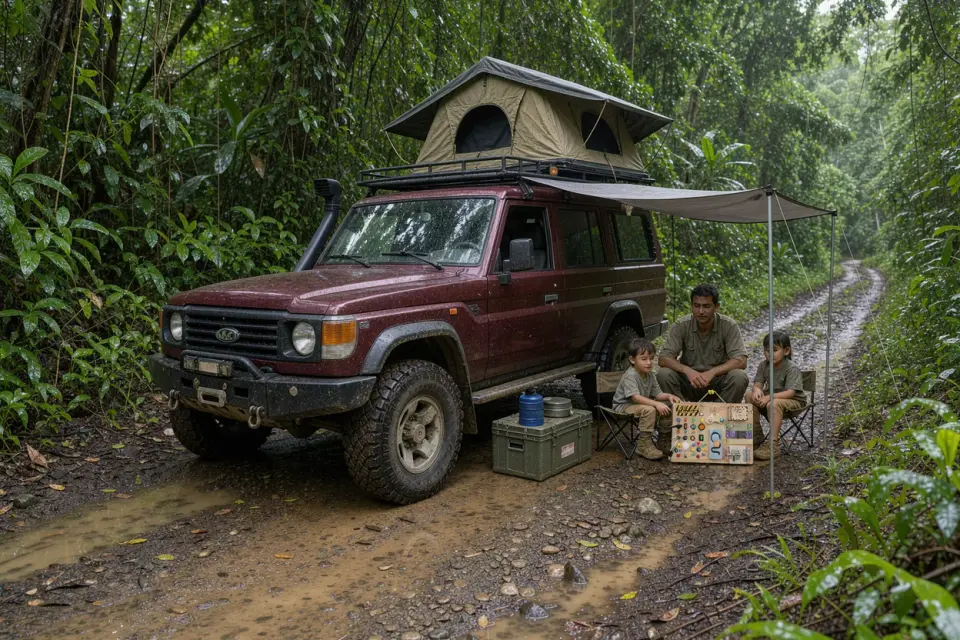
Travelling with babies, toddlers, or young children in an overland vehicle or camper introduces unique constraints that rarely apply in a domestic playroom. Space is strictly finite, meaning every item brought along must justify its presence through versatility, developmental value, and durability. Parents frequently discover that standard home toys lead to frustration on the move, particularly when sets feature dozens of tiny loose parts that tumble into hard to reach footwells and crevices during transit.
When assessing play gear for travel, engagement quality matters far more than quantity. Toys that invite repeated, open ended exploration such as tactile latches, sensory switches, or varied textures tend to sustain interest during long driving stretches or wet weather shelter days. Passive entertainment often loses appeal quickly, whereas fine motor challenges encourage independent focus without the battery dependency or auditory fatigue associated with flashing, noisy electronic gadgets.
Noise level is another vital consideration in the close confines of a cab or living module. Toys with high pitched chimes, repeating sound bites, or loud clicking mechanisms can quickly become wearing for the driver and passengers alike. Opting for quiet, tactile, and sensory led items ensures a calmer cabin atmosphere while still giving young minds an absorbing outlet.
Partner Overview: Joyreal Toys · USA
As a partner example within the play category, Joyreal Toys · USA discounts a range focused on early childhood development. According to partner provided descriptions, the brand features Montessori busy boards, wooden activity tables, sensory toys, and beginner communication devices, aimed at keeping young children learning at home or while travelling.
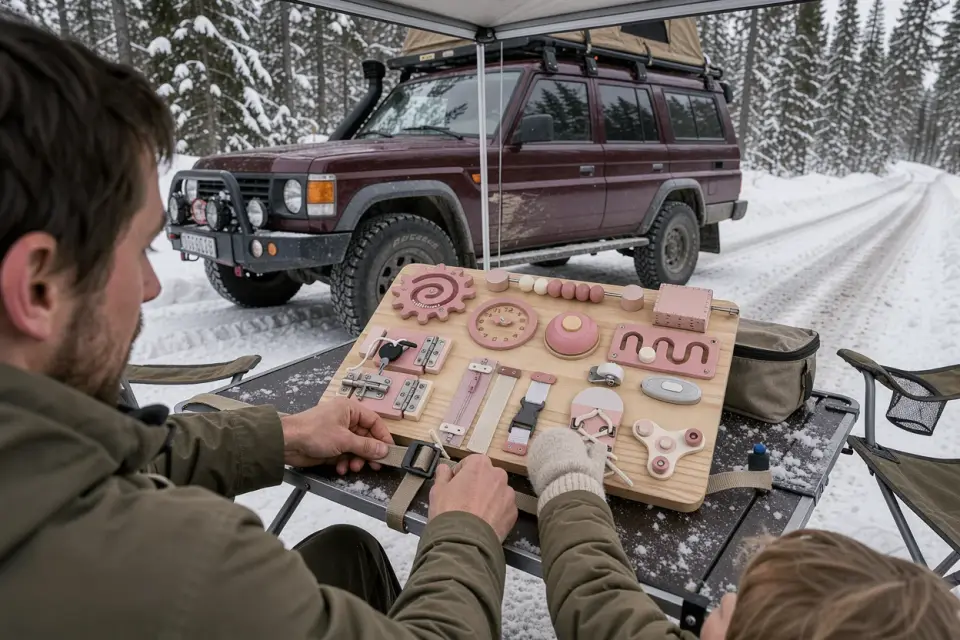
These product types directly address common travel needs by packaging multiple tactile activities into single, integrated surfaces. A Montessori style busy board, for instance, typically incorporates everyday manipulation tasks such as buckles, zips, latches, or switches onto a compact board, allowing children to practice coordination without requiring a wide spread of loose components.
Prospective buyers should distinguish partner marketing claims from their own practical reality. While an activity table might provide an excellent hub at an extended campsite base, its rigidity may prove awkward inside a compact four wheel drive. Conversely, slim busy boards and portable communication aids pack flat into seatback pockets, making them far more compatible with daily vehicle living. Reviewing exact dimensions and transportability against your vehicle layout is essential before making a purchase.
Practical Comparison Framework for Travel Play
To decide which style of toy best suits an upcoming trip, consider comparing potential purchases across three functional categories: Integrated Sensory Boards, Collapsible Activity Stations, and Loose Component Sets.
Integrated Sensory Boards (such as busy boards) score exceptionally well on portability and self containment. Because features are mounted or tethered directly to a single panel, they generate zero cabin litter and slip easily between storage boxes. The trade off is fixed novelty: once a child masters every latch or dial, their engagement may plateau over time.
Collapsible Activity Stations (including folding sensory tables or lap desks) offer a dedicated play surface for varied activities, from drawing to tactile sorting at camp. They excel during longer rest stops where you set up an outdoor living space. However, their bulkier frames require dedicated cargo room and cannot realistically be deployed while driving.
Loose Component Sets (such as building blocks or sorting cups) provide maximum open ended creative play that adapts across multiple age stages. The obvious downside on the road is containment: losing essential pieces under seat tracks or on gravel pitches can quickly render the set incomplete, requiring disciplined pack away habits.
Questions to Ask Retailers and Brands Before Purchasing
Before investing in travel play gear, asking the right questions helps you avoid buying items unsuited to outdoor and vehicular life. Start by inquiring about component tethering: 'Are all latches, beads, and cords securely fastened to the base, or are there small detachable parts that could pose a choking hazard or get lost in vehicle tracks?'
Next, ask about material care and cleaning routines: 'Can the wooden surfaces and fabric elements be sanitised with damp wipes, and how does the material react to outdoor moisture and road dust?' Untreated timber or porous felts can absorb spills and grime, making cleanable sealed surfaces preferable for camping.
Finally, check suitability for travel dimensions: 'What are the exact packed dimensions and weight, and does the item include an integrated handle, strap, or travel pouch for transport?' A toy with built in hanging straps can often be affixed to the rear of a front seat, providing an accessible dashboard for seated toddlers.
Hypothetical Decision Example: Selecting Play Gear for a Family Camper
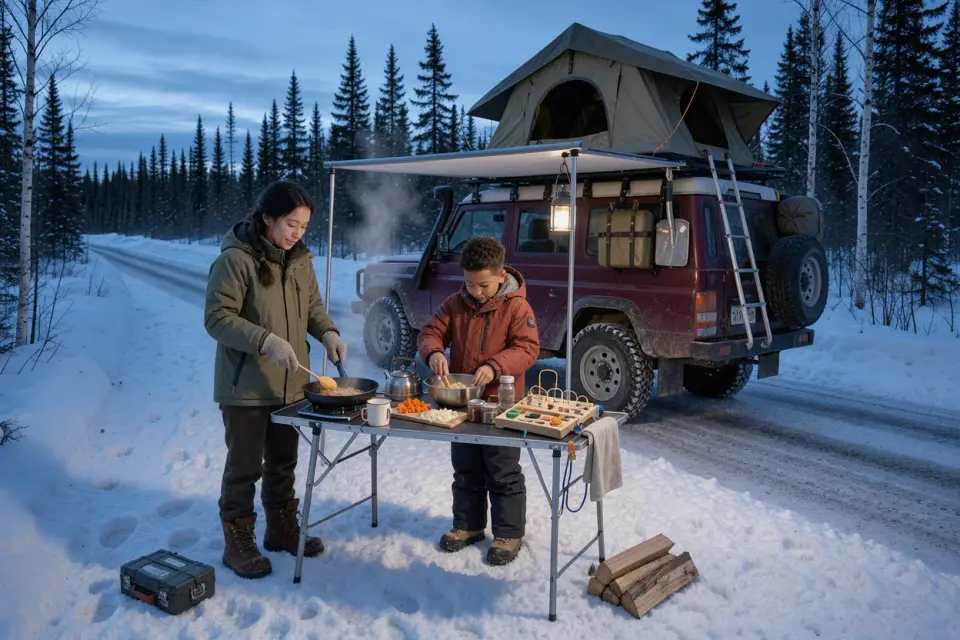
Consider a hypothetical family preparing for a three week overland trip in a compact van with a two year old child. Storage is restricted to two modular plastic crates under the rear bench, and the itinerary includes several four hour driving stretches punctuated by remote bush camps.
The parents evaluate two options: an integrated wooden busy board with switches and buckles, versus a small wooden activity table with interchangeable sensory bins. Although the activity table provides an attractive surface for campsite messy play, packing its rigid legs would take up nearly half of one storage box, leaving insufficient space for spare clothing and bedding.
In this scenario, choosing the slim busy board proves the more practical decision for transit. It slots neatly into the seatback pocket in front of the child's car seat, offering quiet, self contained entertainment on transport stages without consuming precious boxed storage. To supplement creative play at camp, the parents pair the board with a small, flexible silicone bucket and scoops that nest completely flat, demonstrating how space compromises shape a balanced travel kit.
Common questions
What makes a toy truly travel friendly for vehicular travel?
A travel friendly toy is self contained, durable, and flat packing. It avoids unattached small pieces that scatter during transit, operates quietly without reliance on constant battery changes, and wipes clean easily after encountering outdoor dust or food spills.
How do Montessori busy boards suit long road trips?
Montessori busy boards aggregate multiple fine motor challenges such as buckles, keys, and toggles onto a single manageable panel. This keeps toddlers cognitively engaged and focused through tactile problem solving while seated, without creating clutter in the rear footwells.
Are wooden toys practical for camping and outdoor overlanding?
Wooden toys can be very practical due to their physical sturdiness and tactile appeal, provided they have a sealed, wipe clean finish. Unsealed wood can warp or absorb dampness if left outdoors, so ensuring they are stored inside dry vehicle compartments is important.
How many toys should parents pack for an overland trip?
Packing fewer, higher quality open ended items is generally better than carrying large toy boxes. A rotation of two or three compact sensory or construction toys, swapped periodically, maintains novelty without overwhelming limited living quarters.
Partner discounts in this guide
Overland Finds may earn a commission from qualifying purchases made by USA users through this link, at no additional cost to you. This does not imply independent product testing or endorsement. Confirm current terms and availability with the partner.

Joyreal Toys · USA
Browse Montessori busy boards, wooden activity tables, sensory toys and beginner communication devices from Joyreal Toys, made to keep little ones learning at home or on the road.
- Valid in
- USA
- Discount
- USA offer · Shop Montessori and sensory toys