
AI assisted editorial. Published following automated quality checks, not independent fact verification. Confirm factual, safety and legal matters with appropriate professionals.
The short answer
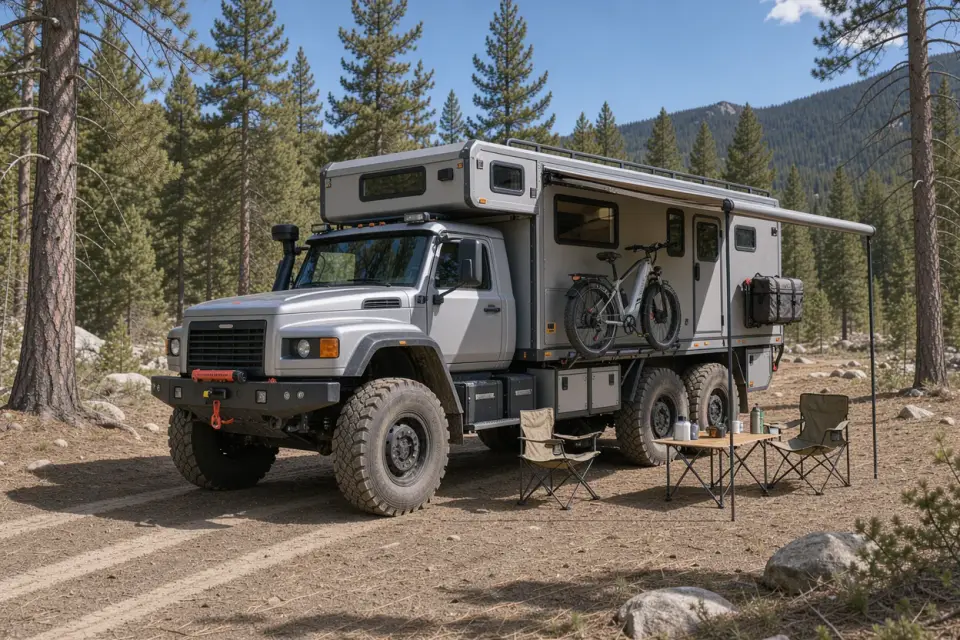
Adding an electric bicycle to an overland vehicle setup provides nimble local transport around camp, easy trail reconnaissance, and effortless supply runs without packing away your living quarters. This guide outlines how to assess e bikes for life on the road, examining weight allowances, charging infrastructure, and partner offerings such as DUOTTS.
Key takeaways
- Assess your vehicle payload and mounting options thoroughly, as electric bikes add considerable rear axle or roof weight.
- Verify off grid charging capability by balancing battery watt hour ratings against your rig's auxiliary 12V or 230V power system.
- Review local land access rules and trail designations before riding, as e bike access regulations vary across different regions.
- Inspect frame geometry, folding mechanisms, and weather seals to ensure resilience against off tarmac dust, vibration, and road spray.
The Role of E Bikes in Vehicle Based Travel
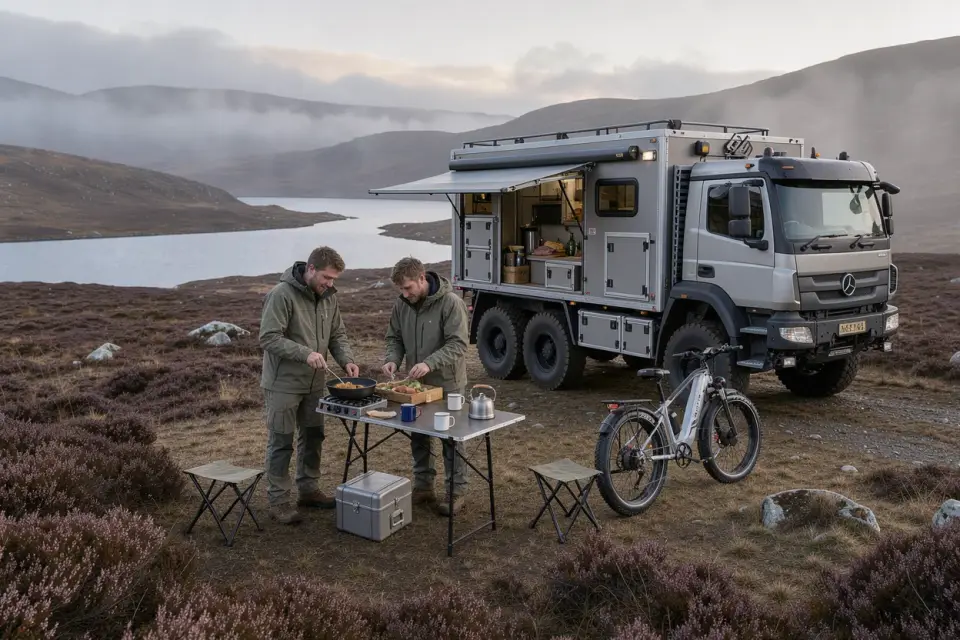
In overland travel and vehicle based camping, setting up a pitch often involves deploying awnings, levelling ramps, and roof tents. Once settled, breaking down the entire camp simply to run an errand, scout an unmaintained trail, or collect fresh bread from a village five miles away quickly becomes inconvenient. A secondary mobility option transforms camp management by keeping your primary touring rig stationary while you remain completely mobile.
Electric bicycles have established a clear role in modern adventure travel. They allow drivers to venture into restricted or narrow paths where four wheel drive vehicles cannot tread, whether due to environmental protections, track widths, or low tree canopies. Furthermore, pedal assist helps travellers explore undulating terrain or headwind prone plains without returning to camp physically exhausted, balancing active outdoor movement with practical utility on longer expeditions.
Core Practical Considerations for Overlanding Rigs
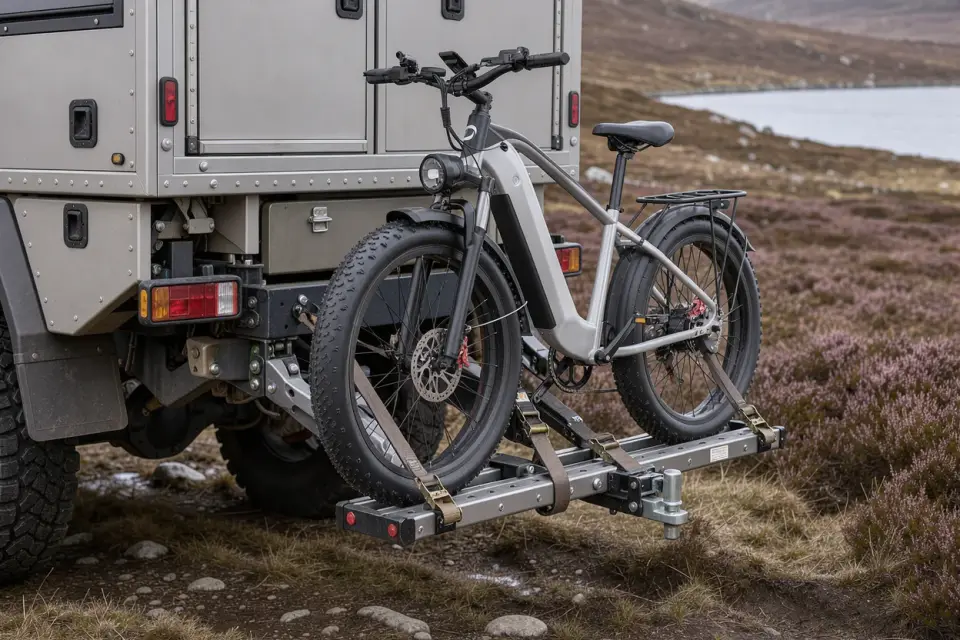
Integrating any two wheeled sports and outdoors equipment onto an overland rig requires realistic planning around weight, space, and electrical capacity. E bikes weigh substantially more than traditional pedal cycles due to their integrated motors and lithium battery packs. Placing multiple heavy bikes on a rear hitch carrier or rear door ladder directly impacts departure angles, axle weight distribution, and chassis fatigue on corrugated tracks.
Power replenishment is another critical pillar for life on the road. Most electric bikes utilise lithium ion battery packs requiring dedicated mains style charging blocks. Overlanders must calculate whether their auxiliary leisure battery bank, solar panels, and inverter can comfortably support regular e bike battery recharging without draining critical camp loads such as 12V fridges, water pumps, and internal lighting during protracted periods of stationary camping.
Exposure to harsh road environments represents a final consideration. Fastened to the exterior of an expedition vehicle, outdoor gear is subjected to fine dust, persistent vibration, salt spray, and heavy driving rain. Prospective buyers should inspect the quality of motor enclosures, cable routing, electronic displays, and battery locking mechanisms to verify they can endure demanding journeys beyond smooth paved surfaces.
Evaluating DUOTTS within the Sports & Outdoors Category
Within the outdoor travel gear landscape, DUOTTS is an equipment provider offering the DUOTTS, Premium Electric Bikes · Multi Geo line. The brand markets its range as featuring powerful motors, long range batteries, and accessible value, targeting riders who desire e bikes suitable for both urban commutes and outdoor adventures across supported European markets.
When considering DUOTTS as an overland companion, travellers must distinguish between manufacturer marketing language and their own specific journey requirements. A powerful motor and large battery can be advantageous when ascending steep tracks around a mountain campsite, but they also result in a heavier frame to hoist onto vehicle racks. Overland buyers should check the exact motor wattages, battery capacities, and physical dimensions of DUOTTS models against their rig carrying capacity, local speed and power legality, and inverter limitations before committing.
Practical Comparison Framework: E Bike Styles on the Road
Choosing an appropriate machine depends largely on your vehicle layout, storage capacity, and planned trail use. A standard full frame mountain e bike discounts superb stability, robust suspension, and genuine off road exploration capability. However, its rigid dimensions necessitate heavy duty exterior bike racks, which remain exposed to weather, trail grit, and potential opportunistic theft when your vehicle is parked unattended in transit.
Compact folding e bikes provide an alternative approach by prioritising stowing efficiency. These models can often collapse into an internal boot space, under bed garage, or pick up bed, protecting delicate electronics from harsh weather and road grime. The tradeoff usually lies in smaller wheel diameters and shorter wheelbases, which deliver a less forgiving ride over rocky tracks, deep sand, or rutted forest trails.
Utility or fat tyre adventure e bikes sit between these categories. Their wide tyres offer natural dampening and improved floatation across loose surfaces such as beach gravel or mud around camp. Yet, their bulky footprints and wide handlebars require tailored rack solutions and add significant overall payload to your vehicle, making them best suited to larger campervans or trucks with generous gross vehicle weight margins.
Key Questions to Put to Bike Retailers Before Purchase
Before purchasing an electric bike for overland usage, ask the supplier or manufacturer specific technical questions regarding remote ownership. Start by asking: What is the exact total weight of the bicycle including the battery, and what is the stripped weight with the battery detached? Knowing both figures helps you determine whether your vehicle bike carrier can handle the load and whether lifting the bike onto high mounts is manageable.
Inquire about charging specifications: What is the input wattage and amperage of the included battery charger, and can the battery be safely charged while detached from the bicycle frame? Detachable charging allows overlanders to bring the power pack inside a climate controlled camper cabin to charge from an inverter, shielding it from external temperature extremes that can impair lithium cells.
Finally, check warranty terms and parts availability: How does the manufacturer support replacement components, such as proprietary controllers, display units, or spare battery keys, when the owner travels across multiple international regions? Reliable access to replacement parts is essential when your journey takes you far from main retail hubs.
Hypothetical Decision Example: Outfitting an Overland Rig
Consider a hypothetical couple touring southern Europe in a medium wheelbase campervan. Their primary vehicle features a fixed rear rack rated for a maximum load of 50 kilograms, alongside a 200Ah lithium leisure battery system fed by 300 watts of rooftop solar. They want secondary transport to navigate steep historic towns and access scenic walking trails while leaving their camper parked at rural campsites.
In this scenario, selecting two standard utility e bikes weighing 28 kilograms each would exceed their rack rating by six kilograms, introducing dynamic stress on gravel tracks. Instead, they evaluate options that allow battery removal during transit, reducing individual bike frame weights to 23 kilograms each and bringing the mounted weight safely under the 50 kilogram threshold. The detached batteries can then travel secured inside the living space and be recharged via the inverter on sunny days, demonstrating how physical parameters guide the final equipment choice.
Common questions
Can I charge an electric bicycle from my vehicle's 12V auxiliary system?
Yes, provided your setup includes a correctly sized pure sine wave inverter or a dedicated 12V to e bike DC step up charger. You must calculate the charger's wattage draw against your leisure battery capacity to avoid over discharging your onboard power reserves while off grid.
How do I protect an exterior mounted e bike from road dust and weather?
Use a durable, water resistant bike cover tailored for vehicle racks, remove the battery and digital display for indoor storage, and apply protective terminal caps over exposed electrical contacts to keep out fine grit, vibration wear, and road spray during long transit stages.
Are electric bikes legal on trails and public roads across all countries?
No. E bike regulations, maximum motor power ratings, throttle permissions, and speed limits vary significantly across international borders and trail systems. Travellers should verify regional legislation and land use designations before operating e bikes in unfamiliar jurisdictions.
What maintenance items should overlanders carry for e bikes on remote trips?
Essential spares include a compatible tyre pump, puncture repair materials, spare inner tubes, a compact multi tool, wet chain lubricant, replacement brake pads, and an extra charger or battery key to manage minor trailside issues without seeking a workshop.
Partner discounts in this guide
Overland Finds may earn a commission from qualifying purchases made by customers through this link, at no additional cost to you. This does not imply independent product testing or endorsement. Confirm current terms and availability with the partner.
DUOTTS, Premium Electric Bikes · Multi Geo
Discover DUOTTS electric bikes featuring powerful motors, long range batteries and exceptional value. Explore premium e bikes for commuting and outdoor adventures, with shipping across supported European markets.
- Valid in
- Multi Geo
- Discount
- Electric bikes with powerful motors and long range batteries.