
AI assisted editorial. Published following automated quality checks, not independent fact verification. Confirm factual, safety and legal matters with appropriate professionals.
The short answer
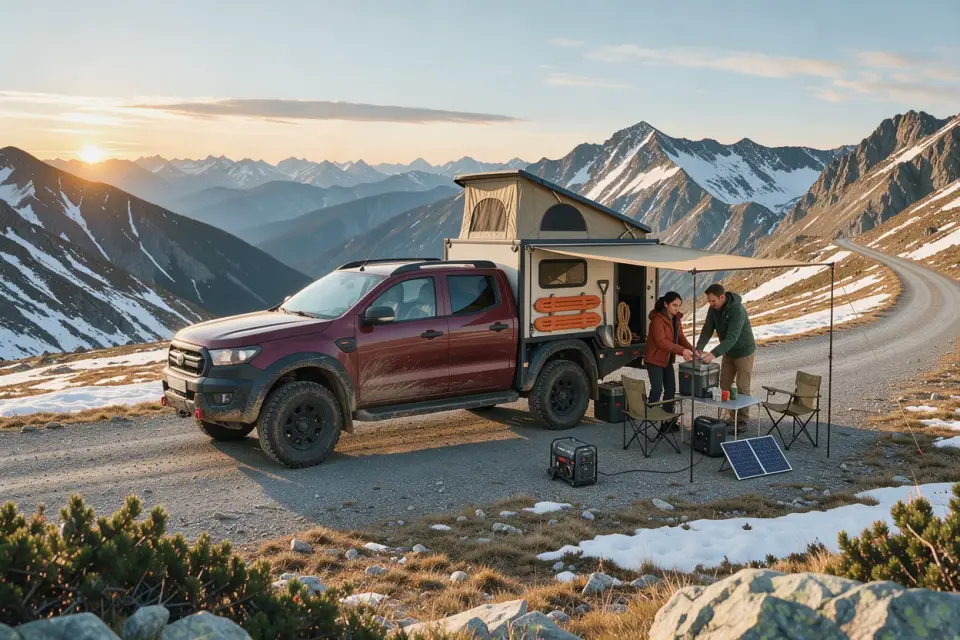
Selecting motorhome and camping equipment requires balancing vehicle payload, living space, and power resilience. Camper Nation · UK by Camper Nation supplies equipment such as awnings, portable power stations, and camping generators; this guide outlines key overlanding considerations, functional trade offs, and practical buying questions for vehicle based adventures.
Key takeaways
- Audit available vehicle payload and storage volume before selecting bulky hardware such as awnings or fuel generators.
- Evaluate whether your touring style favours silent, zero emission power stations or the sustained output of camping generators.
- Verify fixing brackets, rail compatibility, and weather sealing before buying shelter or exterior hardware for an overland rig.
- Camper Nation · UK provides equipment tailored for touring caravans and motorhomes that can be adapted to self contained overland travel.
Adapting Motorhome and Camping Equipment for Overland Rigs
Vehicle based adventure travel places unusual demands on interior and exterior equipment. While purpose built overland hardware often carries a heavy industrial aesthetic, the broader caravan and motorhome retail sector discounts mature, highly functional solutions designed for mobile living. Products such as modular awnings, high capacity auxiliary power, and compact outdoor cooking systems provide practical comfort when camping off grid.
When browsing commercial retailers such as Camper Nation · UK, it helps to approach their catalogue through the lens of self reliant travel. Camper Nation describes its UK focused selection around caravan and motorhome equipment, highlighting items like awnings, portable power stations, and camping generators. For an overland traveller, the goal is identifying which of these items fit the physical constraints of a four wheel drive camper, converted van, or expedition truck.
The primary challenge in adopting motorhome hardware for overland routes lies in vibration resistance and physical bulk. Standard motorhome equipment is typically engineered for tarmac touring and serviced campsites. When fitting such gear to an overland rig that encounters corrugations, unpaved tracks, and variable climates, buyers must assess structural mountings, chassis clearance, and housing materials with care.
Awnings and Exterior Shelters: Balancing Space and Simplicity
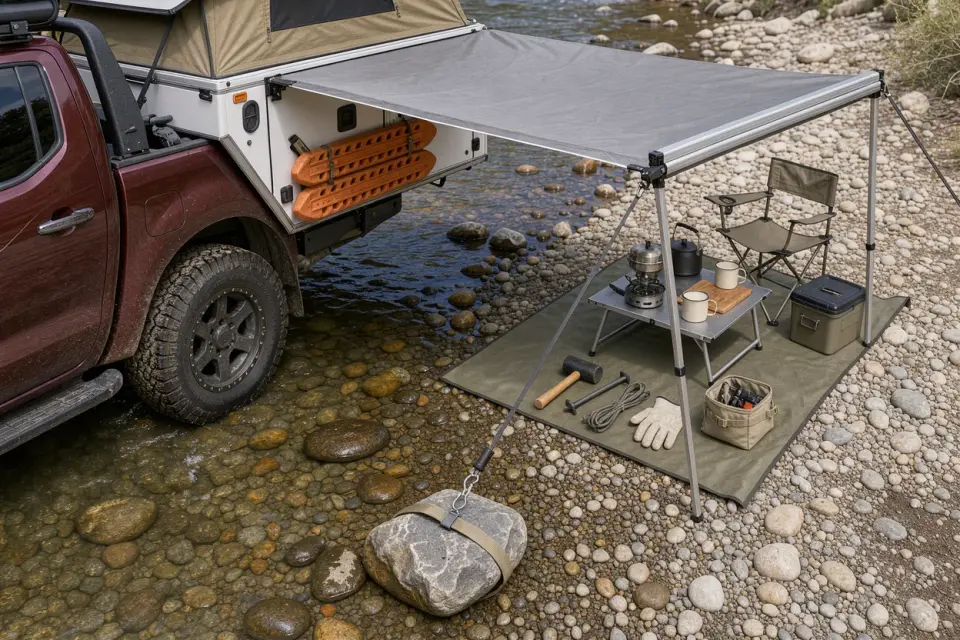
Creating functional exterior living space is essential when living out of a vehicle for extended periods. A reliable awning expands your usable footprint, providing shade during hot midday halts and rain protection when preparing meals outside. Motorhome retailers offer various shelter formats, ranging from lightweight roll out canopies and inflatable drive away awnings to rigid cassette units mounted directly to a roof rack or body rail.
Each format presents distinct trade offs for overlanders. Heavy cassette awnings offer rapid deployment during brief roadside stops, but they introduce high mounted lateral weight that can adversely influence vehicle handling on uneven terrain. Conversely, freestanding or drive away shelters provide an enclosed basecamp that remains intact if you depart for day trails, yet they require time to pitch, pack down, and dry out before transit.
Before selecting an awning, check the mounting points against your vehicle structure. Ensure that the fabric, zip fixtures, and anchor pegs are rated for gusty conditions typical of exposed coastal headlands and moorlands. Simpler mechanisms with fewer moving joints tend to withstand trail vibration and dust ingress better over prolonged journeys.
Auxiliary Power: Portable Power Stations versus Fuel Generators
Electrical autonomy determines how comfortably you can operate 12 volt compressor fridges, water pumps, lighting, and communication devices in remote regions. Equipment retailers such as Camper Nation feature both portable power stations and conventional camping generators to solve off grid energy demands, and each technology serves very different operational profiles.
Portable power stations integrate lithium batteries, charge controllers, and inverters within an all in one enclosure. They run silently, emit no fumes, require minimal mechanical upkeep, and can be kept inside the living quarters. For travellers relying on rooftop solar panels or alternator charging while driving, a battery station provides a tidy, modular bridge between campsite comfort and remote functionality.
In contrast, portable camping generators deliver robust, sustained electrical output regardless of cloud cover, seasonal daylight hours, or vehicle movement. However, they demand safe exterior ventilation, dedicated fuel carriage, periodic oil servicing, and ongoing noise management. In many wild camping and sensitive nature environments, the sound and emissions of an engine generator may be disruptive or strictly prohibited.
Buyers should realistically assess their seasonal travel plans. Summer journeys across open landscapes often favour silent solar charged battery packs, while winter overlanding in high latitudes with heavy heater and charging demands may occasionally require the raw replenishment power of a generator.
Practical Comparison Framework for Gear Selection
To decide whether a particular motorhome accessory belongs on your overland build, evaluate it using a four factor practical framework: payload impact, deployment speed, serviceability, and environmental tolerance.
Payload impact addresses how significantly the item eats into your gross vehicle weight and usable internal storage. Heavy leisure equipment reduces the remaining capacity available for essential water, tools, and recovery gear.
Deployment speed reflects how easily the gear can be set up and stowed in adverse weather. Equipment that requires intricate assembly or delicate handling often gets abandoned after a few rainy evenings on the road.
Serviceability and environmental tolerance gauge whether the item can survive dust, mud, continuous road wash, and whether spare fittings or repair patches are readily procurable during long journeys away from home.
Questions to Ask Retailers Before Purchasing
Engaging directly with sellers or support desks helps verify whether standard touring equipment can handle your specific overland travel pattern. Consider asking the following questions prior to purchase:
Does this equipment include all mounting brackets and hardware required for my specific roof profile, van gutter, or expedition rack, or are specialist adaptors necessary?
What ingress protection (IP) rating or weather resistance standard does this power unit or generator carry for outdoor use in heavy rain and road spray?
Are spare parts, replacement awning fabric sections, or proprietary service components stocked locally for prompt dispatch if damaged on a trip?
What are the precise ventilation and clearance requirements for running fuel driven hardware or high output inverters within semi enclosed camp setups?
Hypothetical Decision Example: Outfitting a Touring Campervan
Consider a hypothetical overland traveller preparing a medium wheelbase van for a six week tour across northern Scotland and Scandinavia. The vehicle features limited internal space, a roof rack carrying two recovery boards, and an interior compressor fridge drawing consistent 12 volt power.
The traveller must choose between an enclosed inflatable drive away awning or a compact vehicle mounted roll out awning, as well as choosing between a 1,000 watt petrol inverter generator or a 1,500 watt hour portable power station.
Under this hypothetical scenario, the traveller opts for the vehicle mounted roll out awning and the portable power station. The roll out awning provides quick shelter for meal preparation along single track pull outs without consuming valuable cabin volume or requiring complex pitching on rocky ground. Meanwhile, the silent power station charges cleanly via the van's 12 volt supply while driving and preserves campsite tranquility in remote coastal bays, avoiding the need to transport flammable fuel canisters inside the vehicle.
Common questions
Can caravan and motorhome equipment be safely fitted to off road overland vehicles?
Yes, but buyers must evaluate mounting strength, vibration resistance, and payload limits. Motorhome items are often designed for tarmac roads, so robust brackets, thread locking fasteners, and secure internal stowage are essential when navigating corrugations and unpaved tracks.
When should an overlander choose a portable power station over a camping generator?
A portable power station is ideal for travellers who require silent operation inside their vehicle, zero emissions, and compatibility with vehicle 12 volt charging or solar panels. Generators suit prolonged stationary camps in winter conditions where solar gain is insufficient to keep batteries charged.
What is the primary trade off when adding a fixed vehicle awning?
A fixed awning provides rapid, convenient shade and weather protection at camp, but it adds continuous external weight, increases overall vehicle height, and creates aerodynamic drag that can affect fuel economy and clearance on overgrown trails.
What should UK buyers verify before purchasing equipment from Camper Nation · UK?
Buyers should confirm that product dimensions, mounting hardware, and electrical specifications match their vehicle configuration. It is also wise to check dispatch timeframes, warranty terms, and returns policies directly on the retailer website prior to travelling.
Partner discounts in this guide
Overland Finds may earn a commission from qualifying UK purchases made through this link, at no additional cost to you. This does not imply independent product testing or endorsement. Confirm current terms and availability with the partner.

Camper Nation · UK
UK only: explore caravan and motorhome equipment, including awnings, portable power stations and camping generators. Browse current discounts at Camper Nation.
- Valid in
- UK
- Discount
- Explore current discounts · UK only