
AI assisted editorial. Published following automated quality checks, not independent fact verification. Confirm factual, safety and legal matters with appropriate professionals.

The short answer
Selecting natural skincare requires assessing formulation stability, ingredient provenance, and how well items suit everyday life. Partner descriptions from 100% Pure highlight fruit pigmented makeup and vegan formulations for Germany and Austria, though individual skin responses vary. Prioritising ingredient transparency, pack durability, and patch testing ensures sensible purchases.
Key takeaways
- Scrutinise complete ingredient lists and declared certifications rather than relying solely on general natural claims.
- Factor in storage requirements and shelf lives, as botanical extracts and fruit pigments may be sensitive to heat.
- Perform a patch test before adopting new formulas, acknowledging that natural plant extracts can still prompt reactions.
- Clarify retailer return terms and container durability before packing products for active travel or life on the road.
Understanding Plant Derived Formulations and Partner Context
Navigating the cosmetic aisle has become increasingly complex as consumer demand shifts towards plant based solutions. Within this sector, our featured partner, 100% Pure · Germany & Austria by 100% Pure, describes its offering as vegan natural cosmetics encompassing makeup coloured with fruit pigments, skincare, body care, and hair care. It is important to note that these descriptions originate from the brand itself rather than independent laboratory audits. For conscious buyers, understanding how botanical extracts operate in everyday conditions is the first step towards a well grounded purchase.
Traditional decorative cosmetics frequently depend on synthetic dyes, petroleum derived lakes, or mined minerals like iron oxides to achieve rich pigmentation. By contrast, formulations that incorporate pigments from berries, tea, cocoa, and fruit extracts provide an alternative methodology for colour delivery. While this botanical approach appeals to buyers seeking simpler ingredient rosters, plant compounds introduce distinct characteristics regarding batch variation, hue saturation, and oxidation over time that must be evaluated honestly.
When purchasing from overseas or regional distributors, such as dedicated regional storefronts, consumers must also evaluate fulfilment terms and localisation. Ensuring that product labels provide clear, harmonised ingredient declarations according to standard cosmetics nomenclature allows you to identify potential irritants or essential oils before introducing a product to your morning routine.
Practical Evaluation Framework for Natural Personal Care
A practical buying framework separates marketing terminology from usable performance. When evaluating natural skincare and cosmetic lines, categorise candidate products across four distinct pillars: colour source, preservation system, packaging resilience, and thermal sensitivity.
First, examine the colourant mechanism. Synthetic dyes offer uniform, long lasting tinting that resists fading under sunlight, whereas fruit pigmented choices rely on naturally occurring polyphenols and carotenoids. While gentle on skin, botanical hues may fade faster when exposed to direct daylight or require slightly heavier layering to achieve strong coverage.
Second, review the preservation architecture. Water based skincare products necessitate robust preservation to deter microbial growth. Mainstream brands often use synthetic compounds, whereas natural brands favour plant derived acids, alcohol bases, or antioxidant complexes. Inquire whether the preservation system remains effective in fluctuating humidity, particularly if items will be kept inside a vehicle or wash bag.
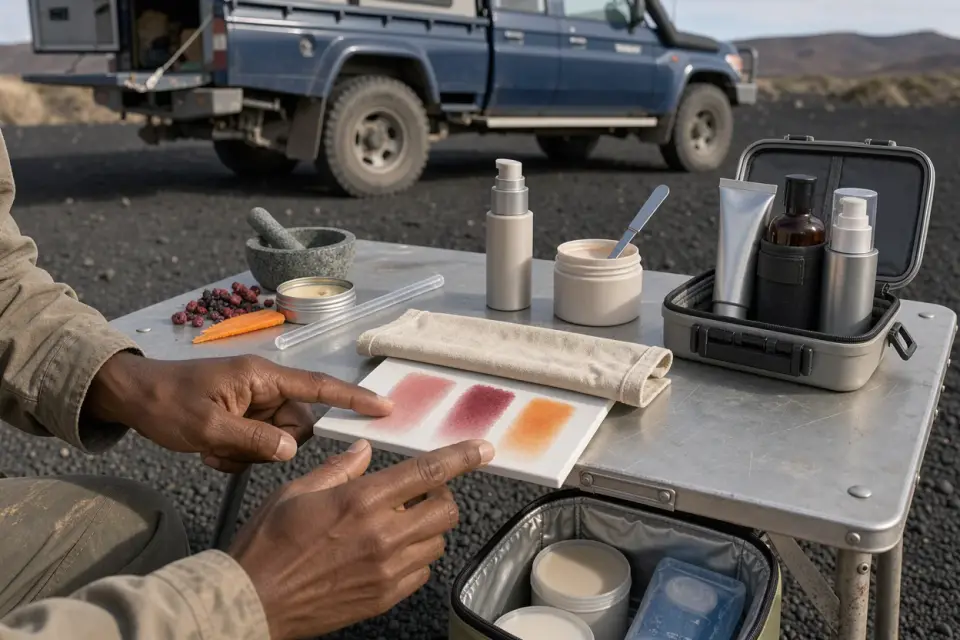
Third, assess packaging materials against your daily lifestyle. Glass droppers and heavy ceramic pots look elegant on stationary vanity tables, but they present significant breakage hazards when travelling in a campervan or duffel bag. Look for lightweight aluminium tins, durable post consumer plastics, or protective travel cases that safeguard emulsions against pressure drops and vibration.
Questions to Ask Retailers and Brands Before Buying
Before finalising an order with any cosmetic vendor, asking direct questions about formulation behaviour can prevent expensive buyer remorse. Consider posing the following queries to customer service teams or checking brand product sheets:
1. What is the designated Period After Opening (PAO) for fruit pigmented emulsions once the protective seal is broken?
2. What temperature threshold can the product withstand before natural oils, butters, or botanical pigments separate?
3. Does this formulation contain natural essential oils or plant derived fragrances that may trigger photosensitivity during outdoor travel?
4. How does the brand substantiate its vegan and cruelty free designations across its global supply chain?
5. What are the company policies regarding returns or replacements if an unopened product demonstrates early oil separation upon arrival?
Hypothetical Decision Example: Balancing Travel Footprint with Skin Sensitivity
Hypothetical Decision Example: Consider an active overland traveller planning an extended trip through varied European climates, needing to replace their daily tinted moisturiser and evening cleanser with compact, low irritation options. They are weighing two paths: a multi use fruit pigmented balm from 100% Pure versus a conventional waterproof synthetic tint.
Choosing the natural fruit pigmented product provides the simplicity of food grade pigments, minimal synthetic film formers, and easy evening wash off without harsh chemical removers. However, the trade off involves environmental tolerance: leaving the natural balm in a warm vehicle glovebox during summer could cause separation or degrade the botanical colourants.
In this scenario, if the traveller possesses a temperature stable storage pod and prioritises plant based formulations, the 100% Pure option satisfies their ethos. Conversely, if their journey involves extreme cabin heat fluctuations and zero opportunities for careful storage, sticking with heat stable synthetic formulas or powdered minerals presents fewer logistical headaches. Weighing daily living constraints against personal ethical preferences leads to the most practical result.

Daily Routines, Skin Diversity, and Professional Care
Establishing an adaptable personal care routine on the road does not require a complex ten step regimen. Prioritising simple fundamentals such as gentle daily face washing, regular sleep patterns, unhurried rest days, and basic sun shielding often yields greater comfort than carrying an exhaustive beauty collection. Multi purpose products can reduce vehicle clutter, but only if your skin genuinely tolerates combined formulas.
It is essential to remember that skin is an organ with unique requirements; natural ingredients are not universally inert. Plant extracts, natural nut oils, and essential fragrances can trigger allergies or contact dermatitis just as synthetic additives can. Introduce one product at a time and maintain realistic expectations about cosmetic coverage.
Individual dermatological needs differ significantly. For ongoing skin conditions, inflammatory flare ups, chronic dryness, or persistent irritation, advice should always be sought from a qualified healthcare professional or dermatologist rather than relying on over the counter beauty claims.
Common questions
What does fruit pigmented makeup actually mean?
Fruit pigmented makeup utilises natural extracts from fruits, vegetables, seeds, and teas to create colour, rather than relying on synthetic dyes, petroleum by products, or heavy mineral pigments.
Do botanical and vegan cosmetics expire faster than conventional items?
Often yes. Natural preservation systems and unrefined botanical oils generally provide shorter periods after opening (PAO) than broad spectrum synthetic preservatives, making careful storage important.
How should natural cosmetics be stored during outdoor or vehicular travel?
Store natural formulations in an insulated, dark container away from direct sunlight, engine heat, and freezing temperatures to protect emulsion stability and prevent oil separation.
Can natural plant pigments trigger allergic reactions?
Yes. Natural botanicals, fruit extracts, and essential oils contain active organic compounds that can prompt sensitivities. Always perform a small patch test on your arm before applying widely.
Partner discounts in this guide
Overland Finds may earn a commission from qualifying purchases made through these links, at no additional cost to you. Each link applies to customers in the country shown. This does not imply independent product testing or endorsement. Confirm current terms and availability with the partner.

100% PURE
100% PURE is a natural beauty and skincare brand offering cosmetics, skincare, and personal care products made with naturally derived ingredients. The brand focuses on clean beauty, plant based formulations, and cruelty free products.
- Valid in
- DE, AT, Germany and Austria
Discount terms: DE/AT · Germany & Austria