
AI assisted editorial. Published following automated quality checks, not independent fact verification. Confirm factual, safety and legal matters with appropriate professionals.
The short answer
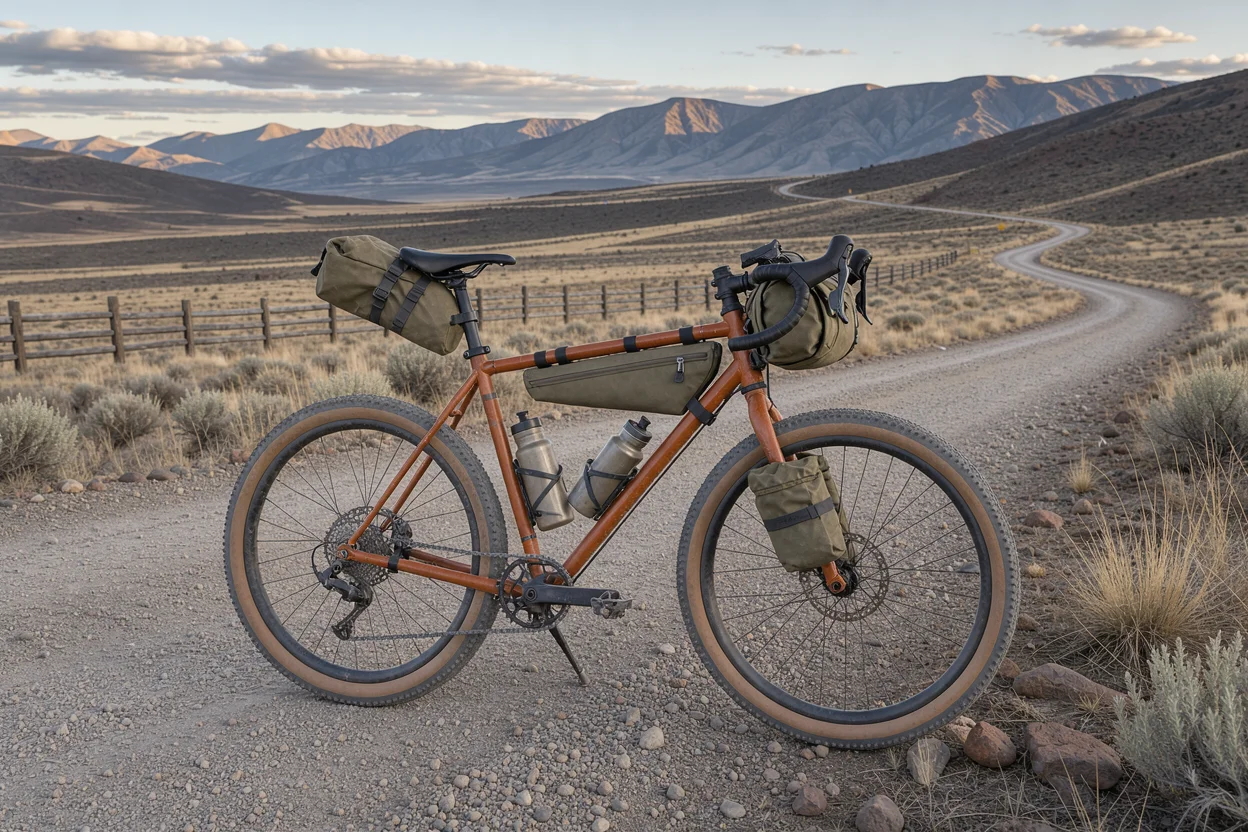
A good bikepacking bicycle balances comfort, load carrying capacity, tyre clearance, and mechanical simplicity over pure speed. It should match your primary terrain, accommodate your luggage system without compromising handling, and offer reliable, serviceable components that remain manageable when fully laden in remote areas.
Key takeaways
- Prioritise stable geometry and all day riding comfort over aggressive aerodynamic postures.
- Verify usable luggage clearance around tyre envelopes, frame triangles, and cables before buying.
- Match tyre volume and tread profile to terrain rather than chasing minimum rolling resistance.
- Select componentry based on field maintainability and gear range rather than purely lightweight materials.
Core Principles: Geometry, Comfort, and Load Stability
A successful bikepacking build starts with rider endurance rather than outright speed. Long consecutive days in the saddle across varied surfaces place unique demands on the body. An endurance oriented geometry featuring a relatively tall head tube, moderate reach, and a slacker steering angle creates a stable, upright posture that reduces fatigue on the neck, shoulders, and lower back.
Weight distribution changes dramatically once luggage is strapped to the frame, handlebar, and seatpost. A bicycle with slightly longer chainstays and a lower bottom bracket will feel considerably more planted when navigating steep gradients or uneven tracks. Highly agile race bikes often become nervous or twitchy when carrying cargo, making steady handling a vital trait for unpaved touring.
Tyre Clearance, Wheel Standards, and Terrain Suitability
Tyre clearance defines the capability boundary of any adventure bicycle. Adequate volume cushions the rider from trail chatter, aids traction across loose surfaces, and prevents rim strikes when traversing rocky paths with extra luggage weight. Frame and fork designs should leave sufficient clearance around the rubber to prevent packed mud from abrading the frame.
Choosing between wheel diameters usually involves a compromise between momentum and manoeuvrability. Larger wheels maintain rolling speed over mixed surfaces and smooth out small trail obstacles, whereas smaller, higher volume pairings permit wider cushioning tyres within the same frame constraints. Prospective buyers should confirm the maximum certified tyre width with both rigid and suspension fork setups.
Luggage Mounting Points and Cockpit Architecture
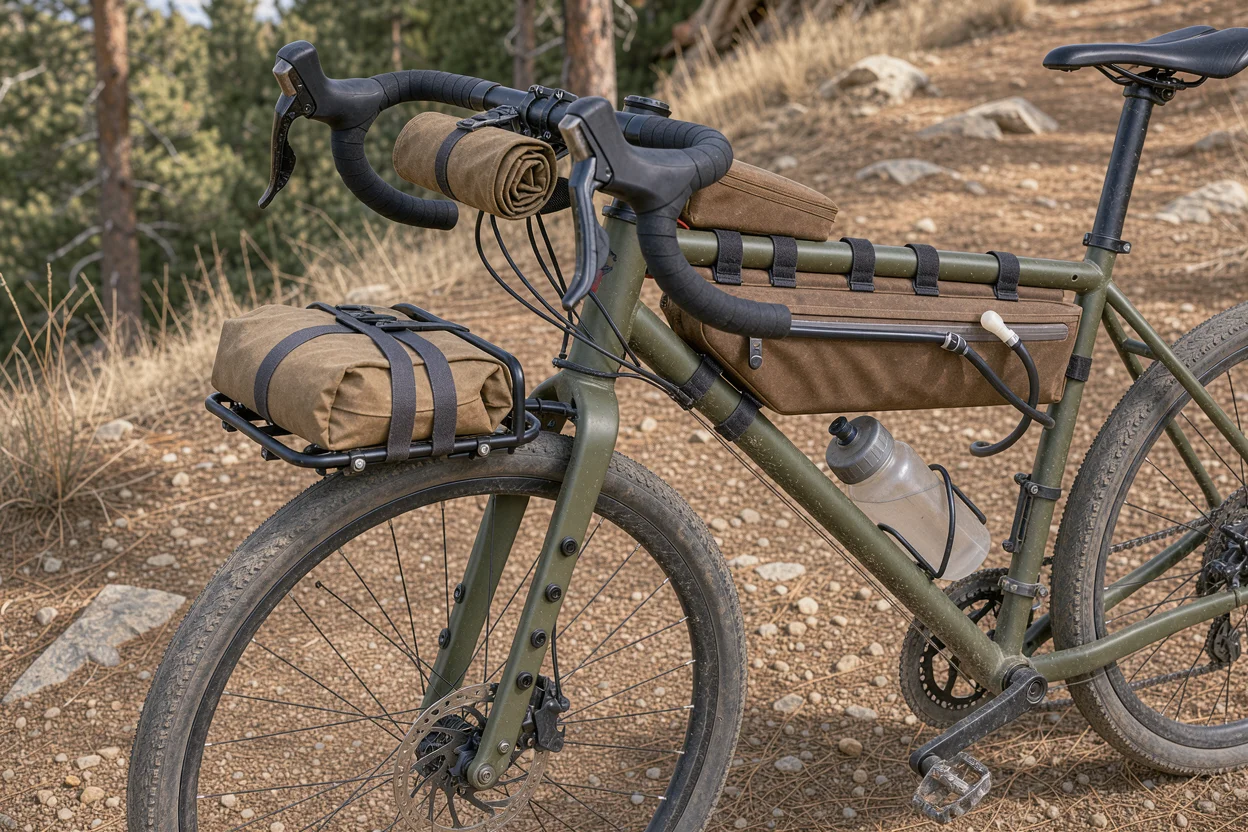
Modern adventure bicycles use a mix of traditional bolt bosses and modern strap on bikepacking luggage. Multiple mounting points across the fork legs, top tube, and downtube allow water bottles and gear cages to be placed low on the frame, keeping the centre of gravity manageable.
The inner triangle of the frame should offer sufficient open area to host a partial or full frame bag alongside hydration bladders. Cockpit space is equally vital: sweeping drop bars or alt bars provide multiple hand positions to mitigate nerve compression while ensuring adequate clearance between handlebar bags, shift levers, and brake lines.
Drivetrain Range, Braking, and Field Serviceability
Pedalling an unladen bicycle up a steep gravel incline is very different from pedalling the same machine with several days of supplies. A suitable drivetrain must offer low climbing gears, typically well below a one to one ratio. Whether selecting a single chainring configuration for simplicity or a double chainring system for tighter cadence steps, the absolute low end of the gearing is crucial.
Braking systems must handle increased gross weight on long descents. Robust disc brakes provide consistent stopping power across wet and muddy conditions. When travelling in remote areas, standard mechanical or widely supported hydraulic systems that use standard pads and conventional fittings are easier to maintain than proprietary components.
Practical Comparison Framework: Adventure Gravel versus Rigid Mountain Platforms
Choosing a platform requires balancing road efficiency against off road capability. Adventure gravel bikes generally feature drop handlebars, lighter overall frames, and tyre clearance tailored for gravel roads, towpaths, and hard packed trails. They excel at covering distance swiftly across mixed surfaces where technical obstacles are infrequent.
Rigid or hardtail mountain bikes feature wider flat or swept handlebars, significantly broader tyre clearances, and slacker geometries suited to rough singletrack, loose rocky byways, and steep natural tracks. While they carry extra weight and roll slower on tarmac, they provide far superior control, braking leverage, and carrying volume on demanding backcountry terrain.
Questions to Ask When Evaluating a Bicycle
When inspecting a second hand bicycle or consulting a shop specialist, direct inquiries uncover details that spec sheets overlook. Ask the seller whether the frame has ever suffered internal cable rub or frame bag abrasion, as soft luggage can wear through paint and tubing if not protected by tape.
Inquire about the true maximum tyre width when mudguards or luggage are installed, rather than merely the nominal clearances stated in brochures. Finally, ask what standard bottom bracket, axle spacing, and headset components are fitted to verify that replacement parts can be sourced without delays.
Hypothetical Decision Example: Selecting a Rig for Mixed Byways
Consider a hypothetical rider planning multi day trips across network byways, farm tracks, and linking tarmac lanes, carrying modest camping gear. The choices are a high end carbon race gravel frame or a versatile steel adventure frame with wider clearance.
The carbon race frame offers lighter weight and sharper acceleration but features limited fork mounts and narrow clearance that struggles in claggy mud. The steel option adds overall weight but provides three pack fork mounts, ample triangle clearance for a custom bag, and stable geometry under load. In this scenario, the steel platform represents the superior bikepacking tool because stability, mounting versatility, and comfort outrank sprinting efficiency.
Common questions
Is steel preferable to aluminium or carbon for bikepacking?
No single material is universally best. Steel offers natural compliance, durability, and easier field repair via welding. Aluminium provides an economical, lightweight structure but can transmit more trail vibration. Carbon allows optimised shaping and low weight, though it requires careful surface protection from bag strap friction.
Can I use a standard road bike for bikepacking trips?
Standard road bikes can handle light touring on tarmac, but they lack the tyre volume, lower climbing gear ratios, and luggage clearance needed for unpaved terrain. Adding heavy bags to narrow tyres increases the risk of pinch flats and unstable handling on rougher trails.
What should I look for in handlebar design for bikepacking?
Look for multiple comfortable hand positions to relieve nerve fatigue on long journeys. Drop bars with flared drops provide greater leverage on descents while clearing handlebar rolls, whereas ergonomic swept flat bars allow stable control and ample room for mounting navigation gear.