
AI assisted editorial. Published following automated quality checks, not independent fact verification. Confirm factual, safety and legal matters with appropriate professionals.
The short answer
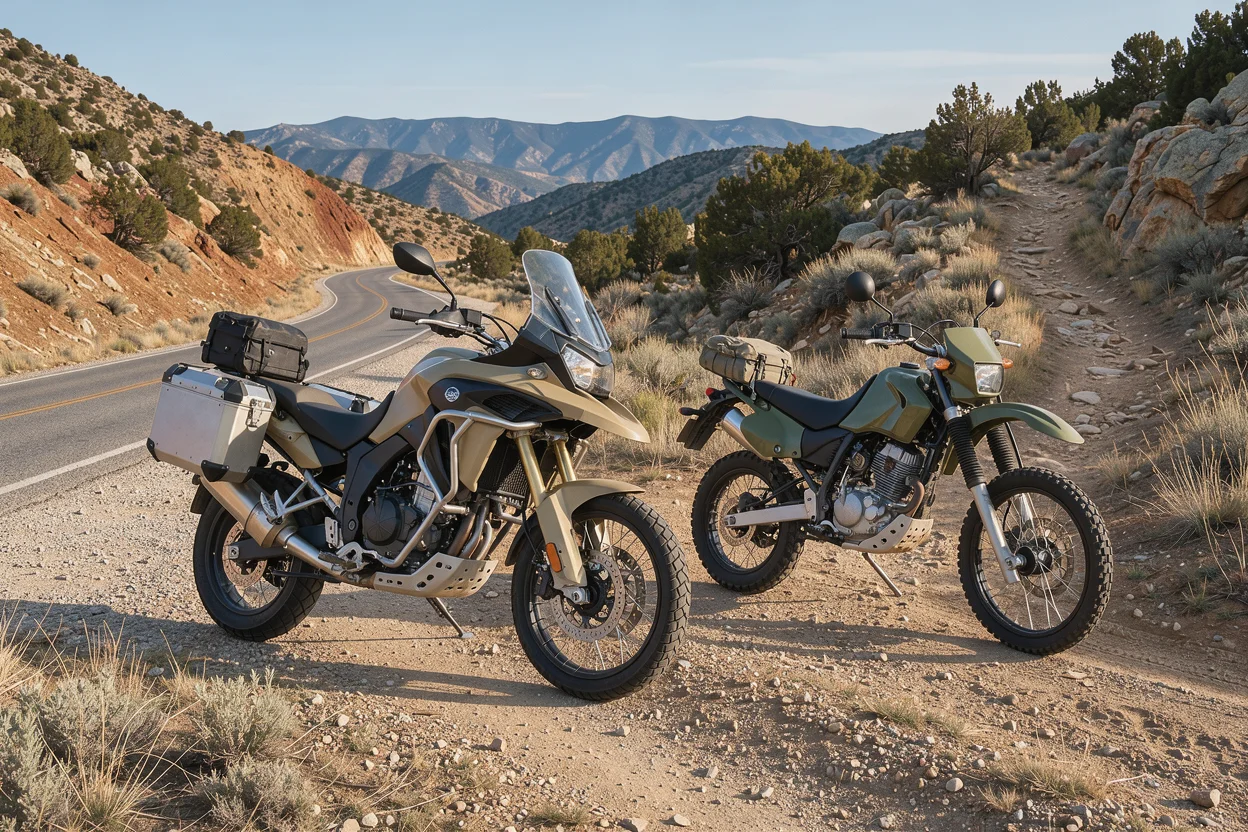
The primary distinction between an adventure (ADV) motorcycle and a dual sport bike centres on design priority: long distance touring comfort versus lightweight trail capability. Adventure bikes excel at high speed road transit, luggage carrying, and weather protection, while dual sports prioritise agility, off tarmac recovery, and mechanical simplicity over long haul motorway comfort.
Key takeaways
- Weight directly dictates off road recovery: dual sports are significantly easier to lift repeatedly on technical terrain.
- Adventure motorcycles provide weather protection, higher payload capacities, and extended fuel range for long tours.
- Service schedules often differ, with competition derived dual sports requiring more frequent maintenance intervals.
- Choosing correctly depends on your realistic tarmac to trail ratio rather than aspirational off road routing.
Understanding Core Design Philosophies
Prospective buyers often conflate adventure motorcycles and dual sport machines because both can negotiate paved roads and unpaved trails. However, their engineering lineages diverge sharply. A dual sport motorcycle is essentially an enduro or trail bike made road legal through the addition of mirrors, indicators, a horn, and appropriate lighting. Its geometry, suspension travel, and stripped back chassis originate in off road competition, prioritising obstacle clearance and low overall mass above all else.
In contrast, an adventure motorcycle is conceived as a long distance touring platform engineered to withstand rough surfaces, unpaved tracks, and variable conditions. These machines incorporate multi cylinder engines or large displacement singles, aerodynamic fairings, broad saddles, and robust subframes capable of supporting substantial luggage systems and pillion passengers. Understanding this distinction prevents the common mistake of buying a heavy tourer for tight singletrack, or an unfaired trail machine for cross continental highway transits.
Practical Comparison Framework: Four Critical Tradeoffs
To objectively compare these categories, riders should evaluate four interconnected factors: weight versus highway stability, payload versus agility, fuel range versus bulk, and wind protection versus simplicity.
Weight versus stability: Dual sports typically weigh substantially less than adventure bikes, making them nimble on loose, steep, or rutted terrain. When stalled or dropped in deep sand, an individual rider can haul a dual sport upright with minimal strain. However, that light kerb weight becomes a liability in heavy crosswinds or during extended motorway cruising, where buffeting creates significant rider fatigue. Adventure bikes offer reassuring stability at 70 mph, but dropped machines demand considerable physical effort and technique to recover repeatedly.
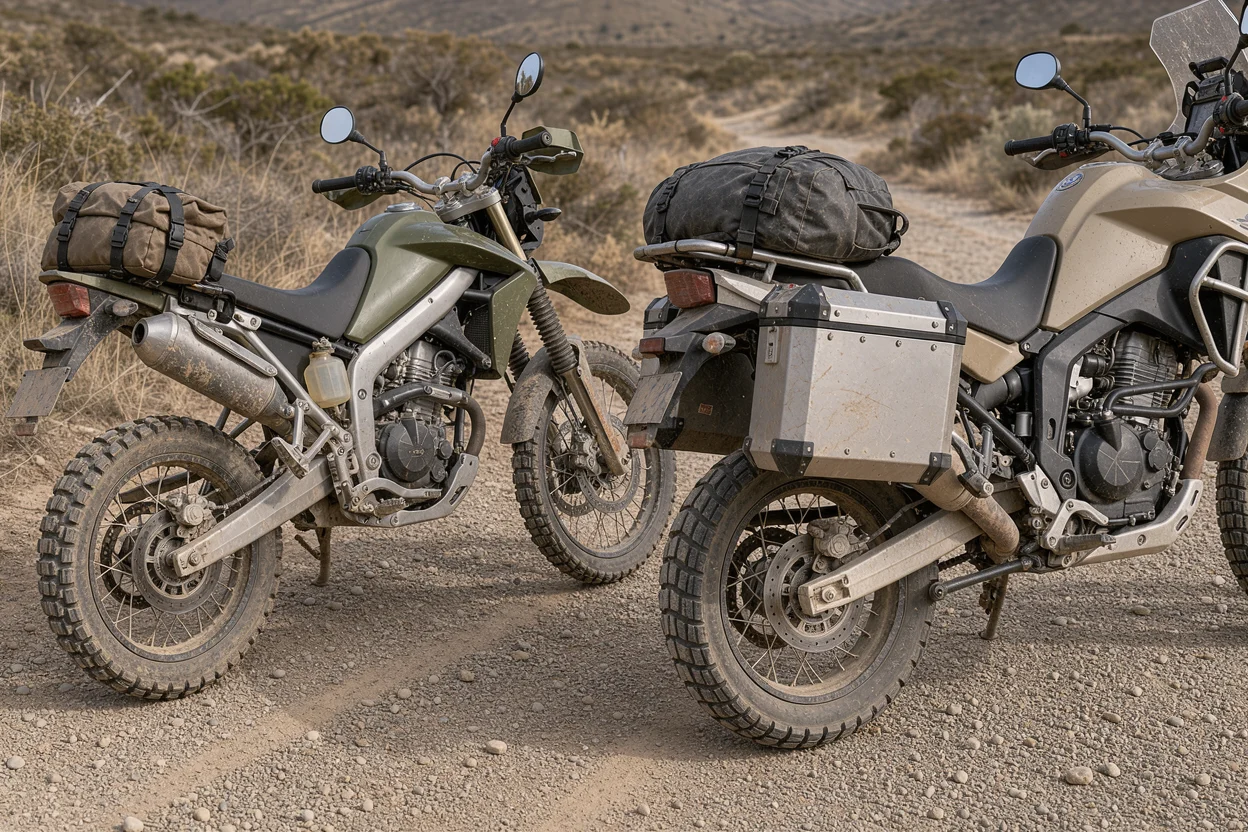
Payload versus agility: Adventure bikes feature structural steel or aluminium rear subframes designed to support hard panniers, top boxes, and heavy expedition equipment without flexing. Dual sports often feature lightweight aluminium or composite subframes with strict weight limits; overloading them can degrade handling or cause structural fatigue over corrugated trails. Packing a dual sport requires an ultralight, minimalist strategy using soft luggage.
Range versus bulk: Touring across remote regions demands dependable range. Adventure motorcycles frequently include large capacity fuel cells delivering 200 miles or more between stops. Dual sports typically carry small fuel tanks intended for day rides, often requiring aftermarket fuel tank installations or auxiliary fuel bladders for remote overlanding.
Protection versus simplicity: High windscreens, broad cowls, and heated cockpits protect adventure riders from rain and freezing temperatures. Conversely, dual sports remain minimalist: there are fewer fragile fairings to crack during low speed trail spills, but the rider absorbs full weather exposure throughout long road stretches.
Questions to Ask Sellers and Dealers
When inspecting a pre owned machine in either class, ask targeted questions to reveal how the motorcycle was treated and whether hidden limitations exist:
1. What is the rated electrical alternator output? Adventure bikes typically produce ample wattage to run auxiliary lighting, GPS units, and heated gear concurrently, whereas small dual sports may have limited excess electrical capacity.
2. How is maintenance measured on this machine? Some performance oriented dual sports track maintenance by operating hours rather than odometer mileage, requiring frequent oil, valve, and piston inspections.
3. What is the maximum load rating of the rear subframe? Clarify whether the current luggage rack setup has compromised the subframe or caused stress cracks under previous ownership.
4. Has the suspension been re sprung or re valved for a specific rider weight? Off road machines are frequently modified with aftermarket spring rates that may prove overly harsh or soft for your intended payload.
5. Were engine guards, bash plates, and handguards installed from new? Check whether underlying crankcases, water pumps, and frame rails show evidence of impacts sustained prior to protective parts being mounted.
Hypothetical Decision Example: Weekend Lanes vs Trans Continental Travel
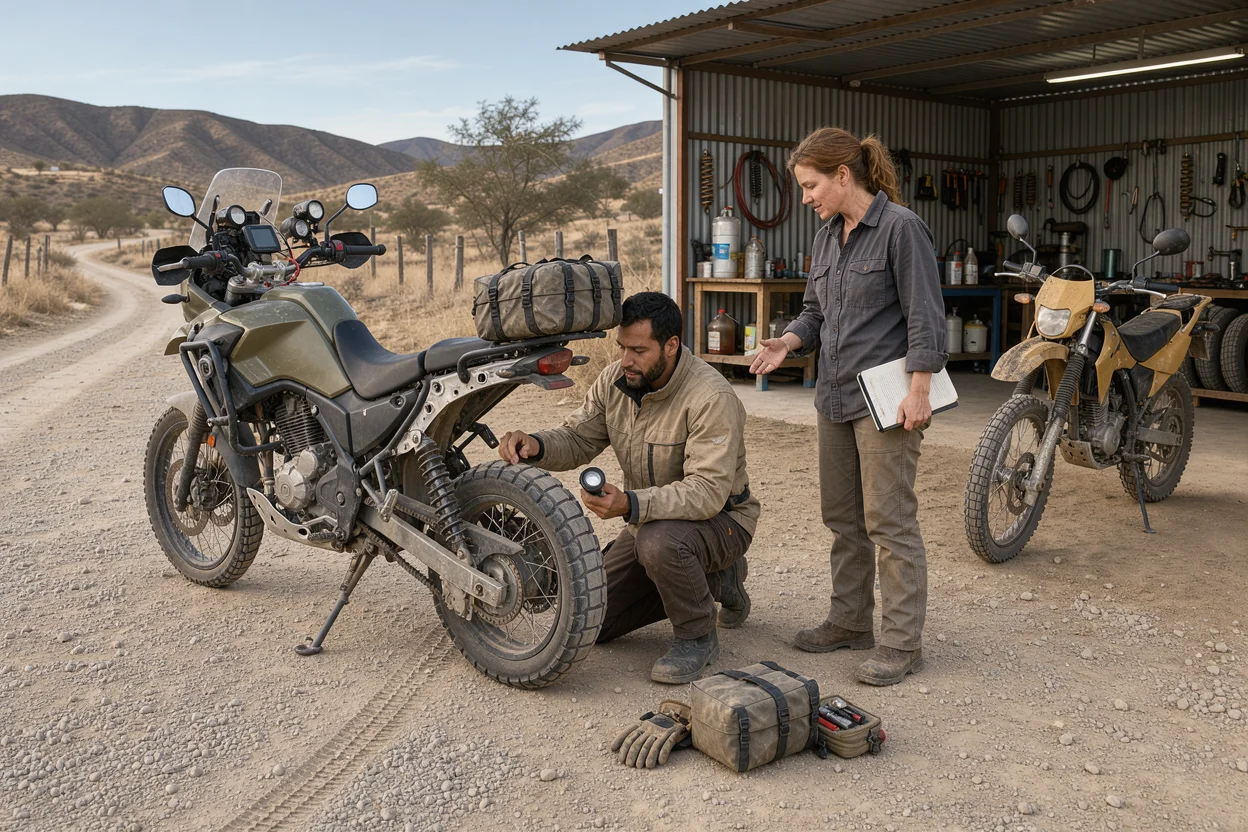
Consider a hypothetical buyer, Alex, who lives 45 miles from a regional network of rocky trails and unclassified green lanes. Alex intends to ride from home, complete rough off tarmac routes, and occasionally embark on a five day camping trip through the countryside.
If Alex chooses a heavy multi cylinder adventure motorcycle, the initial 45 mile road transit will be comfortable and relaxed. However, once Alex reaches wet ruts, rocky descents, and narrow forest tracks, the bike's mass will increase physical fatigue and elevate the risk of dropping the machine. Picking up a fully laden 230 kg bike multiple times in an afternoon can exhaust solo riders.
If Alex selects a road legal dual sport bike, the highway transit requires tolerating engine vibration, high wind buffeting, and a firm, narrow saddle. Once at the trails, however, the lightweight chassis offers superior control, high ground clearance, and effortless recovery when tipped over. For Alex, prioritising trail competence over highway luxury makes the dual sport the more suitable choice, provided Alex accepts minimal luggage capacity.
Common questions
Can a dual sport motorcycle be comfortably used for long distance road touring?
While technically possible, dual sports require substantial rider adaptations for touring, including aftermarket windscreens, wider seats, and soft luggage systems. Even with modifications, modest fuel capacities and persistent wind exposure make high mileage road days far more physically demanding.
Which category is generally cheaper to repair after trail drops?
Dual sport motorcycles are typically less expensive to repair after minor off road spills because they use flexible plastics, minimalist cockpits, and lack painted fairings. Adventure bikes carry expensive body panels, wide radiators, and complex electronics that can incur high replacement costs if unprotected.
Do adventure motorcycles require different rider licensing or insurance?
Licensing requirements depend on engine capacity, power output, and local legal frameworks rather than category labels. However, adventure bikes generally attract different insurance risk profiles compared to dual sports due to differing replacement values, theft rates, and touring use patterns.