
AI assisted editorial. Published following automated quality checks, not independent fact verification. Confirm factual, safety and legal matters with appropriate professionals.
The short answer
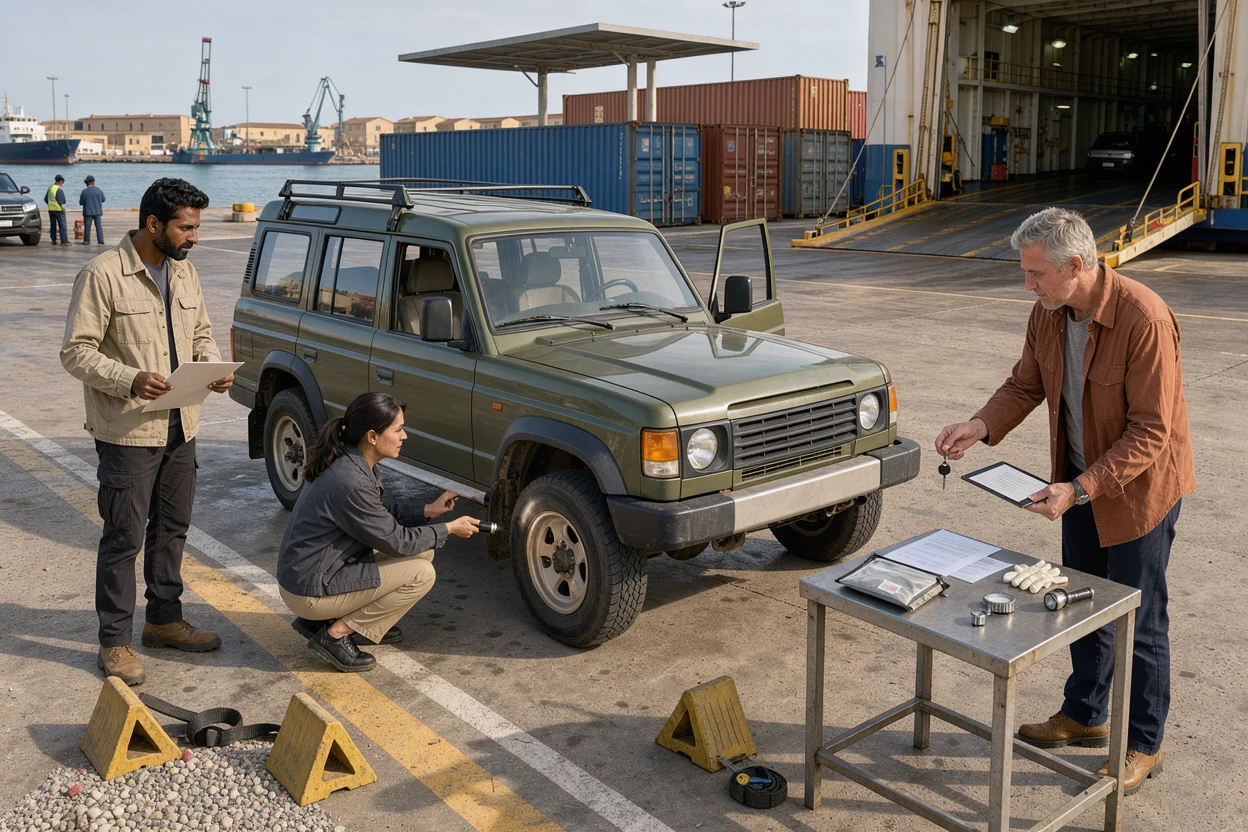
Before sending funds to an international vehicle seller, buyers must thoroughly verify legal title, cross border export documentation, physical condition through unbiased third party checks, and payment security. Asking targeted questions clarifies logistical bottlenecks and mitigates financial risk before contracts are executed.
Key takeaways
- Verify the seller holds unencumbered legal registration and that the chassis number strictly matches all paperwork.
- Clarify whether the seller or the purchaser assumes responsibility for local deregistrations and port handover.
- Commission an unbiased, professional third party inspection before committing any non refundable deposits.
- Select an established cross border escrow service or secure payment structure over direct personal bank transfers.
Establishing Legal Ownership and Documentation Status
Purchasing an expedition vehicle across national borders introduces distinct legal complexities that do not exist in domestic transactions. The foremost objective must always be confirming that the individual or dealership offering the vehicle holds the undisputed legal right to sell it. National registration systems vary widely; some jurisdictions issue paper ownership certificates that serve as absolute proof of title, whereas others rely primarily on administrative registries accessible only to local residents. Buyers should ask for clear scans of the primary registration document and scrutinise the listed owner details against the seller credentials.
Equally vital is discovering whether financial charges, fiscal debts, or outstanding border duties attach to the machine. In many regions, vehicles previously imported under temporary admission schemes, such as a Carnet de Passages en Douane, cannot be sold domestically without paying substantial back taxes. Inquiring about previous import statuses avoids unexpected liabilities upon collection or re registration. Always insist on receiving unambiguous confirmation that any existing finance agreements or commercial liens have been formally released by the relevant lending institutions.
Prospective buyers must also confirm the precise chassis and engine numbers stamped onto the physical vehicle match the associated documentation. Overland platforms frequently undergo component replacements during their working lives, such as chassis swaps or engine conversions. If a replacement block or chassis segment carries an unrecorded identification number, clearing domestic customs or processing export clearance can be delayed or blocked entirely.
Evaluating Remote Vehicle Condition and Modifications
Photographs and promotional video walkthroughs provided by a seller inherently present the vehicle in its best possible light. When assessing a candidate located thousands of kilometres away, the buyer must probe beyond cosmetic appearances. Specialised overland camper conversions, bespoke electrical circuits, auxiliary fuel reservoirs, and heavy duty suspension upgrades introduce potential failure points that regular road cars do not possess. Questioning the provenance, age, and installation standards of these sub systems is critical.
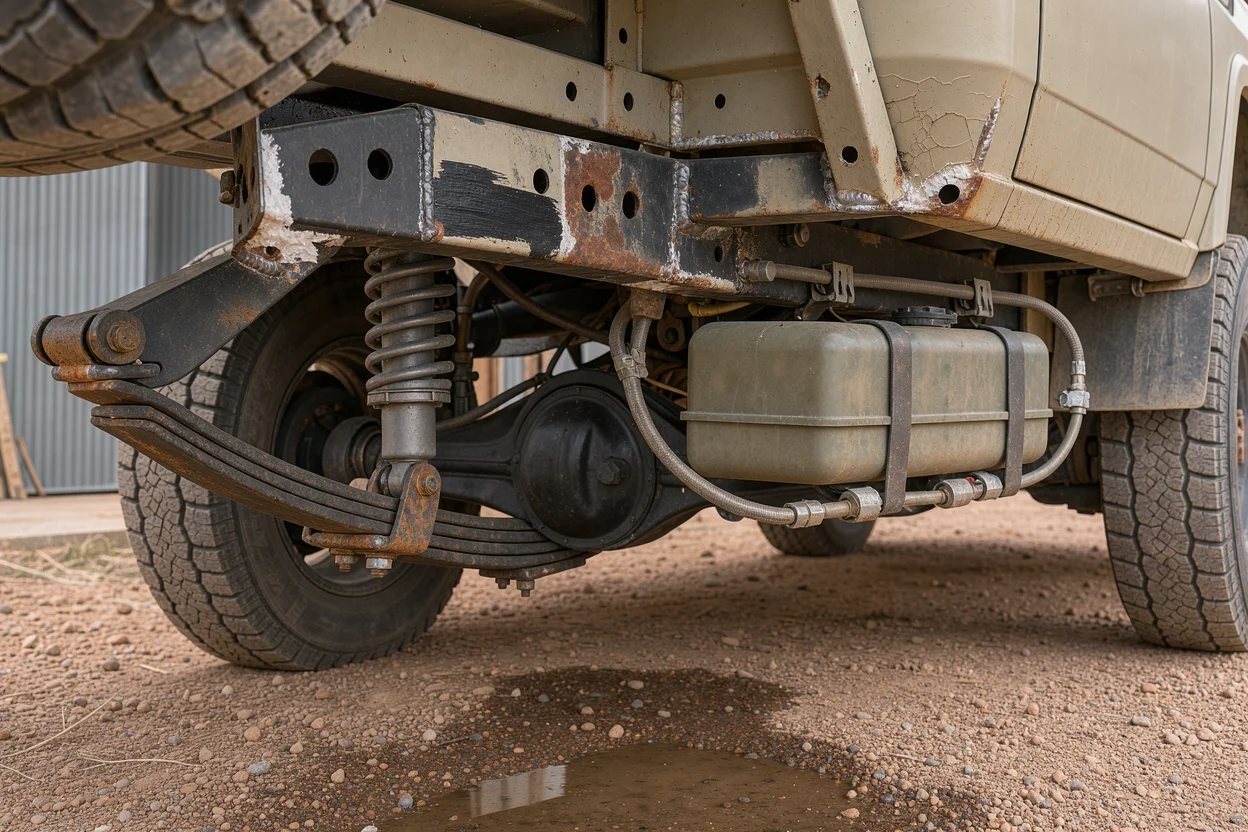
Inquire specifically about the historical operational environment of the vehicle. Sustained travel across coastal tracks, salinated desert flats, or heavily salted winter roads creates structural corrosion that may be obscured by recent underbody coatings. Requesting date stamped imagery of structural crossmembers, outriggers, spring perches, and door bottoms provides a more accurate reflection of metal health than broad bodywork shots.
Maintenance records provide essential context for long term reliability. Ask whether mechanical servicing followed manufacturer schedules or improvised field servicing while travelling. Comprehensive records from recognised workshops carry significantly more weight than verbal assurances of frequent oil changes. Determine which wear and tear items have been replaced recently and whether the spares carried on board are genuine OEM components or aftermarket equivalents.
Practical Framework: Evaluating Transaction Approaches
When purchasing abroad, buyers generally balance convenience, security, and administrative burden across three primary transaction models: Direct Private Settlement, Export Broker Management, and Independent Escrow Services. Evaluating these avenues helps buyers align their risk tolerance with transaction complexity.
The Direct Private Settlement approach relies entirely on bilateral trust between buyer and seller. While this model eliminates intermediary commissions and allows direct communication, it provides almost no protection if the seller misrepresents vehicle condition or fails to surrender documentation after receipt of funds. This approach should generally be reserved for scenarios where the buyer travels in person to inspect the machine and exchange funds simultaneously.
Export Broker Management involves engaging an accredited regional agent who handles vehicle handover, title transfers, and customs clearance. Although this method incurs administrative fees, it transfers the burden of regional regulatory compliance to a knowledgeable third party, significantly reducing procedural delays. Alternatively, using an Independent Escrow Service secures the capital in neutral custody until shipping documentation or bill of lading verification is provided, shielding the buyer against absolute loss while retaining control over release conditions.
Core Questions to Put to the Seller
To streamline correspondence and identify red flags early, buyers should present targeted inquiries divided into administrative, technical, and logistical categories. For legal clarity, ask: Is the vehicle currently registered in your name, and are all import duties and road taxes settled? Are there any outstanding loans or encumbrances against the title? Can you provide an unredacted copy of the registration document showing the vehicle identification number?
For mechanical and operational insight, ask: What modifications are recorded on the official registration papers versus uncertified additions? How old are the auxiliary power systems, leisure batteries, and off grid heating components? Has the chassis or bulkhead suffered corrosion repairs or structural welding? For logistics and release terms, ask: Are you willing to deliver the vehicle to a certified inspection facility of my choosing? Will you handle local export deregistration, or must that be completed by the buyer? What exact paperwork will be physically handed over with the vehicle keys?
Hypothetical Decision Example: Balancing Third Party Inspection with Urgency
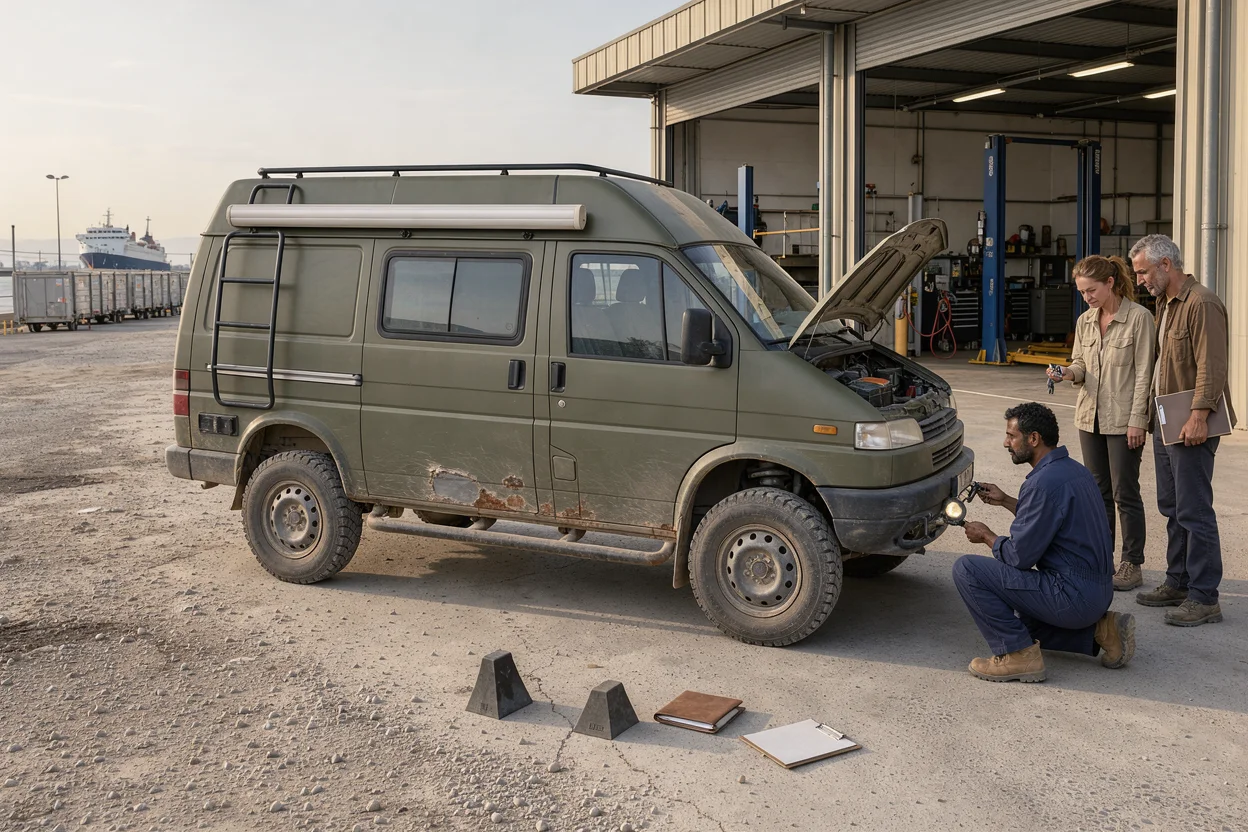
Consider a hypothetical buyer evaluating a prospective overland vehicle located in another country. The seller claims several interested parties are ready to purchase and requests an immediate non refundable holding deposit of twenty percent via direct wire transfer. The vehicle matches the buyer ideal specifications, creating emotional pressure to finalise the agreement quickly.
In this scenario, a prudent buyer pauses the purchase to weigh the trade offs. Bypassing an independent inspection risks inheriting severe chassis corrosion, failed auxiliary wiring, or contested ownership, turning an initial bargain into an expensive recovery project. The structured alternative involves proposing a nominal, refundable holding deposit lodged via a reputable escrow mechanism, contingent on a professional inspection report from an unassociated local garage. If the seller refuses neutral escrow or denies independent access, the buyer avoids a high risk financial commitment.
Common questions
How can I verify the seller identity and legal possession of the vehicle remotely?
Request a video call where the seller shows their government identification alongside the vehicle registration certificate and the physical chassis stamp on the frame. Additionally, cross reference the registered owner name on official records with the recipient bank account details.
What documentation proves an overseas overland vehicle is free of export restrictions?
Ask for an official certificate of deregistration for export from the national licensing body, proof of customs duty payments if the vehicle was previously imported, and written verification from local transit registries confirming no active liens or police flags exist.
Who is normally responsible for local port delivery and export clearance procedures?
Responsibilities depend entirely on the agreed contractual terms. Buyers must explicitly define whether the seller delivers the vehicle to the departure port and clears local customs, or whether an engaged freight forwarder collects the machine from the seller premises.
Is it safe to pay an international vehicle seller via direct electronic bank transfer?
Direct international wire transfers offer negligible buyer protection once completed. Safer alternatives include using established vehicle escrow services, verified commercial brokers, or coordinating final payment upon physical collection through an appointed local representative.