
AI assisted editorial. Published following automated quality checks, not independent fact verification. Confirm factual, safety and legal matters with appropriate professionals.
The short answer
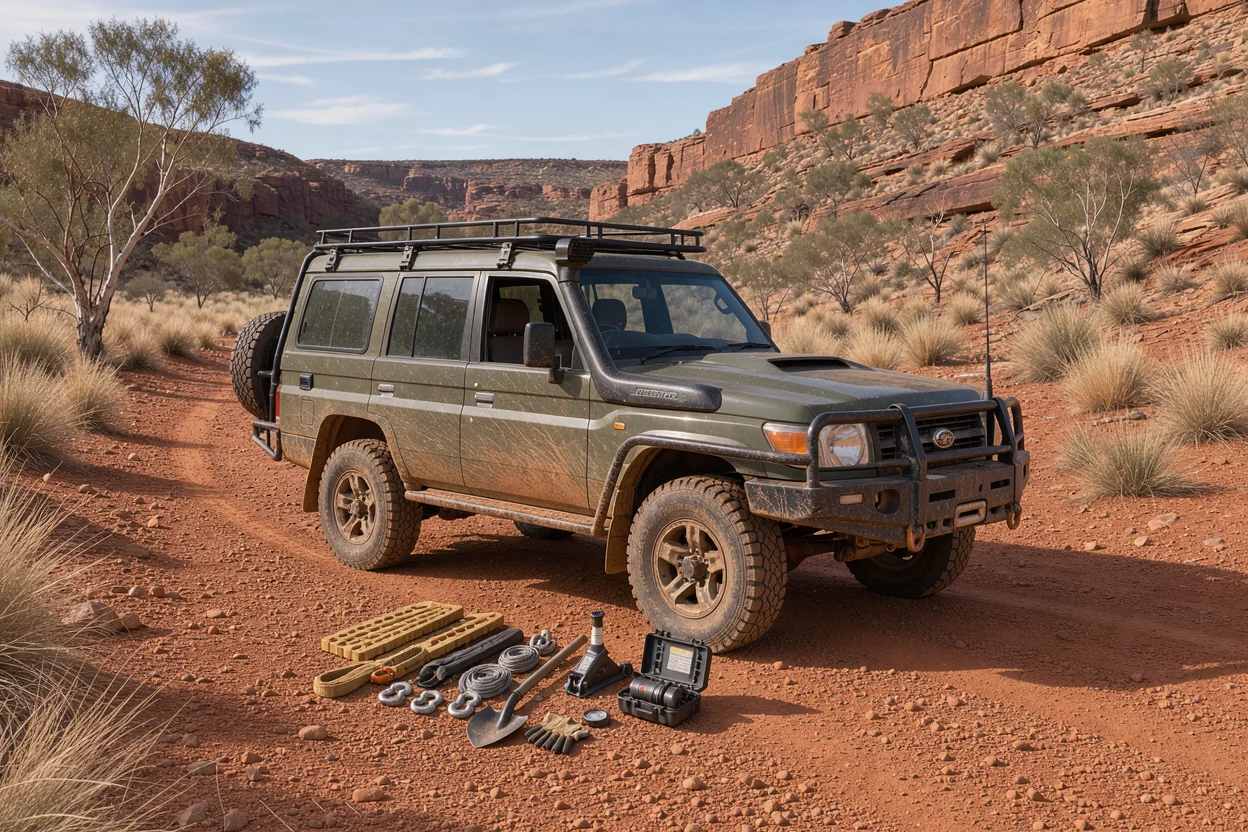
Selecting essential recovery equipment requires balancing gross vehicle weight limits against the remote environments you plan to traverse. Rather than carrying every available device, focus on verified rated gear matching your vehicle mass, terrain demands, and whether you travel solo or in convoy.
Key takeaways
- Audit your vehicle payload margins before purchasing heavy recovery hardware such as steel cable winches and mechanical jacks.
- Prioritise universal self recovery tools like traction boards and a tyre deflator before investing in complex vehicle mounted systems.
- Always match working load limits across every component in your recovery chain to prevent dangerous weak links.
- Verify that chassis recovery points are genuinely rated for multi directional recovery rather than simple flat towing.
Payload Realities and the Recovery Dilemma
Preparing a vehicle for remote backcountry travel inevitably involves navigating a direct conflict between self sufficiency and weight management. Every mechanical winch, farm jack, steel shackle, and set of bridging ladders chips away at your vehicle payload allowance. Overloading a vehicle increases the likelihood of chassis stress, suspension fatigue, and reduced dynamic stability on uneven surfaces, while perversely increasing the probability of becoming bogged down in deep sand or saturated soil.
A measured approach demands that overland travellers view recovery gear as an integrated system rather than an accumulation of individual gadgets. The goal is to carry equipment that provides maximum versatility across varied terrain while imposing the lowest possible penalty on your gross vehicle mass. Striking this balance requires candid appraisal of your intended routes, travelling style, and mechanical understanding.
Core Equipment Tiers and Practical Tradeoffs
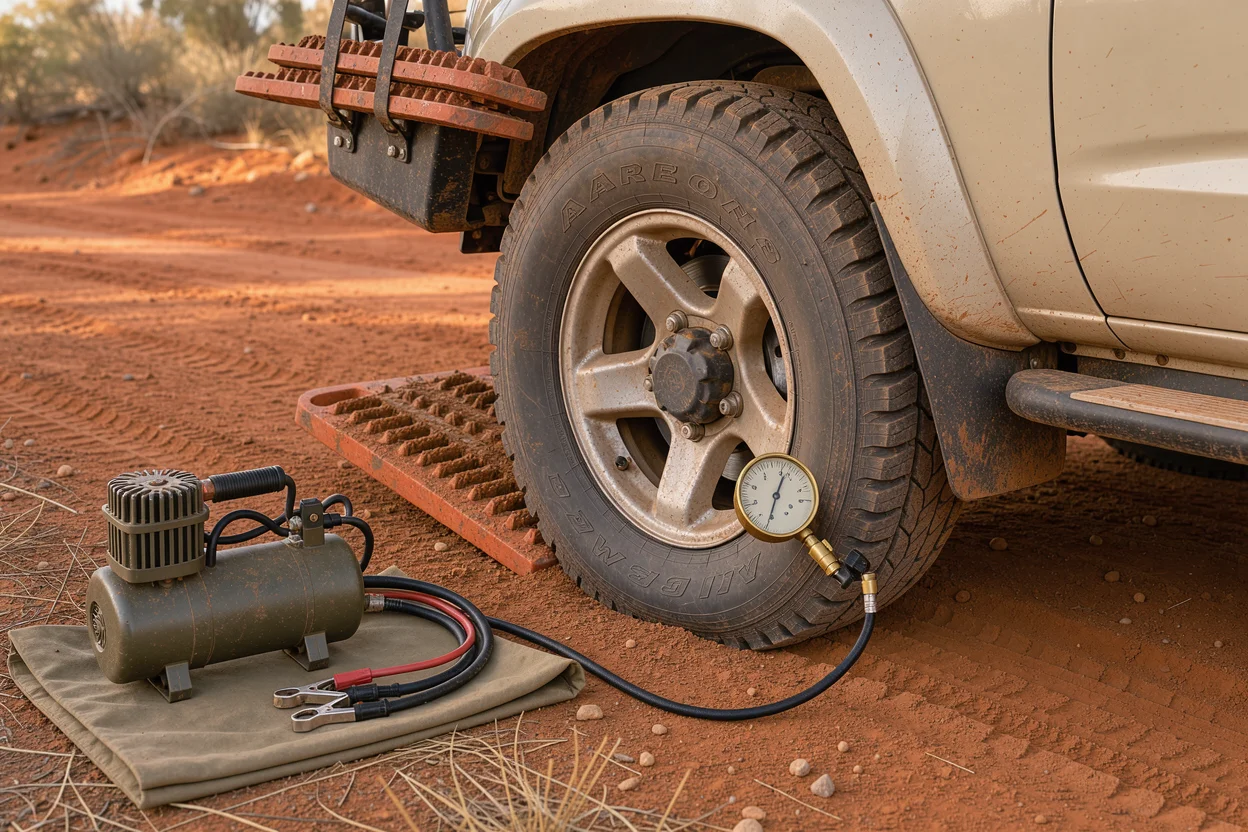
Recovery tools generally fall into three functional groups: momentum and flotation management, static self recovery, and assisted multi vehicle recovery. Managing flotation through tyre deflation is universally recognised as the most effective proactive recovery strategy. A reliable gauge, rapid deflator, and capable 12 volt air compressor should form the non negotiable baseline of any kit. Adjusting footprint pressure often resolves traction issues before mechanical intervention becomes necessary.
Rigid traction boards represent the next tier of practical intervention. They offer immediate assistance in loose sand, soft mud, and snow without relying on secondary anchor points or vehicle battery reserves. Their primary drawbacks are bulk and exterior mounting challenges; boards collect significant mud and debris, requiring secure external stowage that can tolerate rough corrugated tracks.
Mechanical winches, while offering formidable solo extraction capability, carry significant operational trade offs. An electric winch adds substantial mass over the front axle, which often necessitates suspension upgrades and can alter steering dynamics. Synthetic winch lines mitigate some front end weight compared to traditional steel wire, yet they require protection from grit ingress, ultraviolet degradation, and sharp rock abrasion.
Kinetic recovery straps and static tow strops depend on the presence of a second vehicle. While compact and relatively light, dynamic kinetic ropes store kinetic energy to pull a stranded rig clear. Because they exert sudden loads on recovery points, they require tested, rated attachment eyes integrated directly into the chassis rather than standard factory transport tie down loops.
The Recovery Gear Evaluation Framework
To decide what gear belongs on your vehicle, you can evaluate candidate items across four operational criteria: Solo Versatility, Payload Impact, Dependency on External Anchors, and Maintenance Overhead.
Traction Boards rate exceptionally high in Solo Versatility and Anchor Independence, because they require no trees or secondary vehicles. Their Payload Impact is moderate, but external mounting requirements mean maintenance overhead includes cleaning and securing brackets.
Tyre Deflators and Compressors offer the highest operational return, with negligible Payload Impact, complete Anchor Independence, and high everyday utility across all remote surfaces.
An Electric Winch provides absolute Solo Versatility in steep or heavily wooded terrain, yet rates poorly in Payload Impact and requires regular electrical inspection, spool cleaning, and an adequate anchor point such as a substantial tree or ground anchor.
Kinetic Straps and Soft Shackles present a minimal Payload Impact and low storage volume, but their utility drops to zero if you are travelling unaccompanied without a secondary support vehicle.
Questions to Ask Sellers and Equipment Retailers
When purchasing recovery gear or a pre equipped expedition vehicle, prospective owners must look beyond marketing claims and examine practical engineering specifications. Asking pointed questions avoids investing in mismatched or unsafe components.
First, ask: Are the recovery points on this vehicle certified and rated for angled recoveries, or are they intended solely for straight line flat towing? Many factory tie down loops will sheer under snatch or offset loads.
Second, ask: What is the documented Working Load Limit (WLL) and Minimum Breaking Strength (MBS) of each individual connector, shackle, and strop in this recovery kit? Any reputable manufacturer will publish clear, stamped ratings on the hardware.
Third, ask: If an electric winch is fitted, what is the age and condition of the synthetic line, and has the dual battery or electrical charging circuit been upgraded to support the amp draw under heavy recovery loads?
Finally, ask: What is the exact combined mass of the complete recovery inventory, and how does it fit within the remaining payload once water, fuel, and occupants are accounted for?
Hypothetical Decision Example: Remote Desert Crossing
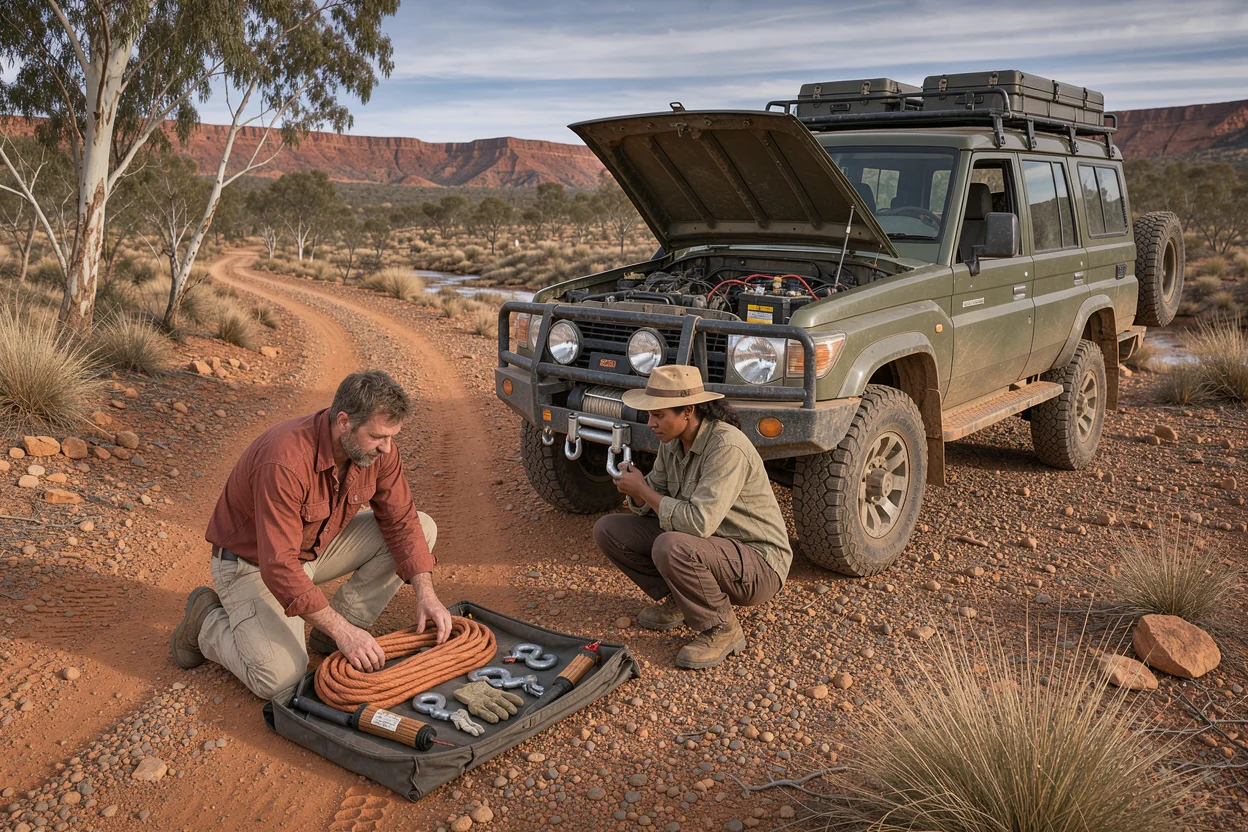
Consider this clearly labelled hypothetical scenario: An overland traveller is outfitting a mid sized four wheel drive estate for a self supported desert crossing. The journey entails remote desert tracks featuring soft sand corridors, severe corrugations, and solitary travel without convoy support. The vehicle has an available remaining payload margin of only 180 kilograms once long range fuel, potable water, and personal provisions are loaded.
Option A involves mounting a heavy steel bumper, an electric winch, a farm jack, two sets of heavy bridging ladders, and a steel tool kit, totalling roughly 115 kilograms. This consumes nearly two thirds of the remaining payload, placing severe strain on the front suspension and increasing ground pressure over soft sand.
Option B prioritises lightweight, high yield gear: a dual cylinder portable air compressor, a quality brass tyre deflator, a pair of lightweight polymer traction boards mounted on the roof rack, a high lift exhaust air jack suitable for sandy substrates, and a set of certified soft shackles paired with a synthetic static bridle. The total kit weighs under 28 kilograms.
In this hypothetical scenario, Option B offers superior tactical alignment with desert travel. It preserves over 150 kilograms of payload margin, reduces the risk of tyre sinking, and supplies sufficient self recovery capacity without adding excessive weight to the vehicle front axle.
Common questions
What is the primary difference between a static tow strap and a kinetic recovery rope?
A static strap has minimal elasticity and is designed for controlled, steady towing or winching extension. A kinetic rope stretches under load, storing energy to safely snatch a stuck vehicle using the momentum of the recovery vehicle without violent shock loading.
Why are soft shackles increasingly favoured over traditional steel bow shackles?
Soft shackles are manufactured from high strength synthetic fibres. They are significantly lighter, will not rust, conform easily around anchor points, and present far less hazardous projectile mass in the event of an unexpected component failure during recovery operations.
Can I use factory installed loops under the bumper for vehicle recovery?
Generally, no. Factory loops on standard vehicles are usually shipping tie down points designed only to hold the car during transport. Dynamic recoveries require dedicated, aftermarket recovery points securely bolted to the vehicle chassis rails with rated high tensile hardware.
Is an electric winch strictly necessary for solo overland expeditions?
Not necessarily. While winches offer reliable pulling power, their value depends heavily on terrain and available anchors. In open environments like deserts or open plains, traction boards, tyre deflation, and a reliable jack often prove more practical than a winch without ground anchors.