
AI assisted editorial. Published following automated quality checks, not independent fact verification. Confirm factual, safety and legal matters with appropriate professionals.
The short answer
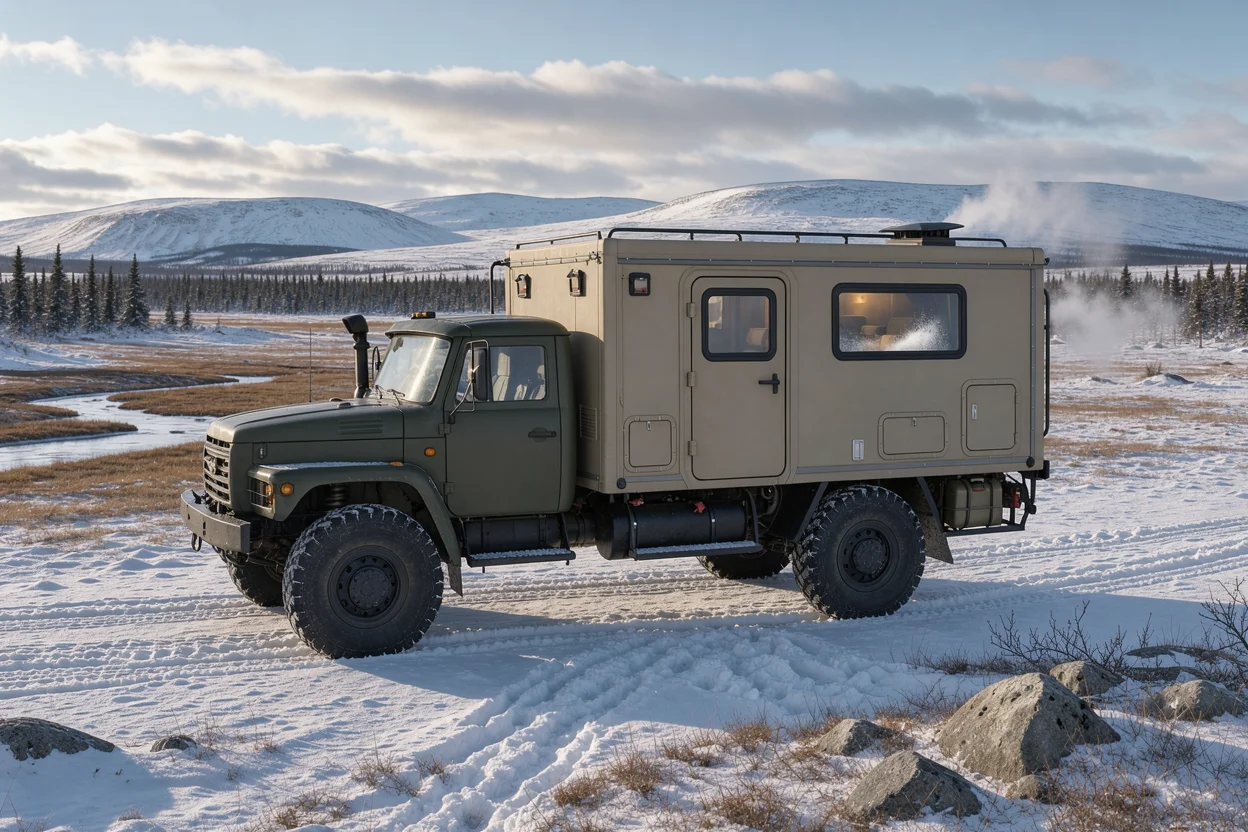
Staying comfortable during sub zero expedition travel requires balancing diesel heating systems with structural insulation and condensation control. This guide outlines how heating choices interact with thermal bridging, fuel supply considerations, and ventilation strategies to help prospective overland buyers make sound decisions before commissioning or purchasing a cold weather rig.
Key takeaways
- Heating power cannot compensate for unaddressed thermal bridges, which create severe interior condensation regardless of burner output.
- Air heaters deliver rapid dry cabin heat with modest power draw, whereas hydronic systems add domestic hot water and engine pre heat at the cost of electrical complexity.
- Deliberate cross ventilation remains vital in freezing conditions to exhaust human respiratory moisture and prevent mould growth behind cabinetry.
- Cold weather reliability depends heavily on combustion air sourcing, altitude capability, and fuel pickup geometry rather than nominal kilowatt ratings alone.
Understanding the Cold Weather Habitation Balance
Preparing an expedition vehicle for sub zero conditions involves a deliberate compromise between heat generation and thermal retention. Many prospective buyers assume that fitting an oversized diesel furnace can solve any insulation deficiency. In practice, vehicle bodies behave quite differently from domestic structures. Heat loss occurs rapidly through thin exterior skins, window panes, and structural chassis connections, making system cohesion far more significant than sheer furnace capacity.
When an oversized heater runs in an under insulated shell, it cycles continuously between high output and shutdown. This short cycling accelerates carbon buildup in the combustion chamber, drains house batteries with repeated glow plug ignitions, and creates uncomfortable temperature swings inside the living quarters. A balanced build prioritises consistent, low level heat delivery paired with comprehensive thermal barriers to maintain stable ambient temperatures without excessive electrical drain.
Dry Blown Air versus Hydronic Heating Architectures
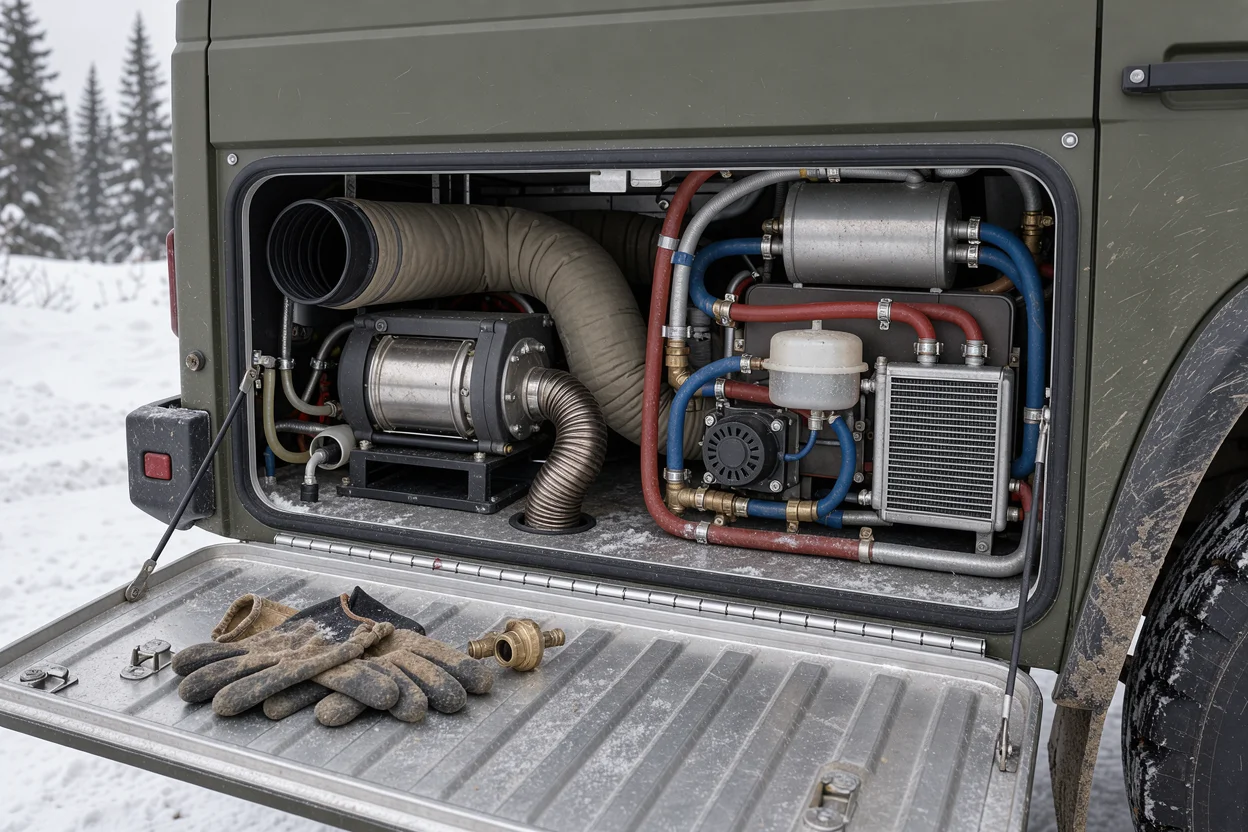
Overland builders generally choose between dry blown air diesel units and hydronic coolant based systems. Blown air systems draw interior air, pass it over an internal heat exchanger, and circulate warm air directly into the cabin. They warm living spaces rapidly, feature relatively simple mechanical connections, and consume minimal electrical energy once the combustion cycle stabilises. However, they do not produce domestic hot water and cannot easily preheat an iced engine block.
Hydronic systems circulate heated coolant through a closed plumbing circuit connected to fan assisted matrix radiators, an indirect hot water cylinder, and potentially the vehicle engine cooling loop. This architecture delivers luxurious residential style warmth, abundant washing water, and reliable cold start capability for the base vehicle. The fundamental tradeoffs are increased installation complexity, heavier fluid weight, multiple plumbing failure points, and a considerably higher electrical draw from continuous circulating pumps and distribution fans.
Practical Comparison Framework for Habitation Heating
To evaluate heating and thermal packages objectively, buyers should contrast options across three practical operational criteria: electrical dependence, functional versatility, and service simplicity.
Electrical dependence governs off grid endurance in dark winter conditions when solar replenishment is minimal. Air heaters require minimal battery capacity to sustain night long operation, making them better suited to compact rigs with limited lithium or AGM reserves. Hydronic layouts require robust electrical storage to support coolant pumps alongside matrix fans.
Functional versatility favours hydronic solutions, which integrate space heating, potable water warming, and engine thermal management into a single diesel fed appliance. For travellers heading into deep arctic conditions where diesel gelling and cold crank limits threaten mobility, engine preheating is an invaluable defensive asset.
Service simplicity distinctly favours blown air units. Because the fluid loop is strictly atmospheric air, there are no coolant hoses to chafe, airlocks to bleed, or secondary heat exchangers to corrode. Diagnostic routines and field cleanouts remain straightforward for remote travel.
Insulation Strategies, Condensation, and Thermal Bridging
Thermal insulation cannot be assessed purely by material thickness; continuity is what truly governs cold weather performance. Moisture vapour produced by cooking, washing, and normal breathing naturally migrates toward the coldest interior surfaces. Any uninsulated metal rib, window frame, or structural bolt acts as a thermal bridge where warm moist air instantly condenses into liquid water.
If moisture condenses behind decorative wall panels or against the raw vehicle skin, it promotes structural corrosion and hidden mould cultivation. Closed cell insulation materials that resist water absorption are therefore vastly preferable to open fibre bats in vehicle bodies. Additionally, an unbroken interior vapour control layer prevents humid cabin air from ever contacting cold outer body panels.
Crucially, ventilation must not be sacrificed in the search for thermal efficiency. A completely sealed camper turns into a humid pressure box within hours. High level exhaust venting paired with low level fresh air inlets creates a managed convection current that carries vapour outside while the diesel heater maintains a comfortable interior ambient temperature.
Crucial Inquiries for Vehicle Builders and Sellers
Prospective buyers evaluating a pre built expedition vehicle or discussing a custom build specification should ask direct questions regarding cold climate preparation. Begin by clarifying how the auxiliary heater draws fuel: Does it connect to an independent standpipe in the main fuel tank set above reserve level, or does it share an engine return line prone to air intrusion?
Next, inquire about high altitude operation. Many modern diesel combustion units struggle in thin mountain air above specific elevations unless fitted with an automatic altitude adjustment sensor or secondary low flow fuel dosing pump. Confirm whether the unit compensates for altitude autonomously or requires manual adjustment.
Finally, ask for detailed documentation of the insulation envelope. Have the window apertures been fitted with double glazed acrylic or glass units with thermal breaks? Are water tanks and internal distribution plumbing located inside the heated insulation envelope, or do they rely on exposed underfloor routings with auxiliary electric heating pads?
Hypothetical Decision Example: The Four Season Trans Nordic Rig
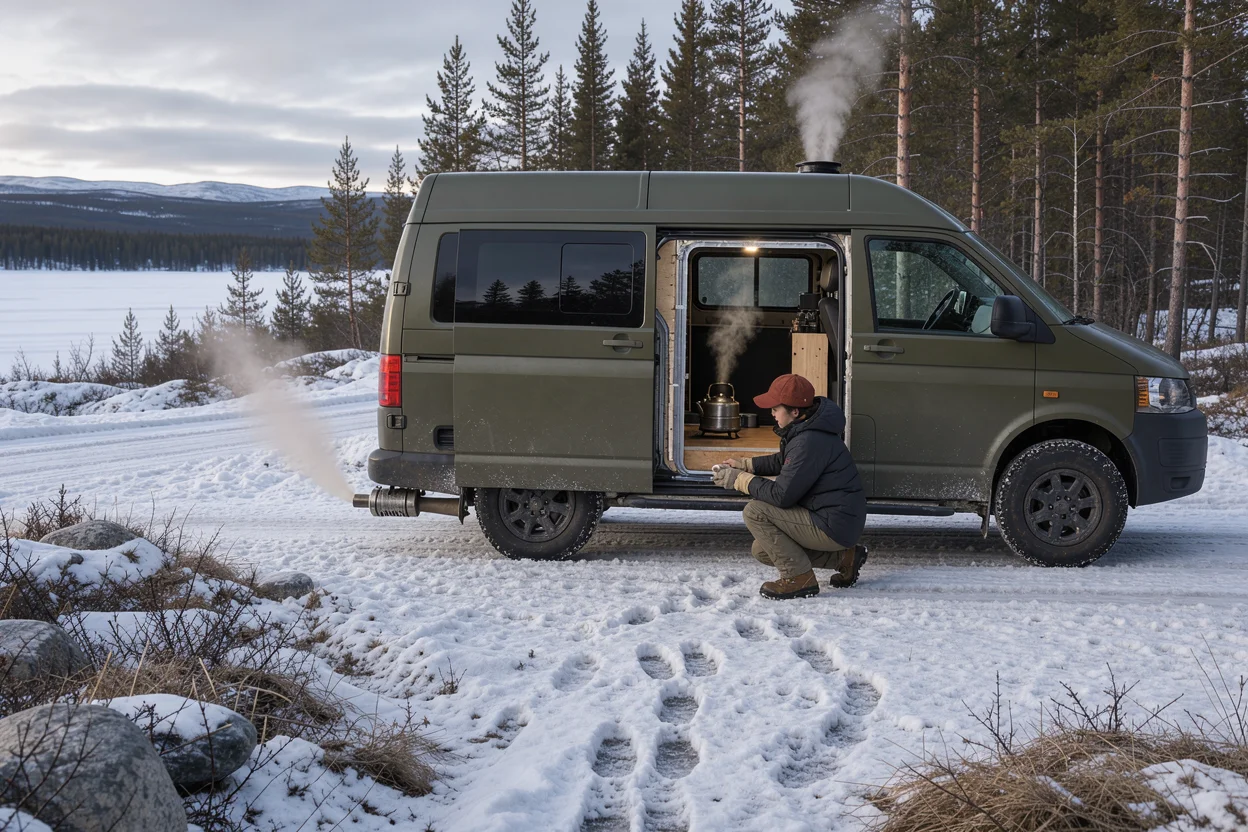
Consider a hypothetical overland buyer planning extended winter journeys across northern Scandinavia. The individual must decide between a streamlined panel van fitted with a blown air diesel furnace and a custom composite box truck equipped with a dual loop hydronic system.
The panel van offers rapid travel times and lower capital outlay, but its corrugated steel body presents thousands of intricate thermal bridges along internal chassis ribs. Even with closed cell insulation painstakingly applied, condensation along door seams remains a persistent housekeeping challenge during multi week trips.
The composite box truck features sandwich panels with structural foam cores and zero internal to external metallic contact points. Choosing the hydronic system in this scenario provides radiant floor warming and dependable engine block heating during harsh arctic cold soaks. However, the buyer must accept significant payload penalties for the fluid mass, install an expanded battery bank to manage continuous pump draws, and accept greater maintenance vigilance for the extensive plumbing network.
Common questions
Can a diesel heater run on standard road fuel in sub zero conditions?
Yes, diesel heaters draw directly from standard diesel supplies. However, in freezing weather, standard untreated summer diesel waxes and blocks narrow fuel dosing lines. Cold climate travel requires winter blend diesel or appropriate anti gel fuel additives to maintain steady heater operation.
Why is thermal bridging such a severe problem in expedition campers?
Thermal bridging occurs where conductive materials like metal structural ribs bypass insulation layers. Warm interior air hits these cold spots, creating rapid liquid condensation that promotes rust, degrades surrounding cabinetry, and causes hidden mould growth behind living space linings.
How does high altitude affect diesel camper heating systems?
At high altitudes, thinner air reduces available oxygen for combustion, causing diesel heaters to run rich. This incomplete combustion quickly produces heavy soot buildup on glow plugs and heat exchangers, leading to flameouts unless the heater features an automatic altitude compensation sensor.
Should camper water storage tanks be heated or placed inside the living cell?
Placing fresh and waste water tanks inside the insulated, heated cabin envelope is the most reliable strategy. External underslung tanks protected only by electric heating pads run a significant risk of line freezing at sub zero temperatures and draw heavily on auxiliary battery capacity.