AI assisted editorial. Published following automated quality checks, not independent fact verification. Confirm factual, safety and legal matters with appropriate professionals.
The short answer
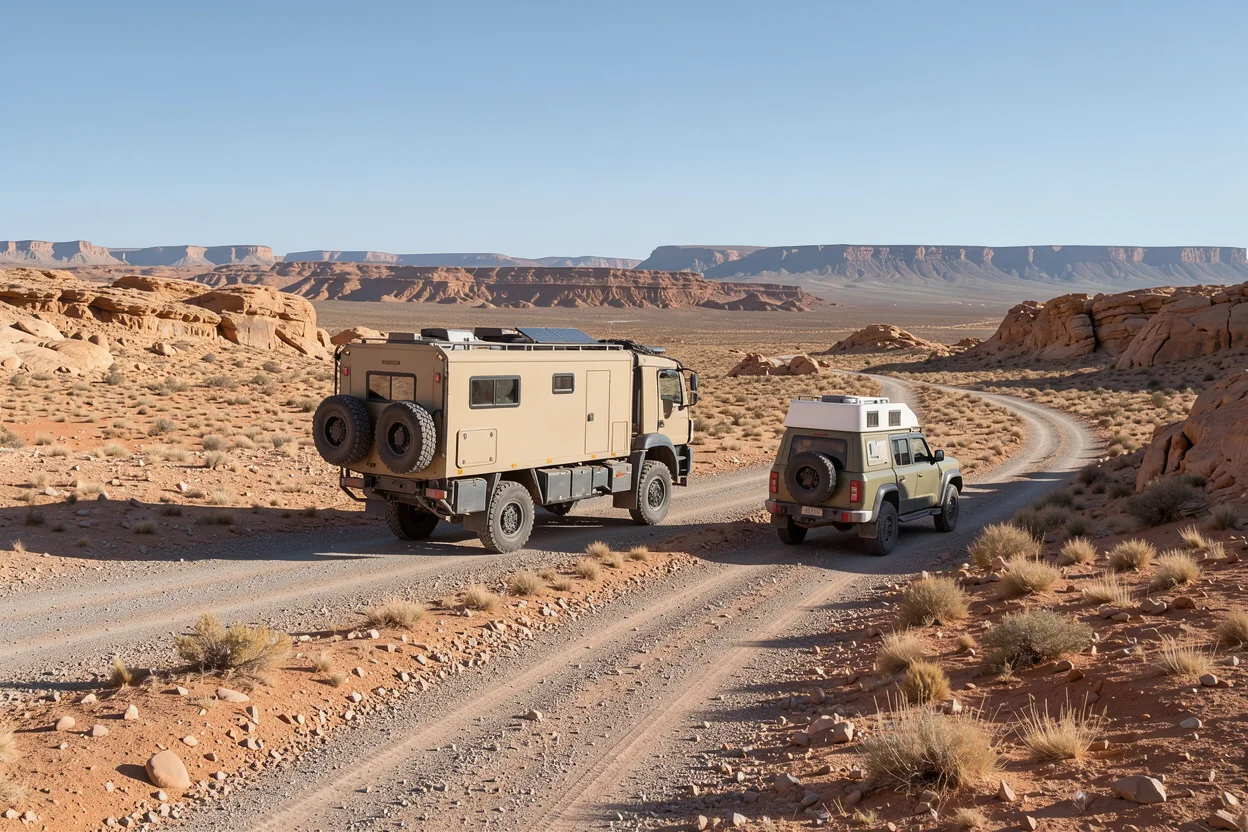
Deciding between an expedition truck and a 4x4 camper comes down to a fundamental trade off: self sufficiency and expansive internal habitat versus geographic accessibility, running ease, and manoeuvrability. Expedition trucks provide extended remote autonomy for long term travel, while 4x4 campers excel on tighter trails, standard roads, and everyday logistics.
Key takeaways
- Prioritise your primary travel style: narrow tracks and urban navigation favour 4x4 campers, whereas extended off grid living favours expedition trucks.
- Factor in total operating friction, including commercial driving licences, recovery equipment scales, ferry tariffs, and local bridge or height limits.
- Evaluate payload margins thoroughly; compact campers reach legal gross vehicle weight limits much faster than medium duty truck platforms.
- Ask private sellers and builders direct questions about real world kerb weight, parts availability, and subframe design before committing.
Understanding the Fundamental Platform Divide
The debate between an expedition truck and a 4x4 camper is rarely about which vehicle is superior in isolation. Rather, it centres on aligning vehicle dynamics with your planned journey. A 4x4 camper is typically built on a production light commercial vehicle chassis, such as a panel van, utility pickup, or dual cab platform. These vehicles retain car like ergonomics, navigate conventional parking bays, and slip under low woodland canopies with relative ease.
In contrast, an expedition truck is constructed atop a medium or heavy duty commercial chassis. These larger platforms deliver extraordinary carrying capacity, permitting reinforced composite living boxes, substantial water reserves, large battery banks, and full sized amenities. However, this habitat comes at the cost of substantial physical mass, taller clearance requirements, and reduced agility on technical or overgrown tracks.
Selecting the right option begins by discarding romantic notions of universal capability. Every extra cubic metre of interior comfort diminishes your route flexibility, while every saving in vehicle footprint requires compromise on storage, foul weather living space, and off grid endurance.
The Core Evaluation Framework: Space, Access, and Autonomy
To objectively compare these categories, prospective buyers should assess candidate vehicles across three interconnected criteria: habitable space, trail accessibility, and logistical autonomy.
Habitable space influences how sustainably you can travel through harsh weather or varied seasons. A converted medium duty truck offers separated zones for sleeping, cooking, hygiene, and remote working. You can spend weeks confined indoors during extreme storms without significant discomfort. A smaller 4x4 camper demands constant space management and multi functional furniture, often pushing daily activities like cooking or showering outdoors.
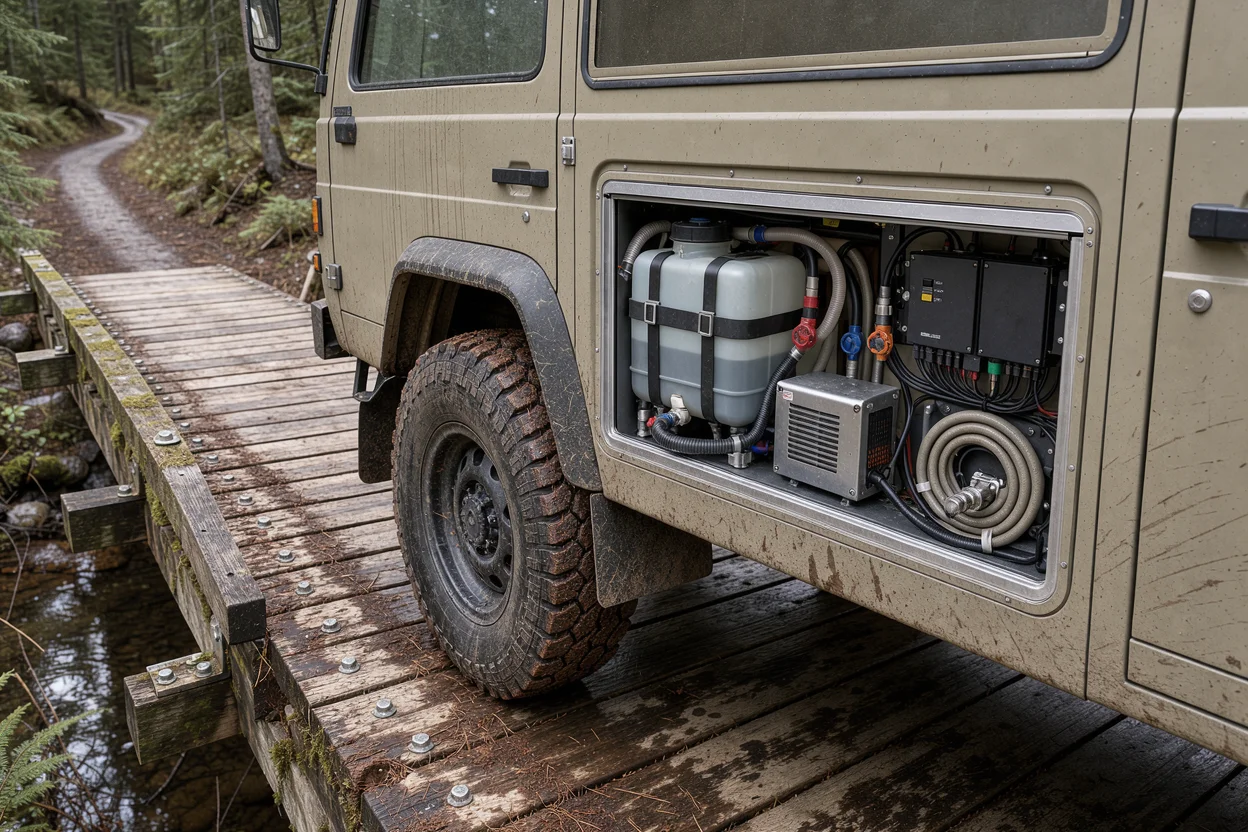
Trail accessibility balances that equation. A compact 4x4 camper can negotiate steep mountain switchbacks, fragile wooden bridges, urban centres, and narrow forest tracks. Large expedition trucks frequently face statutory weight restrictions, physical width bottlenecks, low hanging utility cables, and environmental permits that actively restrict route options.
Logistical autonomy measures how long you can remain stationary away from infrastructure. Expedition trucks excel here because their generous payloads accommodate hundreds of litres of fresh water, dedicated grey water holding, extensive solar arrays, and high capacity auxiliary heating systems. Compact campers operate on tighter margins, requiring more frequent replenishment stops.
Practical Logistics, Licencing, and Maintenance Burdens
Operational overhead often catches buyers unprepared. Medium duty expedition trucks frequently exceed light vehicle gross vehicle weight ratings, which introduces distinct driving licence categories, tachograph rules, or lower statutory speed limits depending on the jurisdiction. Finding shipping options, whether roll on/roll off or containerised freight, is substantially more complicated and expensive for tall, wide trucks.
Maintenance routines also diverge dramatically. Standard 4x4 campers rely on widely distributed commercial drivetrains, meaning consumables like brake pads, filters, and light truck tyres can be sourced in small regional towns. Their running gear can be hoisted on ordinary garage ramps by general mechanics.
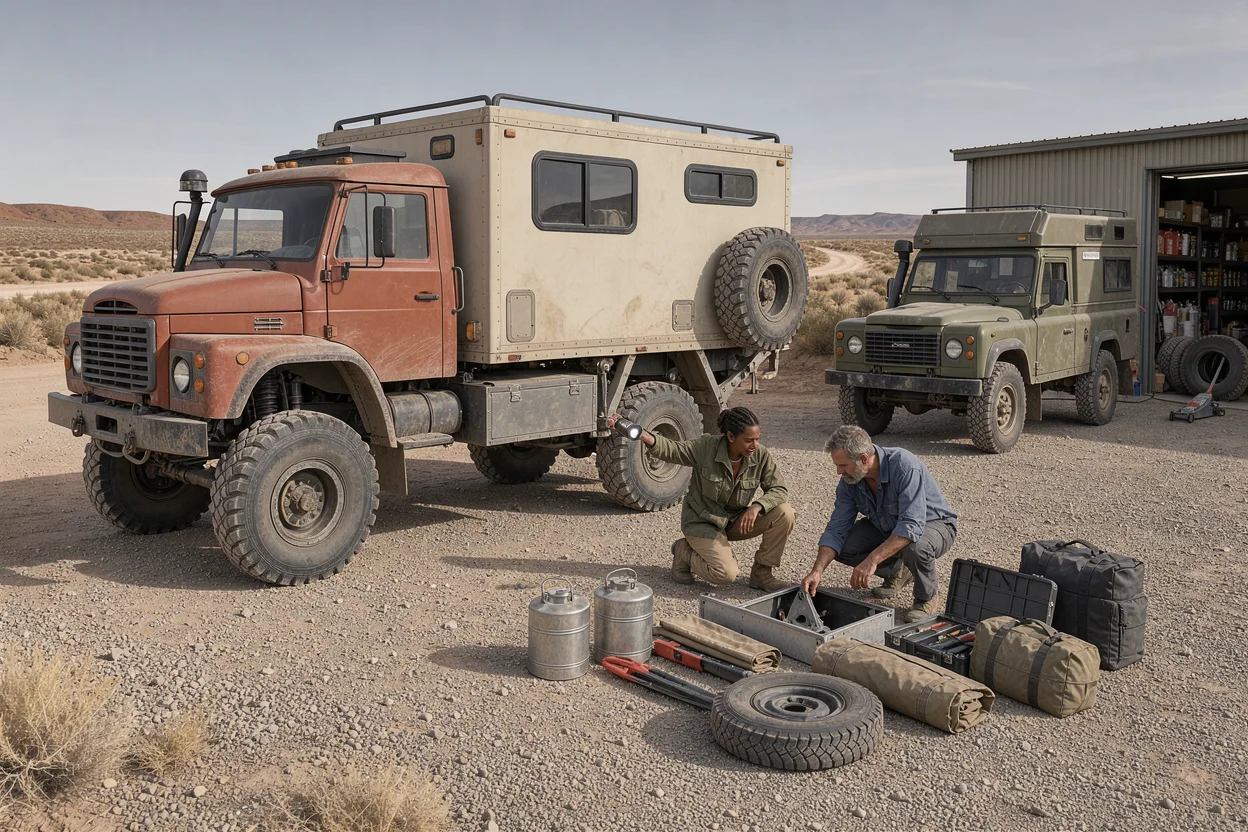
Heavy truck platforms require heavy vehicle workshops, industrial lifting gear, and specialised mechanics trained in commercial air brake systems and heavy diesel drivetrains. Tyre changes on split rim or large commercial assemblies demand heavy tools and strict physical precautions. If a breakdown occurs in a remote area, recovering an eighteen tonne truck requires specialised industrial recovery hardware that may not exist locally.
Essential Questions to Put to Sellers and Converters
When inspecting a pre owned vehicle or commissioning a custom build, surface level cosmetics should be secondary to structural and logistical viability. Ask direct questions to uncover how the vehicle was engineered and used.
First, ask: 'What is the certified unladen kerb weight with full fluid tanks, and what is the remaining legal payload?' Many converted campers sit dangerously close to their maximum permissible weight before personal gear and passengers are loaded.
Second, ask: 'What specific subframe or mounting system is used to isolate the habitation box from chassis chassis torsion?' On a rigid off road vehicle, chassis flex must be properly decoupled from the living box via three point, four point, or diamond mounts to prevent structural failure.
Third, inquire: 'What global availability exists for engine, transmission, and electronic control parts along my intended travel route?' Understanding whether replacement components require specialist international import helps clarify real world travel reliability.
Hypothetical Decision Example: Balancing Two Competing Scenarios
Consider this hypothetical comparison to see how priorities dictate choice. Imagine Traveller A planning a multi year, open ended journey covering high altitude plains, desert tracks, and remote winter conditions while working full time online with a partner. Their priority is uninterrupted four season habitability, domestic ergonomics, and several weeks of stationary water storage. In this scenario, an expedition truck offers the payload, power generation, and thermal comfort necessary to maintain that lifestyle sustainably.
Now consider Traveller B, planning seasonal six month journeys through coastal trails, alpine passes, historic towns, and winding green lanes. Their travel style prioritises spontaneous detours, high mobility, and parking flexibility near municipal amenities. For Traveller B, the expedition truck would prove an encumbrance; a well insulated 4x4 camper van or pickup canopy setup provides sufficient shelter while preserving absolute freedom of movement.
Neither vehicle is inherently superior; each represents a different set of compromises. Clarifying where you intend to spend your days inside living quarters or traversing tight trails reveals the correct path forward.
Common questions
Can I drive an expedition truck on a standard car driving licence?
In most jurisdictions, a standard passenger car licence is limited to vehicles with a maximum authorised mass up to 3.5 tonnes. Because most medium duty expedition trucks significantly exceed this threshold, drivers typically need to obtain a Category C or equivalent commercial heavy goods qualification.
Are shipping costs significantly higher for an expedition truck?
Yes. While many compact 4x4 campers can fit inside standard high cube shipping containers, large expedition trucks usually exceed container dimensions. They must travel via roll on/roll off shipping or flat racks, which generally results in higher freight rates, port handling charges, and customs inspection fees.
Why is chassis torsion mounting so critical on heavy expedition trucks?
Heavy duty truck chassis are engineered to flex over uneven terrain to maintain wheel contact. A torsion free mounting system separates the rigid composite habitation box from the flexing frame, preventing chassis twist from cracking walls, popping cabinet joins, or rupturing structural seals.
How do tyre replacement options compare between the two vehicle types?
Compact 4x4 campers use common light truck tyre sizes available from standard retail garages worldwide. Expedition trucks require heavy commercial or military spec tyres, which can be difficult to source quickly in remote regions, necessitating carrying multiple full sized spares.