
AI assisted editorial. Published following automated quality checks, not independent fact verification. Confirm factual, safety and legal matters with appropriate professionals.
The short answer
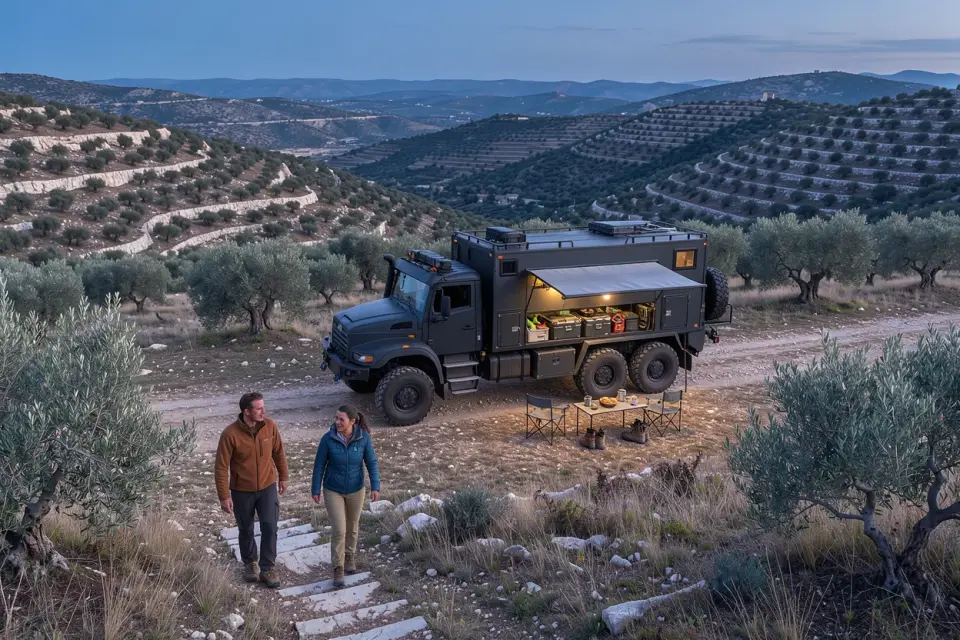
Long stints behind the wheel are often an inescapable part of overland travel, whether you are traversing tarmac corridors between trailheads or crawling across corrugated tracks. You can make vehicle based journeys far more sustainable by deliberately scheduling low pressure walking breaks, choosing camps with pedestrian access, and building buffer time into your route planning.
Key takeaways
- Treat travel pauses as primary itinerary highlights rather than unwelcome delays to keep vehicle based exploration enjoyable.
- Select fuel, lunch, and rest stops that offer safe, pedestrian friendly open ground rather than confined roadside lay bys.
- Build regular rest days and buffer afternoons into multi week overland routes to counterbalance consecutive long haul stints in the driver's seat.
- Remember that individual mobility needs differ; always consult a qualified healthcare professional regarding personal physical limitations or medical concerns.
The Realities of Transit Days on the Road
In the overland community, romance often surrounds remote camps, dramatic mountain passes, and technical track driving. The everyday reality of long distance vehicle travel, however, frequently involves long hours sitting in a cramped cab. Highway liaison stages, border crossings, and vast agricultural plains demand sustained concentration while your body remains largely static. Over several consecutive days, prolonged sitting can leave you feeling sluggish, irritable, and disconnected from the very landscapes you set out to explore.
When vehicle based travel feels like an endurance test, morale tends to dip inside the vehicle. Drivers develop stiff shoulders from wrestling steering inputs over crosswinds or washboard tracks, while passengers suffer from restlessness. Integrating spontaneous and planned physical movement into transit stages is not about maintaining rigid exercise targets or athletic conditioning. Instead, it is an adaptable travel habit that restores mental freshness, loosens muscles, and re establishes a grounded connection to life outside the windscreen.
Practical Framework: Direct Transfer vs Paced Transit
Overland itineraries usually follow one of two competing philosophies on relocation days: pushing through as fast as possible to reach a destination, or adopting a phased, slower transit model that treats the travel corridor as part of the experience. Evaluating the trade offs between these two approaches helps you decide which pace suits your current journey, your travel partners, and your vehicle capabilities.
Under a direct transfer approach, the objective is sheer distance. Drivers minimise pauses, consuming takeaway food at fuel pumps and swapping drivers on the roll. The advantage is arriving at a distant trailhead or remote national park sooner, unlocking an extra day at the destination. The trade off is significant physical exhaustion, higher stress from navigating traffic fatigue, and a total disconnect from intervening communities and landscapes.
By contrast, a paced transit framework limits daily driving blocks to manageable increments, such as two hour intervals punctuated by thirty minutes on foot. Stops are deliberately mapped around historic town squares, nature reserves, or scenic viewpoints. While this approach demands a more modest total daily mileage, it transforms a draining highway slog into an engaging travel day. It also reduces cab fatigue, leaving you with enough energy to pitch camp, prepare fresh food, and enjoy a settled evening without feeling completely depleted.
Hypothetical Decision Example: Crossing the Northern Plains
Consider this clearly labelled hypothetical scenario involving two overland travellers tackling a 600 kilometre liaison stage between two mountain ranges. Option A involves setting off at dawn, driving continuously along the dual carriageway with only brief five minute refuelling pauses, aiming to reach camp before dusk. Under this option, the team arrives after eight exhausting hours in the cab, facing a complicated pitch in failing light with stiff backs and frayed tempers.
Option B breaks the identical 600 kilometre route across a slightly longer timeline. The travellers identify a coastal nature boardwalk at the 200 kilometre mark for mid morning coffee and a 40 minute stroll. At 400 kilometres, they halt at a community managed woodland trail for lunch and a leisurely walk among the trees, arriving at their destination campsite ninety minutes later than Option A. Despite spending more total time on the journey, their physical fatigue is markedly lower, cab tension is avoided, and they experience two memorable regional landscapes they would have otherwise bypassed.
This hypothetical comparison illustrates that trading nominal arrival speed for periodic, unhurried movement often yields a higher quality expedition. You lose very little functional camp time, yet gain a refreshed mind and a significantly more pleasant road experience.
Weaving Everyday Mobility into Camp Life
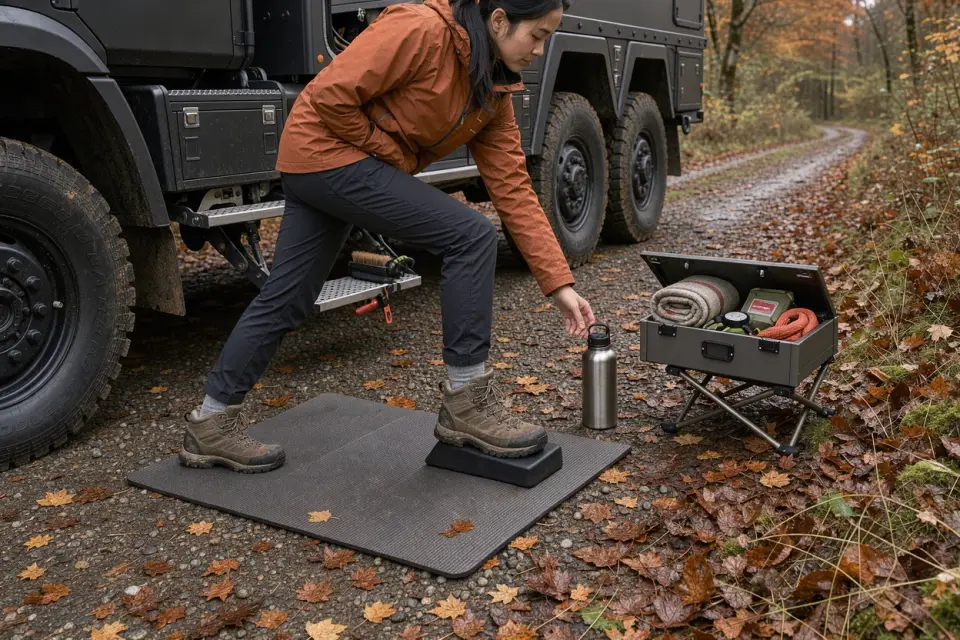
Movement during overland travel does not require dedicated gym kits, specialist equipment, or artificial training regimens. The natural mechanics of life on the road offer numerous opportunities to move, provided you do not design your setup purely for static convenience. Simple habits like parking slightly further out in rural villages to walk between local bakeries and greengrocers can introduce effortless strides into your morning routine.
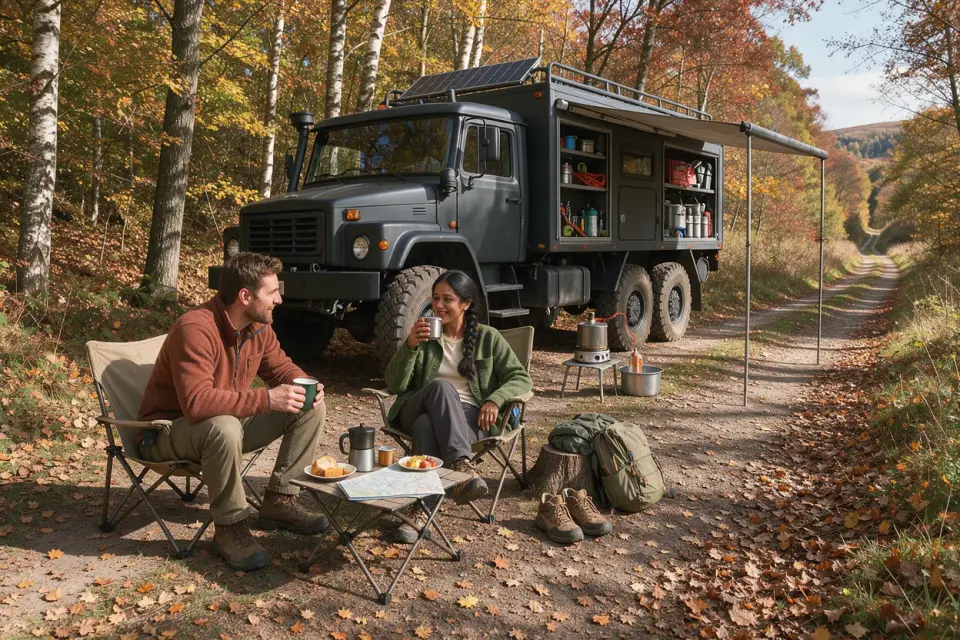
When scouting wild camps or formal pitches, look for spots that invite exploration. Sites situated near public footpaths, river trails, or open ridgelines encourage an evening wander after the vehicle is levelled. Engaging in camp setup unpacking storage boxes, erecting awnings, and fetching water also mobilises joints that have remained static during hours on the highway. Prioritising simple, freshly cooked meals over packaged cab snacks similarly encourages you to stand, move around your outdoor kitchen, and reset your body before sleep.
Equally important is social connection and rest. Taking an afternoon off from driving every three or four days allows you to wash clothes, chat with local residents or fellow travellers, and enjoy a slow, unhurried walk without checking your rear view mirrors or navigational apps.
Questions to Ask When Choosing Stops and Route Timelines
Before setting off on long driving stages, evaluating potential stopping points through practical questions will ensure your breaks allow genuine mobility rather than frustrating car park confinement. Use these questions when interrogating satellite maps, route guidebooks, or speaking with campsite hosts and tourist information staff:
Does this fuel or rest stop provide direct, safe pedestrian access away from heavy goods vehicles and busy slip roads? Many motorway service areas are entirely vehicle centric, offering no pedestrian space beyond a concrete apron. Seeking municipal parks or village greens slightly off the main corridor usually yields far more peaceful, walkable surroundings.
Can we safely park a loaded overland rig with external equipment while we step away for a thirty minute walk? If security is a worry, look for staffed visitor centres, historic sites with dedicated surveillance, or national park ranger stations rather than unattended, blind lay bys.
Does our planned campsite permit walking directly from our pitch without having to navigate dangerous road verges? Campsites that back onto trail networks or shoreline paths allow you to unwind instantly on foot as soon as your engine is switched off.
Are our daily mileage goals realistic enough to absorb an unexpected hour long stroll if we stumble across an appealing local landmark? If your itinerary is so rigid that a pleasant impromptu pause causes logistical panic, your daily driving targets are likely too ambitious.
Keeping Movement Flexible, Enjoyable, and Safe
Every traveller brings a unique body, baseline mobility level, and set of personal preferences to vehicle based exploration. What feels like a rejuvenating woodland ramble to one person may feel over tiring or physically unsuitable for another. It is essential to adapt your daily movement to what feels comfortable and sustainable for your circumstances, rather than attempting to adhere to arbitrary standards.
Listen to your body when driving. If you feel neck stiffness or restlessness creeping in, take that as a clear signal from your body that it is time to indicate, pull off at the next safe location, and take a stroll. Individual physical needs, mobility limitations, and joint tolerances differ widely. Anyone seeking to manage ongoing pain, circulatory concerns, or physical conditions while travelling should consult a qualified healthcare professional, keeping their journey adaptable, comfortable, and safe.
Common questions
How frequently should an overlander stop to stretch on highway days?
A sensible baseline for many overlanders is pausing every two to three hours. Breaking your drive into manageable segments allows you to step away from the driving seat, reset your concentration, and take a brief stroll without significantly compromising your overall transit progress.
What should I look for when selecting movement friendly fuel stops?
Look for service points situated near small towns, riverside recreation areas, or municipal parks. These locations let you fuel up and then park securely for fifteen minutes while you take a brief walk away from heavy commercial vehicle fumes and high speed carriageways.
How can solo overland drivers manage safe movement breaks?
Solo travellers should choose daylight stops with natural foot traffic, such as visitor centres, village squares, or park ranger stations. Parking within clear view of staffed facilities allows you to take a rejuvenating walk without fretting over vehicle security.
Can camp chores count towards daily physical activity on the road?
Yes. Pitching ground tents, lifting storage boxes, fetching water, and preparing meals over camp kitchens all provide functional, full body movement that naturally counterbalances hours spent seated in the cab.