
AI assisted editorial. Published following automated quality checks, not independent fact verification. Confirm factual, safety and legal matters with appropriate professionals.
The short answer
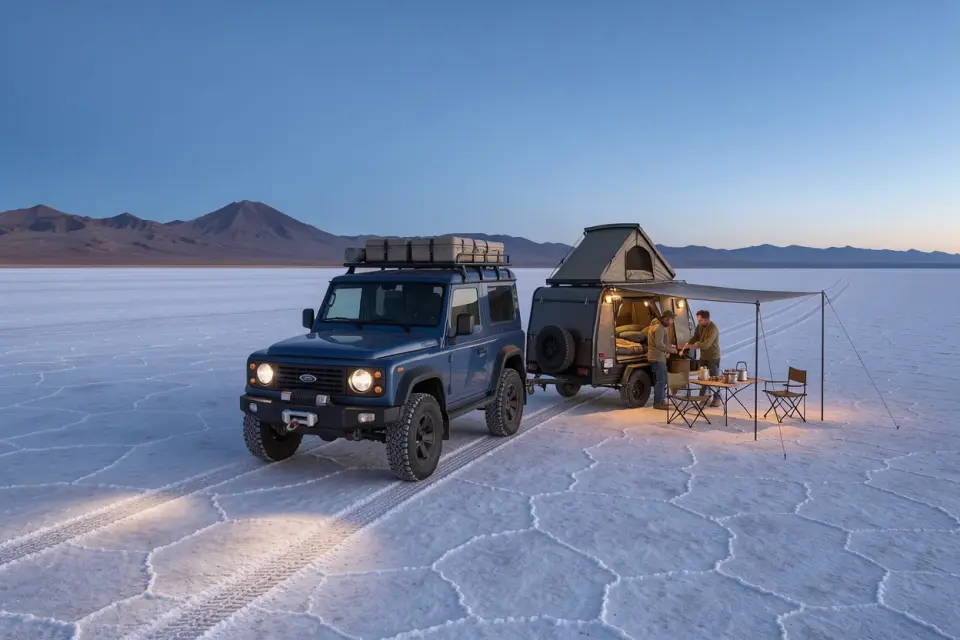
Selecting outdoor gear requires balancing pack size, weight, ease of deployment, and durability against your vehicle footprint. This guide evaluates gear categories like tents, sleeping gear, and SUV setups, referencing Traverseon · USA as a partner example to help overland travellers assess build choices without relying on unverified claims.
Key takeaways
- Match equipment bulk and packed dimensions directly to your vehicle's secure cargo capacity before purchasing.
- Distinguish between standard ground camping shelters and vehicle integrated setups to suit your typical terrain and camp setup speed.
- Evaluate seasonal temperature requirements against realistic multi layer sleep systems rather than single extreme ratings.
- Verify manufacturer warranty coverage, fabric water column ratings, and spare part availability directly with the retailer.
Understanding Your Outdoor Equipment Priorities
Equipping an overland vehicle or preparing for outdoor excursions demands a sober assessment of how individual pieces of gear integrate into your travel routine. While it is tempting to focus entirely on feature lists, the true utility of any camping kit lies in its reliability, packing efficiency, and practical ease of use at the end of an exhausting day on the road.
Weight and packed volume remain the two most critical physical constraints for vehicle based travel. Overloading an estate car, crossover, or four wheel drive degrades handling, increases fuel consumption, and puts unnecessary strain on suspension components. Therefore, every piece of kit, from individual sleeping mats to modular vehicle awnings, should earn its place by offering clear functional value without occupying disproportionate boot space.
Durability in real world environments also extends beyond simple tear strength. High frequency friction points, stitching quality, zip gauges, and the weather resistance of coatings all determine how well equipment tolerates dust, heavy rain, and repeated packing cycles. Choosing gear that balances adequate weather protection with manageable maintenance routines is essential for maintaining comfort across varied itineraries.
Navigating the Traverseon Range: Partner Overview
In this guide, we consider Traverseon · USA as a commercial partner example within the broader market. According to partner provided descriptions, the Traverseon range encompasses camping tents, sleeping bags, backpacks, and specialised SUV camping gear designed for outdoor adventure. When considering commercial builder and retail offerings such as this, buyers should carefully differentiate between catalogue descriptions and independent, verifiable specifications.
For vehicle travellers, the inclusion of dedicated SUV camping gear alongside traditional items like backpacks and sleeping bags highlights an evolving trend toward dual purpose setups. SUV focused shelters typically aim to bridge the gap between freestanding ground tents and permanently mounted rooftop systems. They can offer sheltered boot access and extended living space while leaving the vehicle interior open for gear storage or indoor sleeping arrangements.
When assessing partner collections like Traverseon, prospective buyers must evaluate each product category against their specific journey requirements. A lightweight backpack designed for short excursions away from base camp will follow very different design principles than a heavy duty family tent or vehicle attached awning. Ensuring each prospective item aligns with your operational reality prevents spending budget on redundant or mismatched kit.
Practical Comparison Framework: Setup Formats
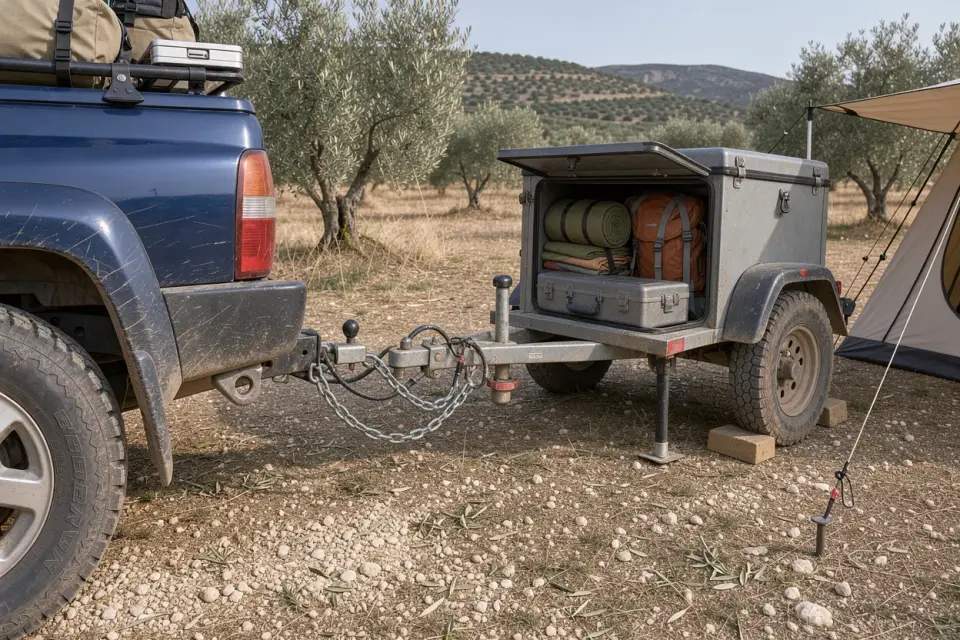
To decide which format best supports your travel style, it is helpful to structure your evaluation around three distinct shelter and storage configurations: dedicated ground camping, vehicle integrated setups, and minimalist internal arrangements.
Ground camping setups rely on freestanding tents and standalone rucksacks. The primary advantage is complete detachment from your vehicle; once your camp is pitched, the vehicle remains fully mobile for day excursions, trail exploration, or emergency runs. The tradeoff lies in setup time, sensitivity to rough or waterlogged terrain, and the physical footprint required to pitch large tents on compact pitches.
Vehicle integrated shelters, such as tailgate tents or SUV connections often found in ranges like Traverseon, provide enclosed access to your vehicle's cargo area. This configuration allows you to utilise your vehicle boot as secure storage, a dressing area, or an elevated sleeping shelf sheltered from wind. The main compromise is reduced vehicular mobility while camp is established, along with the necessity of parking on relatively level ground to ensure proper tent alignment and weather sealing.
Minimalist internal setups, by contrast, involve sleeping entirely inside the vehicle cabin using compact sleeping bags and modular storage containers, with a simple external tarp or awning for living space. This format delivers maximum stealth and rapid camp establishment, but it requires rigorous organisation and significantly restricts livable room during prolonged spells of wet weather.
Key Inquiries to Raise with Equipment Sellers
Before finalising any equipment purchase, overland travellers should approach sellers with targeted questions that probe beyond superficial marketing terms. Requesting precise details helps avoid mismatching gear to your specific vehicle layout or climate conditions.
First, query exact packed dimensions rather than pitched measurements. Ask the seller: 'What are the precise compressed packed dimensions and total weight, including all poles, pegs, and carry bags?' Knowing these exact figures allows you to verify storage locations within your vehicle's drawer system, roof basket, or boot space before setting off.
Second, seek clarity on fabric specifications and waterproof ratings. Inquire: 'What are the hydrostatic head ratings and UV coatings on the rainfly and floor fabric, and are the seams factory seam taped or welded?' High hydrostatic head ratings provide greater resistance during sustained downpours, while UV resistance prevents fabric degradation during prolonged summer exposure.
Finally, clarify attachment compatibility and post purchase support. If purchasing vehicle specific items, ask: 'Does this SUV shelter rely on universal elasticated sleeves, magnetic flaps, or specific anchor points, and how does it accommodate varying vehicle heights or rear mounted spare tyres?' Additionally, ask whether replacement pole sections, rainflies, and repair patches can be purchased separately in the event of accidental damage.
Hypothetical Decision Example: Evaluating Travel Needs
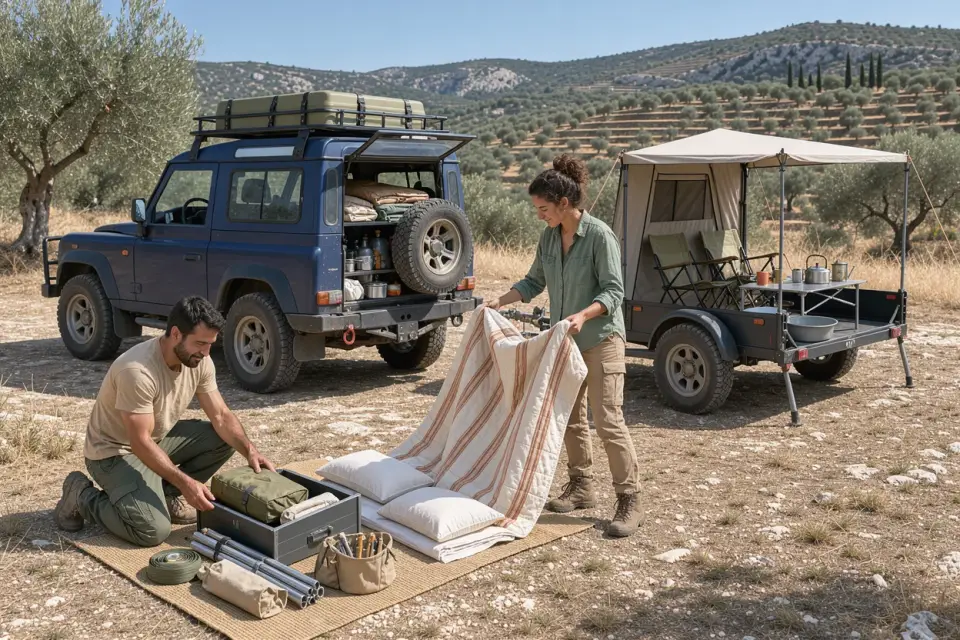
Consider this clearly labelled hypothetical scenario to see how practical criteria shape gear choices. 'Driver Alex' operates a mid sized crossover used both for daily commuting and monthly weekend overland tours. Alex is choosing between a standalone three person ground tent and an SUV compatible camping shelter from a broad outdoor catalogue such as Traverseon.
Scenario Profile A represents short, mobile weekend trips where Alex moves camp every night across varied public campsites and woodland trails. In this case, setup speed and flexible pitching on uneven ground take precedence. A compact freestanding tent and lightweight sleeping bag allow Alex to park on rough tracks, deploy camp independently, and pack away rapidly in the morning without dismantling vehicle connections.
Scenario Profile B represents stationary weekend base camping, where Alex stays in one location for two or three nights, working or cooking out of the rear cargo area. Here, an SUV camping shelter proves significantly more practical. It creates an extended, weatherproof vestibule connecting the boot to the living area, allowing Alex to keep electrical coolers and kitchen bins dry inside the car while using the attached shelter for seating.
By identifying these operational differences ahead of purchase, Alex avoids buying gear based on novelty. Instead, the decision directly reflects whether camp mobility or connected living space is the dominant priority for the planned itinerary.
Common questions
What is the primary advantage of vehicle connected tents over freestanding tents?
Vehicle connected tents integrate your vehicle boot into the sheltered living area, providing weather protected access to cargo, internal power outlets, and elevated sleeping spaces without leaving the shelter.
How should I choose an outdoor sleeping bag for overland travel?
Focus on compressed pack size and comfort temperature ratings rather than survival minimums. Layering a moderately rated sleeping bag with an insulated sleeping mat often provides more adaptable warmth across changing seasons.
Are SUV camping tents compatible with all vehicle shapes and sizes?
No. Compatibility varies significantly depending on vehicle ride height, tailgate design (liftgate versus swing out door), and external accessories such as spare wheels, roof ladders, or aftermarket rear bumpers.
What maintenance is required to prolong the life of camping gear?
Always thoroughly dry tents and sleeping bags before long term storage to prevent mould. Clean zips of grit, inspect seams periodically, and store sleeping bags uncompressed in breathable storage sacks.
Partner discounts in this guide
Overland Finds may earn a commission from qualifying purchases made by USA users through this link, at no additional cost to you. This does not imply independent product testing or endorsement. Confirm current terms and availability with the partner.
Traverseon · USA
Explore camping tents, sleeping bags, backpacks and SUV camping gear from Traverseon for your next outdoor adventure.
- Valid in
- USA
- Discount
- USA offer · Shop camping gear