
AI assisted editorial. Published following automated quality checks, not independent fact verification. Confirm factual, safety and legal matters with appropriate professionals.
The short answer
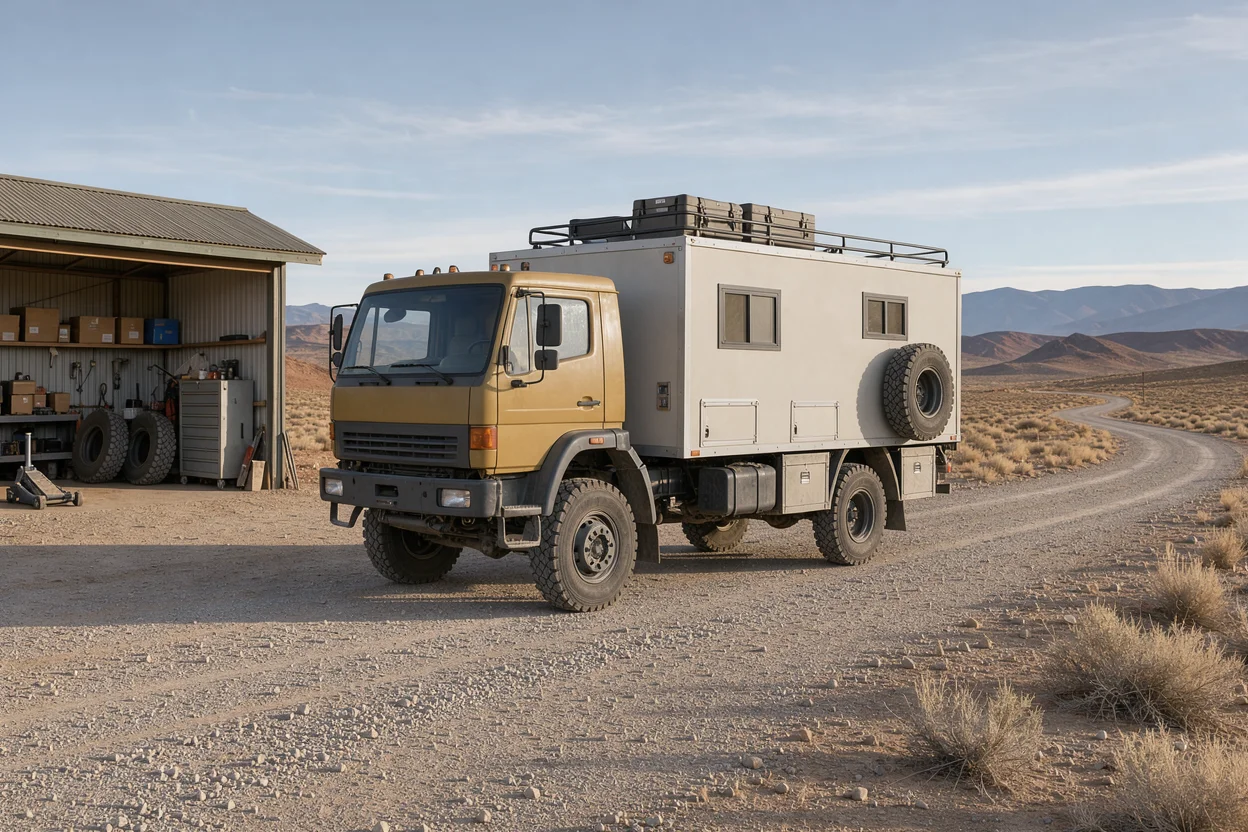
A dependable base vehicle balances legal payload capacity, global parts access, manageable physical dimensions, and chassis durability against your intended living comfort. Prioritising genuine carrying capacity and mechanical serviceability over aesthetic appeal or extreme trail capability ensures a safer, more sustainable long term platform.
Key takeaways
- Legal payload margin is the single most critical constraint when fitting auxiliary fuel, water, and living modules.
- Parts availability and local mechanical familiarity in your target destinations matter more than obscure performance upgrades.
- Physical exterior footprint dictates remote track clearances, shipping container compatibility, and inner city manoeuvrability.
- Cab and chassis layout determines whether internal walkthrough capability is possible without structural coachbuilding.
Payload and Gross Vehicle Weight Considerations
A successful long term overland build begins with an honest assessment of mass rather than interior design. Every modification, from steel bar work and dual battery setups to domestic water tanks and onboard storage, draws directly from the base vehicle's net payload capacity. Operating near or above the manufacturer's gross vehicle weight rating introduces severe handling compromises, accelerates chassis fatigue, and risks legal non compliance during border inspections or standard roadside checks.
When inspecting candidate platforms, subtract the unladen kerb weight including a full tank of fuel and an average driver from the certified gross vehicle weight. The remaining figure represents your total operational margin. Expedition builds regularly accumulate significant mass once personal equipment, recovery tools, provisions, and passengers are aboard. Selecting a chassis with an abundant factory payload reserve avoids costly structural reinforcement and preserves reliable handling across challenging surfaces.
The Four Pillar Evaluation Framework
To objectively compare divergent vehicle classes, prospective builders can apply a four pillar assessment framework that balances capability against daily practicality.
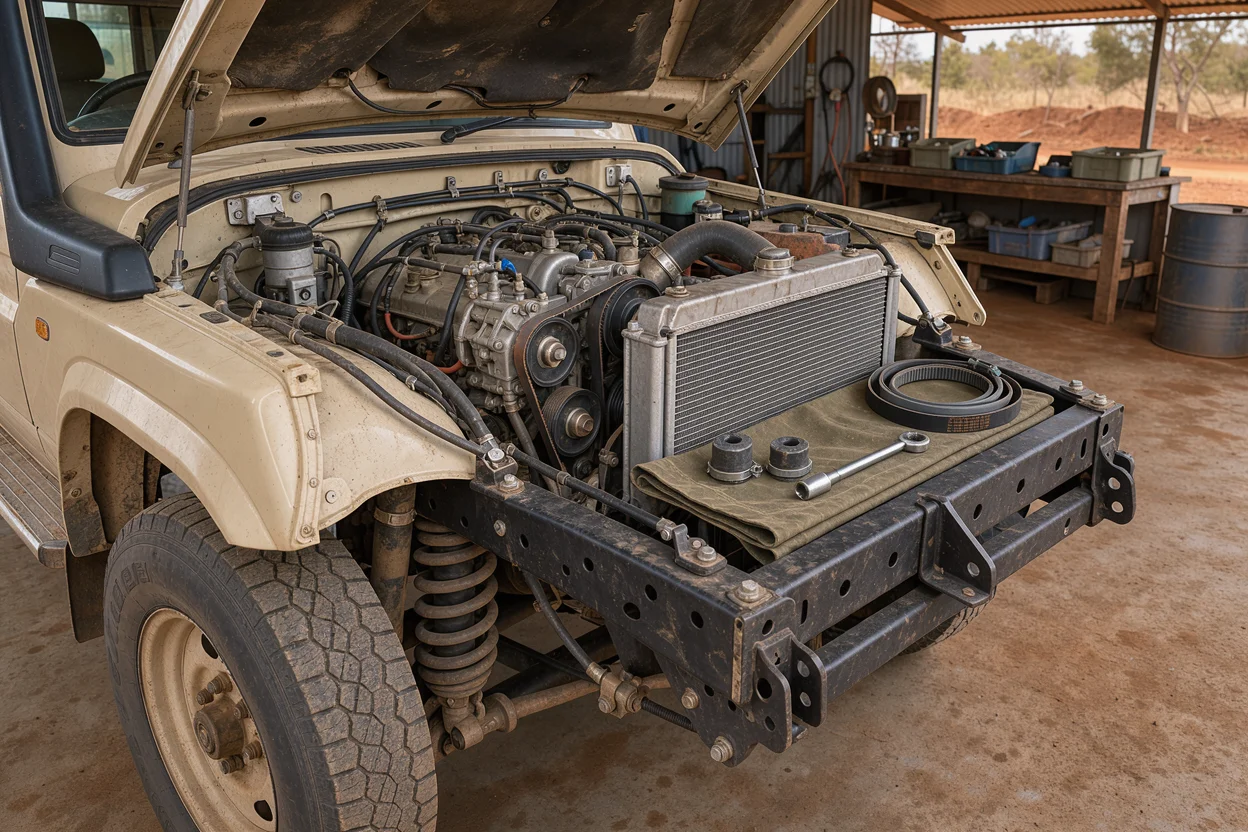
1. Global Serviceability: Evaluate whether routine service consumables, suspension bushings, drive belts, and sensor assemblies are stocked regionally or require intercontinental freight. A vehicle built on ubiquitous commercial mechanicals often spends less downtime waiting for basic maintenance parts in remote settlements.
2. Structural Adaptability: Examine the chassis layout and cab architecture. Body on frame utility vehicles and cutaway commercial chassis accept custom subframes, auxiliary tanks, and camper boxes far more easily than unibody monocoques. However, ladder frame trucks may exhibit firmer road manners and higher overall load heights.
3. Spatial Usability: Assess living ergonomics versus external dimensions. Van platforms deliver superior interior volume per metre of total length, permitting enclosed cooking and bad weather refuge. Conversely, conventional bonneted utility 4x4s present superior approach angles and engine bay access at the expense of confined living space.
4. Mechanical Predictability: Scrutinise engine and drivetrain management. Platforms that require ultra low sulphur diesel or proprietary dealer diagnostic tools present operational hurdles in regions with variable fuel standards. Robust cooling systems, conventional mechanical linkages, and well understood electrical systems offer greater field repair predictability.
Hypothetical Decision Example: Two Divergent Profiles
Consider a hypothetical comparison between two common builder profiles: a solo traveller planning a transcontinental gravel route, versus a travelling couple seeking year round living accommodation across mixed climates.
In this scenario, the solo traveller prioritises standard utility: an established four wheel drive pick up platform. The trade off involves sacrificing an internal walkthrough and living primarily out of external lockers or a compact pop top shell. In exchange, the vehicle fits standard shipping containers, navigates narrow forestry trails, and draws upon globally distributed spare parts.
Conversely, the travelling couple selects an all wheel drive medium duty commercial van. The external clearance and articulation are comparatively limited, restricting aggressive rock crawling. However, the substantial internal volume allows a fixed bed, an internal sanitation area, and generous freshwater capacity without exceeding axle ratings. This hypothetical comparison demonstrates that neither platform is universally superior; suitability stems entirely from matching chassis constraints to lifestyle requirements.
Critical Inquiries for Prospective Sellers
When assessing a pre owned candidate for an expedition conversion, standard used car questions prove insufficient. You must interrogate the vehicle's past working conditions, structural health, and maintenance documentation with long distance travel in mind.
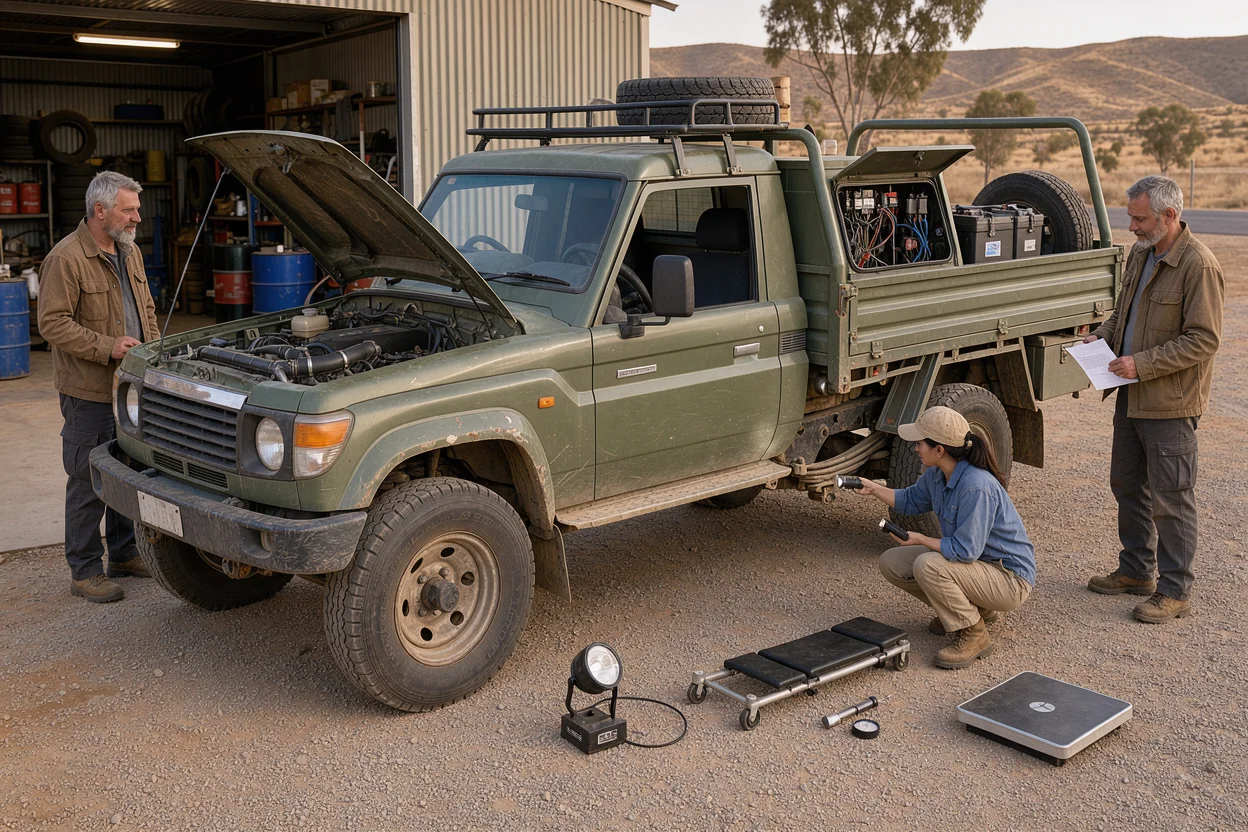
Begin by requesting the exact certified weight ticket if the seller has already introduced accessories or heavy bodywork. Ask whether the cooling system, driveline oils, and suspension components were replaced based on severe service intervals or extended domestic fleet schedules. Enquire whether the chassis has suffered torsional stress, towing over capacity, or underlying frame corrosion near leaf spring perches and crossmembers.
Furthermore, ask specifically about non factory electrical taps and aftermarket wiring. Haphazard wiring looms installed for auxiliary lighting or sound systems are notorious sources of parasitic battery drain and intermittent electrical faults in remote environments. Clean, documented wiring and unmodified factory harnesses provide a much safer baseline for your expedition power installation.
Living Space, Access, and Transport Logistics
The spatial format of your base vehicle permanently establishes how you interact with your surroundings. Forward control and cab over configurations maximise internal square footage relative to total road presence, yet place the driver directly over the front axle, which alters ride comfort over corrugations. Bonneted platforms isolate vibration more effectively and simplify standard under bonnet inspection routines during long transit stages.
Transport logistics also place firm boundaries on physical size. Vehicles exceeding typical high cube sea container clearances must travel as roll on/roll off cargo, substantially increasing shipping exposure, port handling risks, and scheduling complexity. Similarly, excessive overall height restricts access to standard parking facilities, bridges, and dense canopy tracks. Finding a balanced footprint ensures your expedition vehicle remains a versatile travel tool rather than an unwieldy transport burden.
Common questions
Why is payload capacity more critical than four wheel drive hardware?
Excess weight compromises braking performance, strains suspension linkages, and risks chassis damage regardless of your traction aids. If a platform lacks adequate payload margin for fuel, water, and living systems, advanced differentials cannot offset the handling hazards and structural fatigue.
Should I choose a panel van or a cab chassis truck for an expedition build?
Panel vans provide weather sealed internal walkthrough access and rapid build fabrication within factory metal walls. Cab chassis trucks require bespoke subframes and habitat boxes, but they generally offer higher axle ratings, square living walls, and superior separation between cab and living quarters.
How does vehicle dimension affect international overland travel?
Vehicles that fit within standard sea shipping containers enjoy cheaper, safer ocean transit and broader route flexibility. Taller or broader platforms face track clearances issues, higher toll categories, and restricted access to narrow village thoroughfares and low fuel station canopies.
How can I assess if spare parts will be available along my route?
Research whether your candidate model shares foundational engine, brake, and chassis assemblies with commercial fleets, light buses, or utility work vehicles commonly operated in your target regions, rather than relying on boutique luxury or market exclusive configurations.